
Give Your Wedding Chaat Counter a Sense of Place
A regional name, a distinct texture and a maker who can explain the dish give the familiar live counter a more memorable identity.
A wedding chaat counter is a good place for a family to be specific. Someone remembers a particular city; someone else has firm views about the chutney. Those preferences can create a far more interesting menu conversation than the instruction to provide every familiar snack.
Start with the dishes the family actually wants to introduce to its guests. Then give each enough space to taste, look and feel distinct. A small, well-explained selection can offer the pleasure of discovery without turning dinner into a geography lesson.
Use the dish’s name as a beginning
Comorin’s published Chai & Chaat menu names dishes including Indore Khopra Pattice, Calcutta Ghoogni Chotpoti and Ahmedabad Khaman Dhokla Chaat. Its naming offers a useful reference for a counter that acknowledges different places and preparations. It also lists a wasabi variation on dahi batata puri, making the contemporary addition explicit. (Comorin — Chai & Chaat menu)
For a wedding, ask the culinary team to explain the version it proposes. Which recipe or maker is the reference? Which parts are being adapted for service? Keep that explanation accurate on the menu card. A city name alone should not become a claim that one preparation represents an entire region.
Give the tasting a contrasting pair
Put two proposed dishes side by side and ask what makes each worth including. Consider texture, temperature, sourness, sweetness and how the dish is assembled. If the same garnish and sauces overwhelm both, return to the recipes before approving another decorative vessel.
Invite the family member with a strong food memory to describe the detail they recognise. The chef can then discuss what is possible for the actual guest count. This is a useful conversation about a flavour, rather than a demand to reproduce an unnamed stall from a photograph.
Make the final assembly visible
The charm of a live counter comes partly from watching a dish come together. At the service trial, check what the cook finishes in front of the guest and what has already been prepared. Taste a portion at the moment it would be handed over.
Choose crockery guests can manage while standing or talking. A generous garnish can be appealing, but the first spoonful should reach the food without a balancing act. Give people somewhere nearby to pause, eat and leave the used plate.
Write labels a guest can use
Pair the dish name with a short description agreed with the kitchen. Identify the principal ingredients and arrange clear dietary information through the caterer. Let the team explain substitutions directly; the design studio should not be guessing what is in a chutney.
If a dish has been substantially reworked, say so. The pleasure of a contemporary interpretation grows when guests can understand the idea behind it.
Carry the place through the food
Build the counter around good cooking, legible names and warm service. Let the decor support that experience with considered materials and space for the cooks to work. When a guest returns to ask about one particular dish, the counter has offered something more lasting than another long list of options.
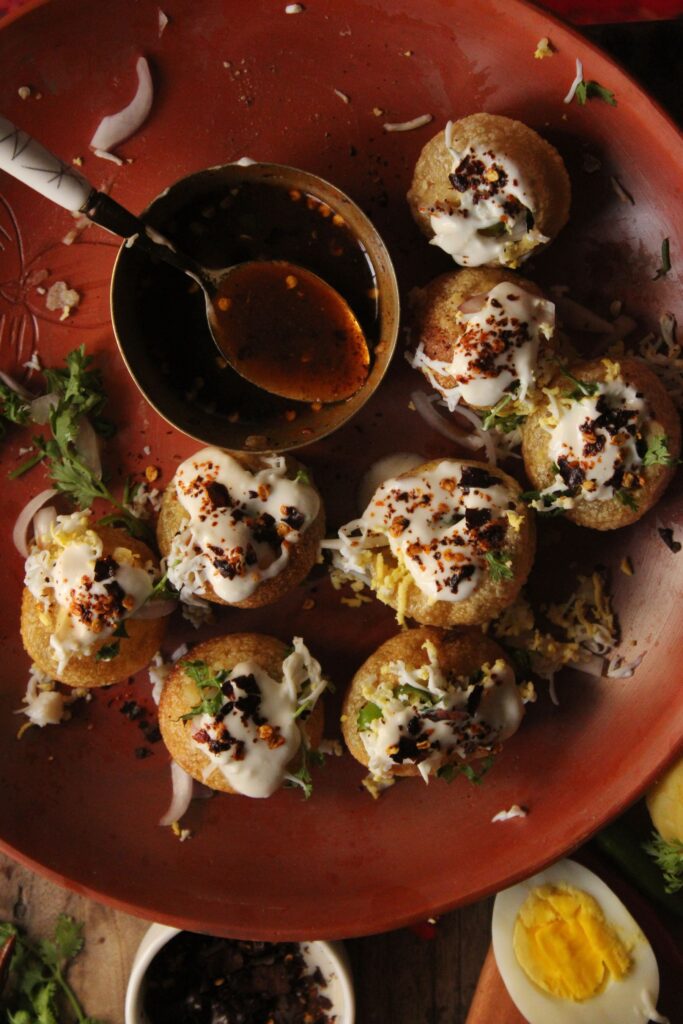
Dahi puri with yoghurt and chutney; this photographed serving includes a side of boiled egg. Illustrative food photograph by Jahra Tasfia Reza, not a dish photographed at Comorin. Photography: Jahra Tasfia Reza. Pexels License. Via Pexels. Original photograph unchanged.
Share this story
More stories like this
Before the Chef Writes Your Wedding Menu, Write This Brief
Your Wedding Tasting Should Rehearse the Dinner You Are Actually Hosting
