Before the Chef Writes Your Wedding Menu, Write This Brief
Family food memories, guest habits and the purpose of each meal tell a chef more than a long list of fashionable cuisines.
A list of favourite cuisines is a promising start to a wedding menu meeting. It leaves a more interesting question unanswered: should dinner feel like an intimate family table, a sequence of discoveries or an evening in which guests keep leaving their seats to greet one another?
Before collecting dish names, describe the kind of hospitality you want to offer. That gives a culinary team something more useful to interpret than a folder of other people’s menus.
Tell the chef what this meal is for
A welcome dinner might introduce two families. Lunch between functions may need to restore some calm. A reception meal has to work around speeches, photographs and people arriving at different times. Assign each meal its own purpose before asking for variety across the weekend.
Masque Lab’s published private-dining description connects an intimate group with the kitchen’s process and menus shaped around the occasion. The useful idea to carry into a wedding brief is that context can lead the food conversation. A larger celebration will need its own culinary team and service design. (Masque — About the Lab)
Bring three food memories with enough detail to use
Choose a small number of dishes that matter to the family. Explain whose version you remember, which occasion it belongs to and what makes it recognisable. Is the pleasure in a particular sourness, a freshly finished bread or the way an accompaniment is served?
If a relative is contributing a recipe or demonstrating it, arrange that exchange deliberately. Confirm who will interpret it for the event and how the family will approve the result. A meaningful dish deserves a clear handover, with enough detail for the chef to understand what the family hopes to recognise.
Leave space for the chef’s response. The most personal menu need not reproduce every family meal literally; it can preserve a flavour or ritual in a form that works for the gathering.
Describe the people, not just the headcount
Explain who prefers a familiar meal, who enjoys experimentation and who will be travelling before dinner. Share children’s requirements and the dietary information already collected, with an agreed process for updates. Have individual allergy requirements discussed directly with the catering team rather than reduced to a general label in the mood board.
Be specific about how guests will eat. A beautifully composed seated course and a plate someone carries through a busy reception require different decisions. Supply the working programme and venue information so the kitchen can identify the constraints it needs to investigate.
Decide where you want the chef’s signature
Give the team a few moments in which to be distinctive: perhaps the opening bite, a regional course or a dessert that gathers people around the table. Identify the dishes the family considers essential and those still open to interpretation.
Finish the meeting with a brief that distinguishes memories, requirements and creative freedom. The tasting comes later. First, give the chef a clear picture of the people they are feeding and the evening those people will share.
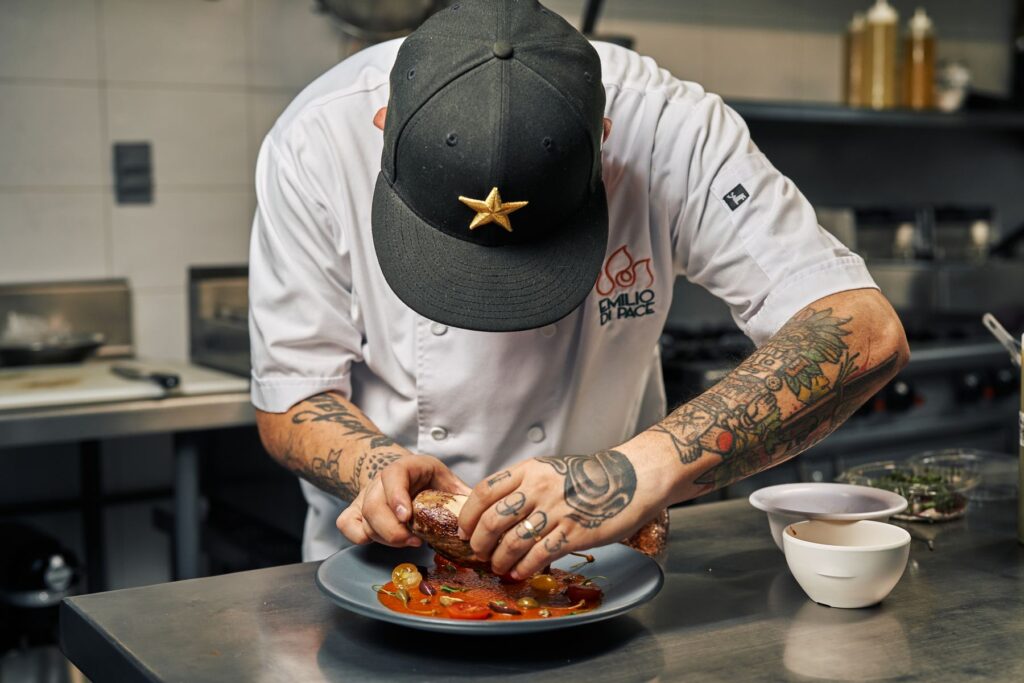
A chef plating food in a professional kitchen. Culinary preparation reference; the pictured kitchen is not identified as Masque. Photography: Willians Huerta. Pexels License. Via Pexels.
Share this story
More stories like this
Your Wedding Tasting Should Rehearse the Dinner You Are Actually Hosting

Ten Menu Mistakes Guests Notice Before the Hosts Do