The Lehenga Looked Perfect. Can You Wear It for Six Hours?
The final fitting should include a chair, a staircase and the evening’s actual movements. Comfort belongs in the couture brief from the beginning.
The mirror gives a bridal lehenga a generous advantage. It asks for a few still minutes, usually on a flat floor, with someone arranging the skirt. A wedding asks for entrances, greetings, photographs, dinner and possibly a staircase. Those are different fittings.
Before committing to another elaborate outfit, map the evening you intend to have. A bride who wants to dance should be able to test that intention while the atelier can still respond.
Begin with movement, not a weight label
Anita Dongre’s published Iara Lehenga-Sage description presents a lightweight lehenga with an accompanying jacket. That gives a bride a real alternative silhouette to investigate. It also leaves the essential question open: how does the complete outfit feel on her? (Anita Dongre — Iara Lehenga-Sage)
A garment described as light may still involve a demanding dupatta, jewellery or fastening arrangement. Bring the whole proposed look into the conversation. Ask the atelier to explain where the skirt is supported, how the waistband should sit and what adjustments are possible within the garment’s construction.
Put a chair in the fitting room
Sit in a chair similar to the one planned for the ceremony or dinner. Remain there long enough to notice whether the waistband presses, the blouse pulls or the skirt needs constant repositioning. Stand again without someone lifting every layer for you.
Then walk, turn and lift your arms. Try the footwear you intend to wear, including its fastening. If the event involves steps or a different ceremony posture, explain that to the atelier and arrange an appropriate trial. The point is to discover the difficulty while there is still a practical decision to make.
Have a companion take a short video from the side and back. A moving image can reveal a hem that catches or a drape that restricts an arm more clearly than a perfect front-facing photograph.
Identify which layer is doing too much
Ask specific questions before requesting a wholesale redesign. Is the problem the skirt, the placement of the drape, the footwear or several accessories competing at the neck? Can an intended detachable element be removed neatly? Would a different way of wearing the dupatta preserve the look you like?
Let the atelier propose changes appropriate to its construction. Record what was agreed and repeat the movement test after alterations. Do not discover that a solution changes the silhouette only when the outfit reaches the hotel.
Give an outfit change a real place in the evening
If the preferred ceremonial look remains substantial, a second outfit can be a considered choice. Decide when the change happens, where the replacement is waiting and who can help with fastenings and jewellery.
Allow for photographs and the journey back to the party. A supposedly quick change should not leave the couple absent through the evening’s most enjoyable stretch. The successful wardrobe lets the bride participate in the celebration she helped imagine.
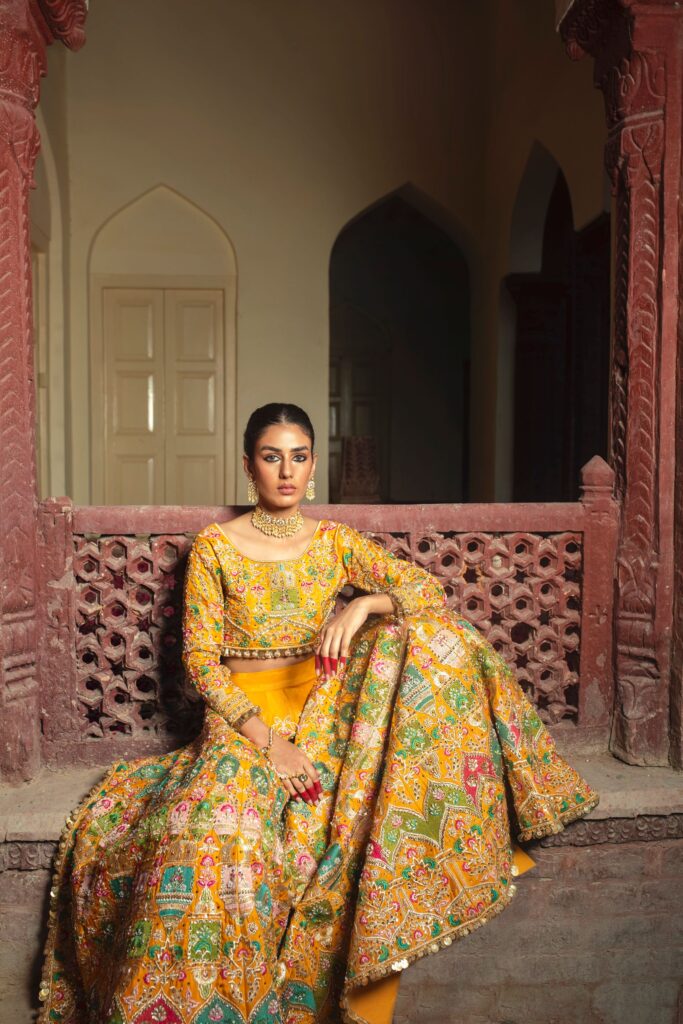
A seated bridal look showing skirt volume, blouse proportion and the way fabric falls around the chair. Outfit designer unidentified. Photography: Abdullah Shahid. Pexels License. Via Pexels.
Share this story
More stories like this
The Heirloom Necklace Comes First. The Wedding Wardrobe Follows.
The Bridal Cape: Drama Without a Second Dupatta?