The Afterparty Starts With a Room, Not a Playlist
Agree the space, sound conditions, service and guest journey before promising a late-night celebration. The atmosphere should be designed around what the venue can actually host.
The afterparty is often the easiest event to imagine and the last one to specify. Someone saves a playlist, somebody suggests a DJ and the family assumes the hotel will have a suitable room when dinner is over.
Treat it as a separate piece of hospitality. Its success depends on a space that can support the intended evening, with an agreed handover from the wedding programme.
Name the room before you name the mood
W Goa’s official descriptions give WOOBAR and the cliffside ROCKPOOL different settings and different rhythms. WOOBAR is presented as a day-to-night cocktail space with DJ music; ROCKPOOL centres on sea views and sunset atmosphere. That distinction is useful even when the wedding is elsewhere: a property can contain several kinds of nightlife without offering the same experience in each. (W Goa — Official Dining and Bar Descriptions)
Ask which particular space is proposed for your private function. Establish whether it will be exclusive, shared with other guests or subject to another event’s schedule. A bar’s regular opening hours do not by themselves describe the arrangements for a wedding booking.
Request the conditions that shape the music
Have the property explain the permitted event window, sound conditions and requirements for bringing in performers or production equipment. Ask who coordinates with the venue’s own technical team and how any changes will be agreed.
Let those answers guide the format. A compact indoor dance floor, a lounge with a DJ and a gathering built around conversation need different sound and lighting decisions. Give your music team the actual room information before they propose equipment or a performance plan.
Where an outdoor gathering must move elsewhere, request a specific handover rather than assuming the party can continue in whichever space is empty.
Make it easy to join and easy to leave
Decide how guests will hear about the afterparty, how they will find it and what time it genuinely begins. Keep the route clear after dinner, including any transport the family has agreed to provide.
Consider the guests who are finished for the evening. They should be able to reach their rooms without crossing the dance floor or waiting for the same transfer as people continuing the party. Let hospitality communicate the options discreetly.
Ask how water, refreshments, seating and the final guest departures will be managed. A late-night gathering still needs hosts, even when it is designed to feel spontaneous.
Give the room one convincing change of energy
Choose a deliberate opening: the lighting settles, the first track starts and guests understand that the formal programme has ended. Save the evening from another round of extended announcements.
The strongest afterparty may need fewer visual additions than the reception. Let the chosen room, the music and the people supply its identity. When the venue arrangements are understood, the family can enjoy a party that feels relaxed because its practical questions were answered earlier.
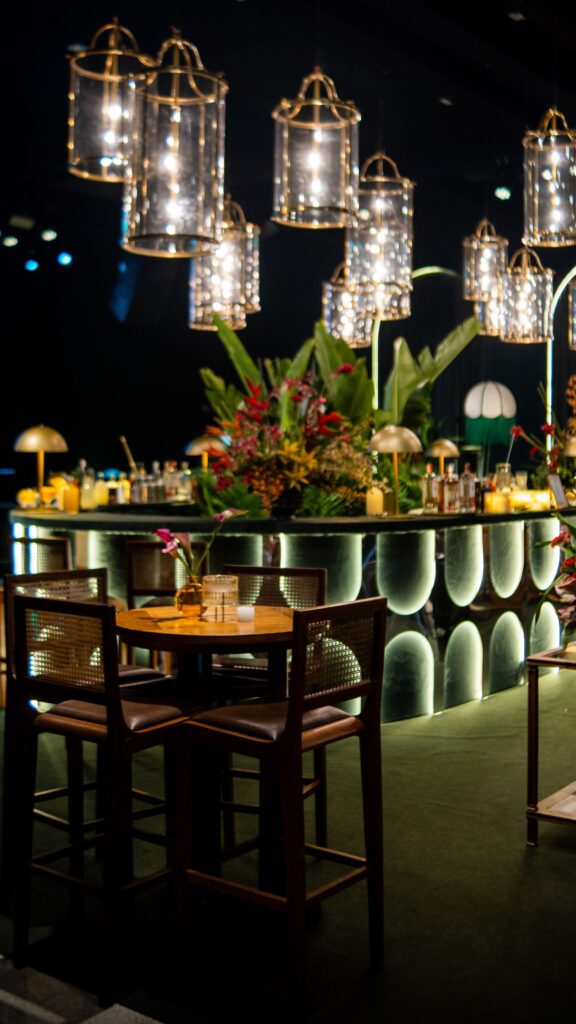
An evening bar setting with illuminated pendants and intimate seating. Venue-design reference; the location is not identified as W Goa. Photography: Flávio Nascimento. Pexels License. Via Pexels.