The Sangeet Needs an Arc. Another Medley Will Not Supply It.
When every performance has the same tempo and the same ending, the evening loses contrast. Build the running order around shifts in mood and participation.
A sangeet can have excellent dancers, elaborate costumes and a room full of people who love the couple, yet still feel strangely uniform. The issue may be the sequence: another medley, another similar entrance, another pause while the next group is found.
An engaging evening needs changes in scale and mood. The running order should help guests feel those changes without watching the family solve them on stage.
Put the performances on one page
Before choosing an order, list each confirmed act with its approximate duration, number of performers, mood and setup requirements. Mark costume changes and anyone appearing in more than one group.
Play the music extracts consecutively. Listen for repeated openings, similar choruses and several acts building towards almost identical finales. The repetition can be much easier to hear in a short review than to spot across separate rehearsal videos.
Decide where contrast would help. An intimate duet, an affectionate spoken introduction and a large family number can occupy different emotional spaces even when the evening remains firmly celebratory.
Give each act a purpose
Choose an opener that suits the room as guests are settling. Place a quieter or more personal moment where people can listen to it. Let a larger ensemble feel like an arrival rather than one more version of what has just happened.
SHIAMAK’s official entertainment-design service includes choreography and bespoke celebrations. It demonstrates that staging and sequence can be commissioned alongside the dance itself. (SHIAMAK — Entertainment Design, India)
Ask your choreographer to review the complete sequence, including acts they are not teaching. Someone needs to see the show as a whole.
Rehearse the space between numbers
The transition begins before applause ends. Who clears the stage? Where does the next group wait? Does a prop have to leave by the same route through which performers enter?
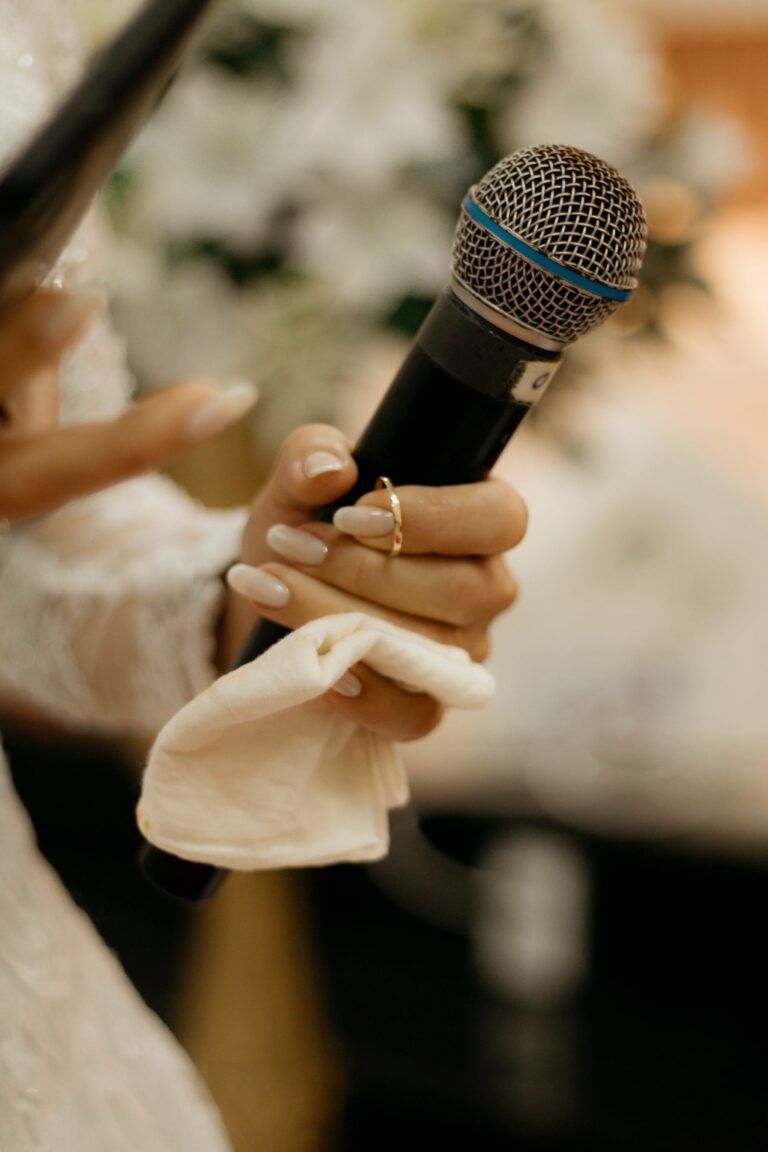
Give the emcee a short, approved introduction for each act. Have one version of every audio file, with names that match the cue sheet. A designated show caller should coordinate playback, lighting and entrances with the production team.
Review the order from the performers’ perspective too. Grandparents should not spend an unnecessary stretch waiting in the wings. Children need a clear handover to an adult. Relatives appearing twice need time to change and return.
Plan how the audience becomes the party
After the final performance, decide what invites people onto the floor. Agree the handover to the DJ or musicians, including the moment house lights and stage lighting change.
Keep a shorter running order ready in case the programme starts late. Identify which introductions or optional segments can be reduced with the family’s agreement, rather than rushing the most meaningful performance.
The objective is an evening whose energy has somewhere to go: anticipation, affection, spectacle and then the pleasure of everybody joining in.
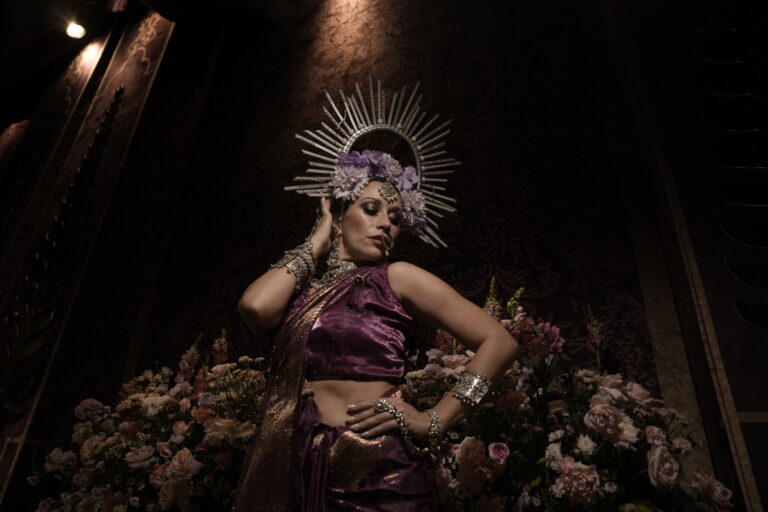
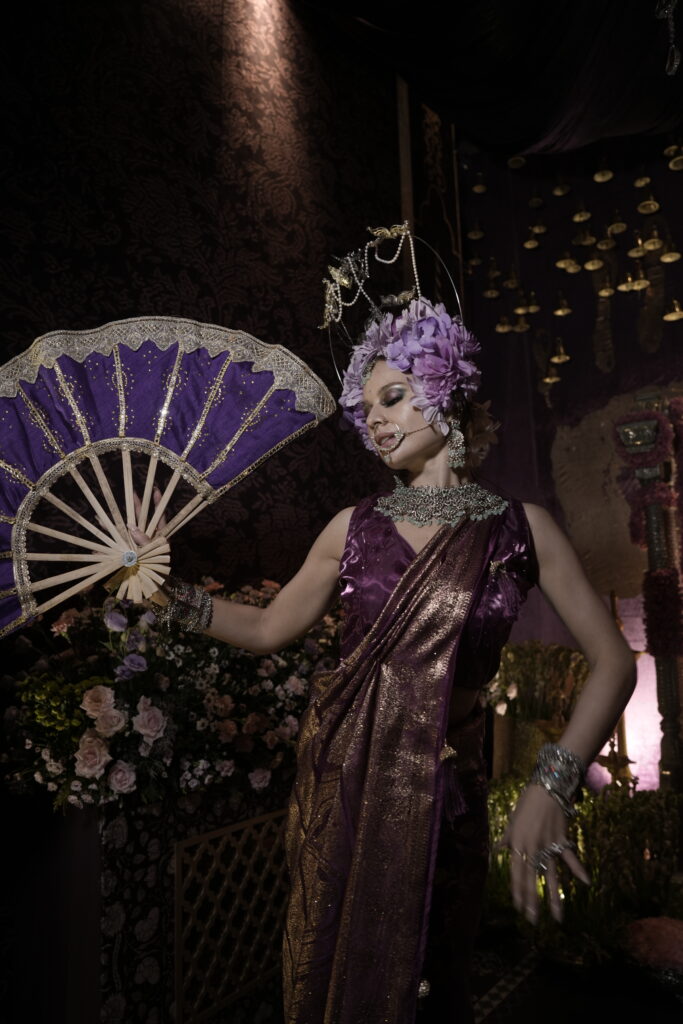
A theatrical performance portrait from Starplug Entertainment’s Noor-e-Shab collection. Image courtesy of: Starplug Entertainment.