The Guests Cannot Hear the Speeches: Solving the Quietest Production Failure
Make speech clarity a separate item in the production brief, with a rehearsal, a room-wide listening check and a named person managing the handovers.
Make speech clarity a separate item in the production brief, with a rehearsal, a room-wide listening check and a named person managing the handovers.
The first line of a wedding speech should not be a request to turn the microphone up. When a parent or friend stands to speak, the audience needs to hear ordinary words clearly, including from the seats farthest from the stage. Put that requirement in the production brief before the loudspeakers and stage positions are finalised.
Audio manufacturer Shure explains that a microphone cannot repair the acoustics of the room around it. Its guidance on microphone placement describes how reflected sound can compromise speech intelligibility. That makes the room, the speaker’s position and the audience layout part of the same conversation.
Rehearse the handover, not just the sound check
Ask the sound engineer to select and demonstrate a suitable microphone for each speech position. Let each available speaker practise with the actual device: how to hold or approach it, where to stand and how to turn towards the audience without moving away from it.
Assign someone to manage the running order and hand over the microphone. A short introduction, a clear speaking position and a practised exchange help prevent several people speaking at once or an unplanned speech beginning from an uncovered corner of the room.
Listen from the seats that matter
During rehearsal, send a listener to the rear tables, side seating and any separate guest areas. Ask whether sentences are understandable at a comfortable level. Do not sign off the entire room from the sound desk or the front row alone.
Give the engineer the final audience layout and the expected speaking positions. A change in stage orientation or a newly added seating area should trigger another coverage check. Outdoor locations also need a plan for the conditions expected at speech time.
Protect the moment in the schedule
Coordinate with the caterer, bar and show caller so avoidable background activity can pause during the speeches. Agree how music will fade and return. Tell the photographer and film team when speeches begin and let the audio and film teams agree their recording arrangements in advance.
Have the engineer prepare the appropriate backup and make its location clear to the person managing the stage. A spare microphone is useful only when somebody knows how it will enter the programme.
End the production meeting with a simple rehearsal brief: who is speaking, from where, using which microphone, who hands it over and who is listening at the back. Those decisions give a personal speech the attention it deserves.
References: Shure — Critical distance and microphone placement; Shure — SM58 User Guide.
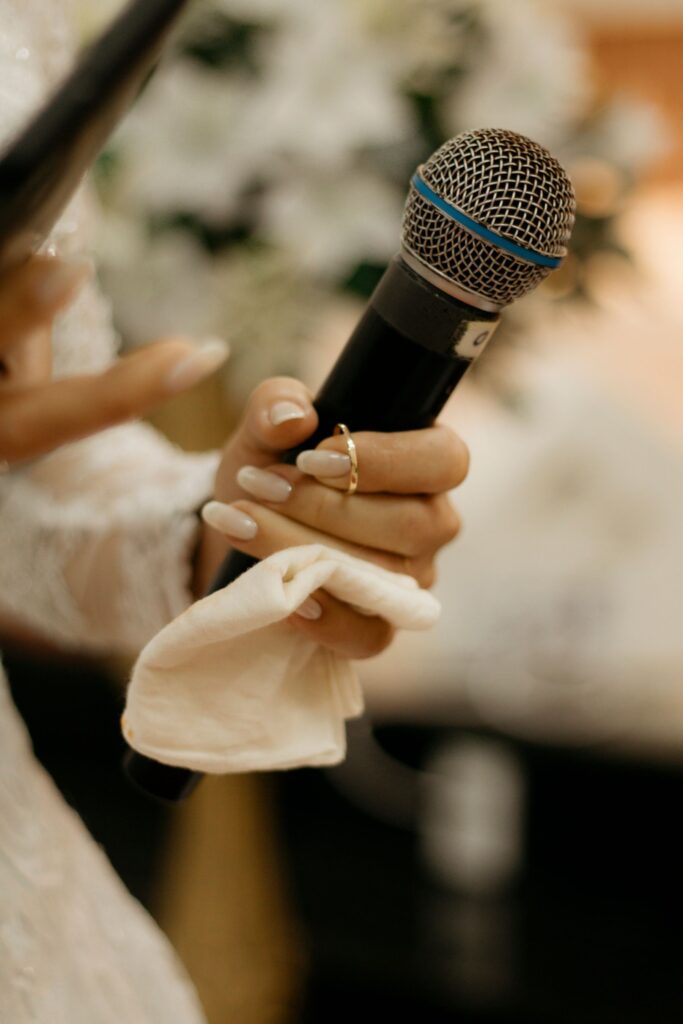
A microphone in use during a wedding speech. Photograph: Leticia Curvelo / Pexels. Pexels License.