
What The Wedding Story Finds in a Couple’s Smallest Gestures
A shared laugh, a shared procession and a portrait on a grand staircase offer different views of a wedding. The relationship between the people gives those images their connecting thread.
5 minute read
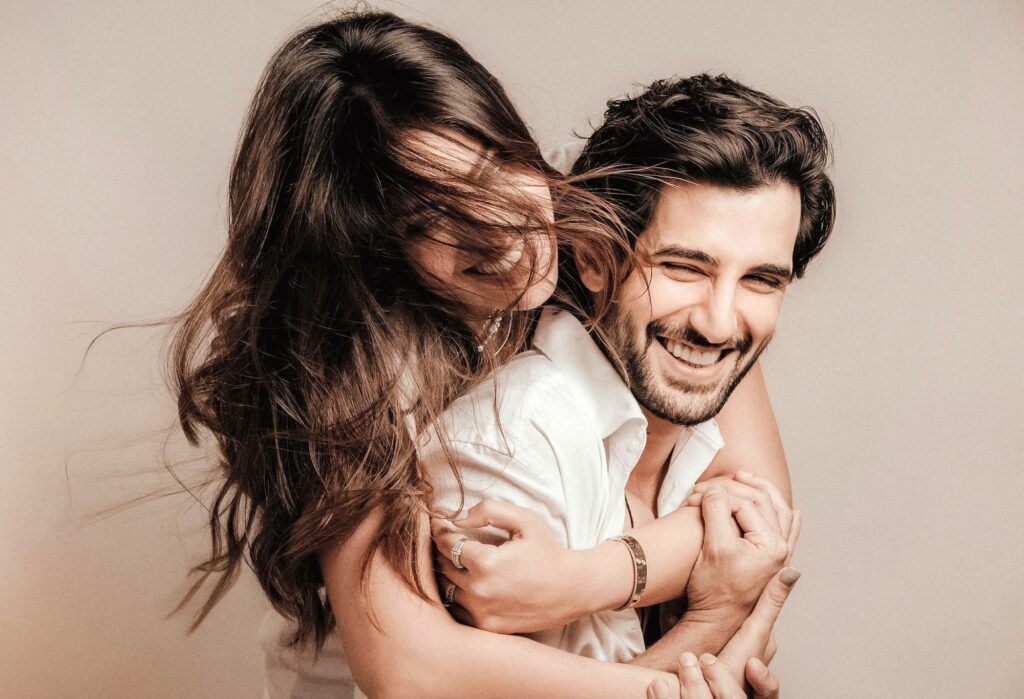
An embrace and a broad smile give a close couple portrait its energy.
The Expression Changes the Portrait
A woman has her arms around a man, her hair crossing part of her face. He is smiling broadly. In this photograph by The Wedding Story, the embrace supplies the composition and the expression supplies its energy. There is very little in the frame that needs explaining. The interest begins with the way the two people appear together.
That economy is revealing in a wedding photograph. A celebration can offer an extraordinary amount of visual material, from clothes and jewellery to elaborate surroundings. A close portrait makes a selection from that abundance. It asks the viewer to spend time with a relationship, using the position of an arm or the direction of a face to make the connection visible.
The Wedding Story, founded by Harpreet Bachher and creatively led by Harjot K Dhillon, describes a wedding as a story shaped before the event itself. That idea gives the small gesture a larger significance. The people in a photograph arrive with a history that the camera cannot fully describe. Their ease, proximity and attention can offer glimpses of it.
A wedding album becomes more personal when it allows those glimpses to remain specific. A smile does not need to be enlarged into a claim about an entire relationship. It can be appreciated for what it gives this frame: an expression, an embrace and a sense of two people sharing the moment. The photograph leaves room for their own knowledge of what it means.
Let the Other People Into the Story

A photograph from a ceremony widens the circle. A couple appears beneath a floral structure, surrounded by people whose raised hands, faces and clothes bring movement into the image. Their passage through the gathering remains clear, while the people around them are doing more than filling space. They make the couple’s progress part of a shared experience.
The photograph has a different kind of intimacy from the close embrace. Its feeling comes through participation. The viewer can move between the bride and the people around her, finding more than one point of interest. The setting establishes the occasion’s scale, while the faces and gestures explain why that scale has a human purpose.
This is where wedding storytelling can extend beyond a sequence of principal events. A procession is one part of the programme. The way it is received gives it another layer. A photographer’s selection of surrounding expressions can bring that layer into the album, preserving something the couple may have had little opportunity to notice while moving through the gathering.
The studio places the couple’s feelings and family relationships at the centre of its stated approach. Read through that lens, a procession photograph needs enough context to retain the gathering around it. The flowers and the procession belong in the image because they help describe a shared occasion. Their relationship with the people is what keeps the frame from becoming only a record of decoration.
For a luxury wedding, such photographs can also change the balance of the final edit. Wide views establish the ambition of the celebration. Closer views of participation give that ambition a social life. An album can move between the two, allowing the reader to understand both the setting that was created and the people who made use of it.
A Composed Portrait Can Still Have a Story

A photograph on a curved green staircase makes a very different proposition. Seen from above, a figure in a red gown becomes a strong shape within the surrounding architecture. The staircase leads the eye through the frame, while the fabric introduces a concentrated area of colour. The composition is deliberate and immediately legible.
There is a place for that formal clarity alongside the more animated images. Getting dressed for a wedding can carry considerable thought and personal significance. A portrait gives the clothes, the figure and the setting enough space to be understood together. The photograph can record a chosen presentation of the self as part of the wider account of the celebration.
Its role in the album is different from that of the embrace or the entrance. It offers a pause around one person and a particular visual arrangement. The contrast becomes useful when those photographs are edited together. A composed image can make the livelier frames feel more immediate, while those livelier frames return the portrait to the human occasion around it.
The connection across these images is a way of looking: attention to the small relationship within the frame, whether that relationship is between two people, a person and a gathering, or a figure and the architecture around them. The point of attention changes, giving the album several ways to describe the people who inhabit its pages.
The most compelling wedding edit has room for all three. It can appreciate the beauty of a carefully arranged portrait while remaining alert to the smile or gesture that changes a photograph’s meaning. In The Wedding Story’s selection, those small details give the grander views somewhere personal to return to, keeping the relationship within reach of the spectacle.
Photography supplied by The Wedding Story.


