What Good Light Does for a Wedding Photograph With Nitin Arora
Window light, a silhouetted pavilion and a lively outdoor gathering offer three ways to look at a wedding. In Nitin Arora’s photographs, light helps determine what the viewer notices first.
4 minute read
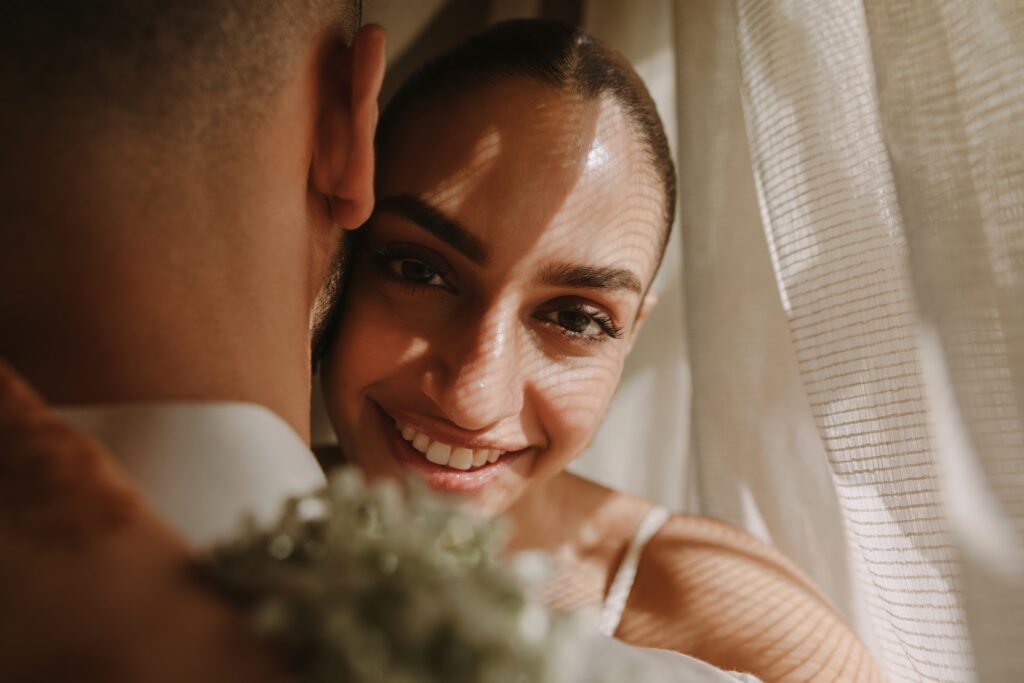
A close portrait beside a pale curtain draws attention to a smiling face.
Find the Face Within the Light
A smiling face appears beside a pale curtain, with another figure close to the camera. The foreground is soft, while the expression beyond it remains clear. In this Nitin Arora photograph, light and proximity work together. The viewer is directed towards the face without losing the sense of another person occupying the space immediately beside it.
The curtain gives the image a pale edge. Skin, jewellery and fabric retain enough definition to be appreciated, but none of those details needs to compete with the expression. The light helps the face become the centre of the photograph, allowing a close view to communicate more than a record of the completed bridal look.
A luxury wedding creates many reasons to photograph detail. Yet the most revealing detail may be an expression within the clothes, rather than an object separated from the person wearing it. The close portrait can bring those elements together. Jewellery and fabric remain part of the occasion, while the face gives the frame a particular human interest.
Nitin Arora describes a practice rooted in observation, combining documentary attention with an editorial eye. In this image, that balance can be understood through what the light makes visible. The composition has clarity, while the relationship between the nearby figures supplies its intimacy. The photograph’s elegance comes through the care given to both.
Allow the Silhouette to Do Less
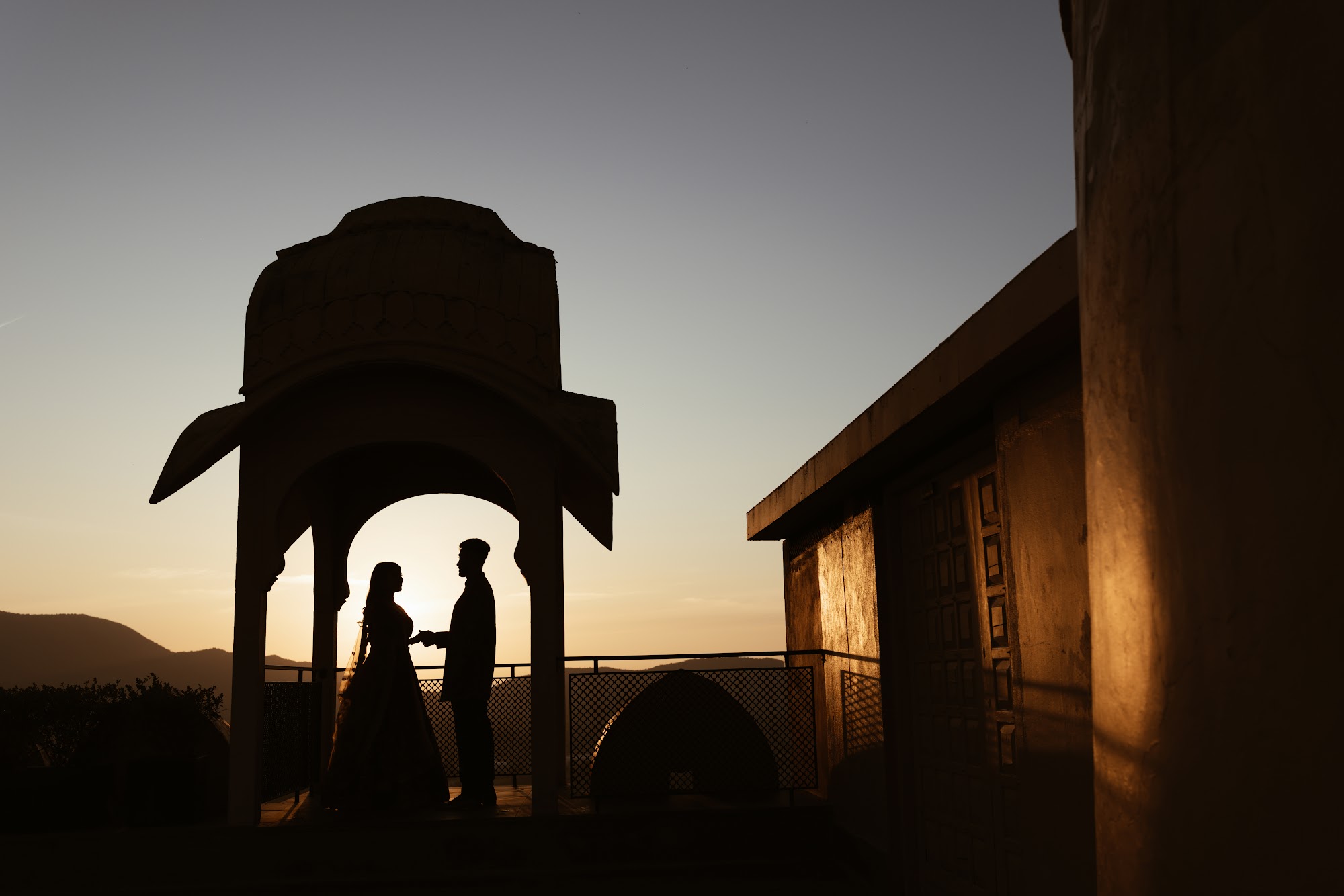
Another photograph takes detail away. Two figures stand within a pavilion, their outlines dark against the brighter sky. The surrounding structure frames them, while the interior remains largely in shadow. The photograph offers very little information about fabric or facial expression. Instead, it asks the viewer to read the position of the figures and the space between them.
That reduction has a useful place in the wedding album. A silhouette can establish posture and proximity with unusual economy. The eye follows the outline of a head, a shoulder or an arm, then returns to the architecture that holds the pair. The portrait acquires its character through the relationship between those larger shapes.
The setting remains important, though it is being described differently from a brightly lit architectural view. The pavilion has a clear outline, and the areas of shadow allow the sky to become more prominent. The scene is organised around a contrast in light. The people appear within that contrast, giving the structure a personal point of focus.
A silhouette would be a limited way to record an entire wedding wardrobe or every person in a family. Its value in a varied edit is precisely that it does another job. It can sit beside a closer, more detailed portrait and introduce a quieter visual register, letting the album change pace without changing its interest in the couple.
For a destination celebration, the image also suggests a considered way to include the setting. The place enters through a specific view and a particular relationship with light. Its identity need not be announced for the composition to work. The photograph gives the viewer a sense of the space around the people, while leaving the couple at its centre.
Keep the Colour and the Gathering Together
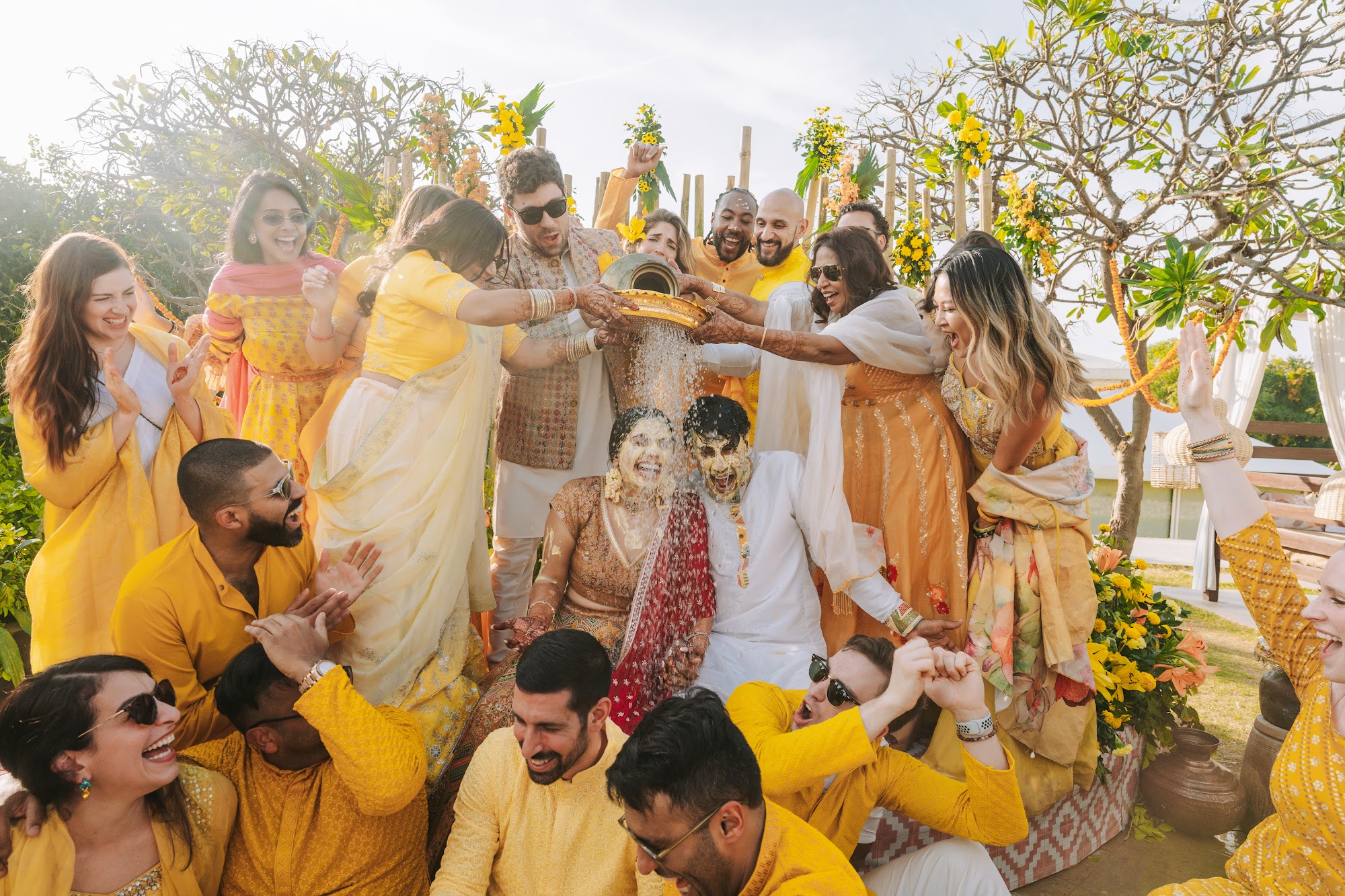
An outdoor celebration brings the light back across a much wider group. Yellow clothes, raised hands and animated faces fill the frame, with greenery visible behind them. The photograph has none of the silhouette’s reduction. Its information is abundant, and the viewer can travel between several people within the same busy scene.
The brightness makes the colour an important organising element. Yellow links different parts of the gathering, while the faces and gestures keep the image varied. The celebration is understood through that combination. The clothes establish a shared visual character, but the people remain individually interesting within it, each occupying a different part of the activity.
This is another reason to consider light as part of the story rather than only a technical concern. It affects how much of a gathering can be read at once, how surfaces appear and which expressions become prominent. A clear outdoor view can preserve several exchanges within one photograph, giving the couple more to discover when they return to the album.
Across these examples, light produces three different kinds of attention. The curtain portrait brings the eye towards a face. The pavilion image makes outlines and proximity carry the meaning. The outdoor gathering gives colour and participation a larger field. The photographs describe different aspects of a wedding through the way their subjects become visible.
Nitin Arora’s selection is most persuasive when that visibility remains connected to people. The light has a role because it helps the viewer notice an expression, understand a pair of figures or look around a lively group. The result is an album that can hold both the carefully seen detail and the larger social life of the celebration.
Photography supplied by Nitin Arora Photography.