
The Case for a Little Blur in Shutterdown’s Wedding Album
A moving dance floor and a close embrace can carry a different kind of information from a polished portrait. Shutterdown’s photographs show why a wedding album benefits from changes of pace.
4 minute read
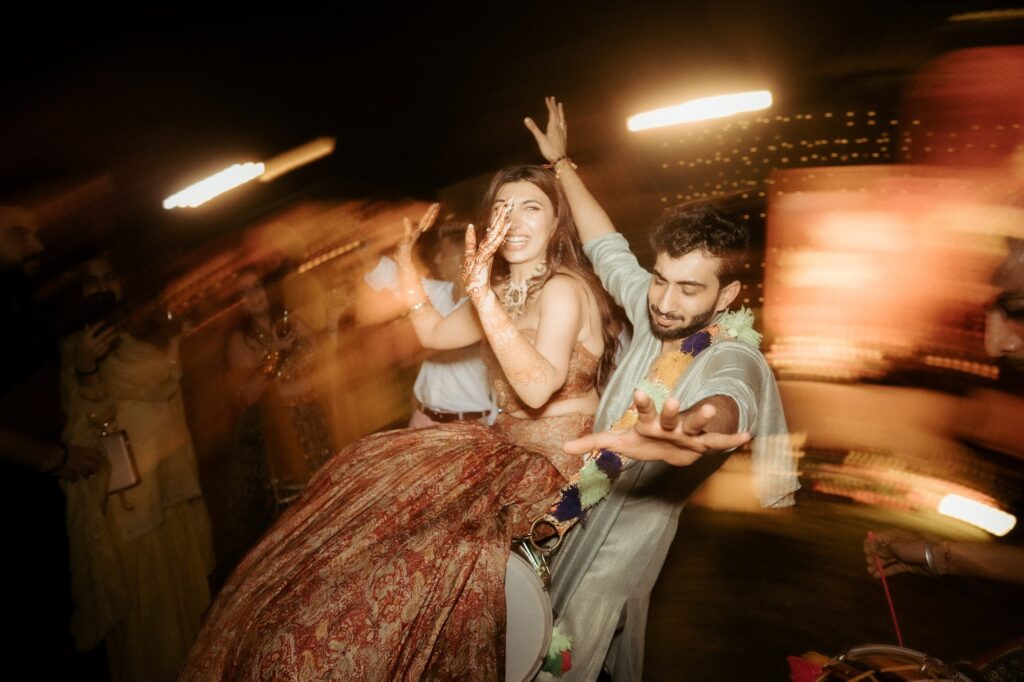
Movement and streaks of light give a dancing pair a lively place within the frame.
Let the Dance Keep Moving
The lights become streaks around a dancing pair. Fabric moves out from the figures, and parts of the surrounding scene lose their hard edges. In this Shutterdown photograph, the wedding is pictured in motion. The image feels busy because the movement remains visible within it, giving the viewer more than a neat record of where everyone stood.
Blur can change what a photograph asks us to notice. A sharply resolved detail invites inspection of a face, a jewel or a piece of embroidery. Movement directs attention towards action and the relationship between people. In this frame, the figures remain readable while the areas around them communicate the animation of the scene.
The effect is particularly useful in a wedding album that might otherwise become a succession of completed looks. The couple’s clothes matter, but so does what happened in them. A dance photograph can return fabric to motion and place an outfit within the physical life of the celebration, rather than leaving it suspended in a perfectly still presentation.
Shutterdown, founded by Lakshya Chawla, works across editorial photography, documentary images, portraiture and filmmaking. Its stated approach adapts to the couple and their families. The moving image belongs within that range. It can describe one part of the occasion without requiring the entire album to adopt the same visual treatment or the same degree of sharpness.
An Embrace Does Not Need to Be Perfectly Still
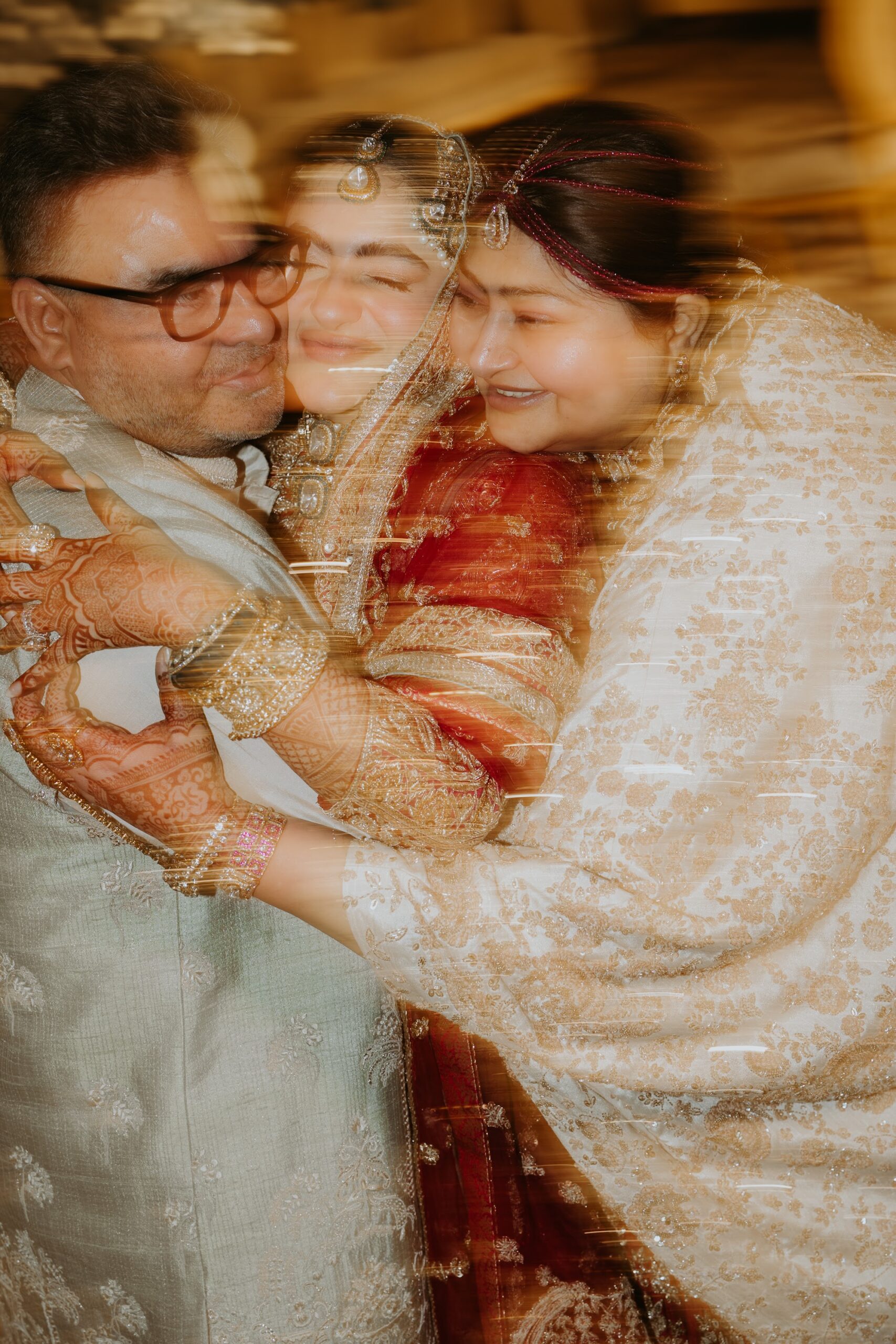
A close embrace in another photograph makes the movement more intimate. Faces, arms and pale fabric fill the frame, with parts of the image softened as they overlap. The eye searches for the people within that activity. There is enough information to understand their proximity, while the less resolved areas keep a sense of something taking place.
The interest is different from the dance photograph. There, movement describes the larger action. Here, it concentrates attention on contact. The frame is occupied by the people and the clothes between them, bringing the viewer much closer to the exchange. The surrounding wedding has little need to announce itself through another visible backdrop.
For a couple looking through the album later, a photograph like this can sit beside the more formal record of the occasion. It offers another way to encounter the same wedding wardrobe and the people around it. The fabric is being worn, the figures are moving and the frame carries the untidiness that can accompany a close gathering.
That does not make blur a requirement for an expressive photograph. Its value depends on what remains understandable. If the people or the action lose all definition, the image has a different problem. The persuasive frames in this selection retain a centre of interest, allowing the movement to contribute to the picture rather than overwhelm it.
Shutterdown’s emphasis on photographs that speak to different generations gives the edit another consideration. A lively frame and a clear portrait can preserve different aspects of the celebration for the same family. The album becomes richer when neither is asked to stand in for every other kind of picture the wedding deserves.
Give the Still Portrait Its Own Place
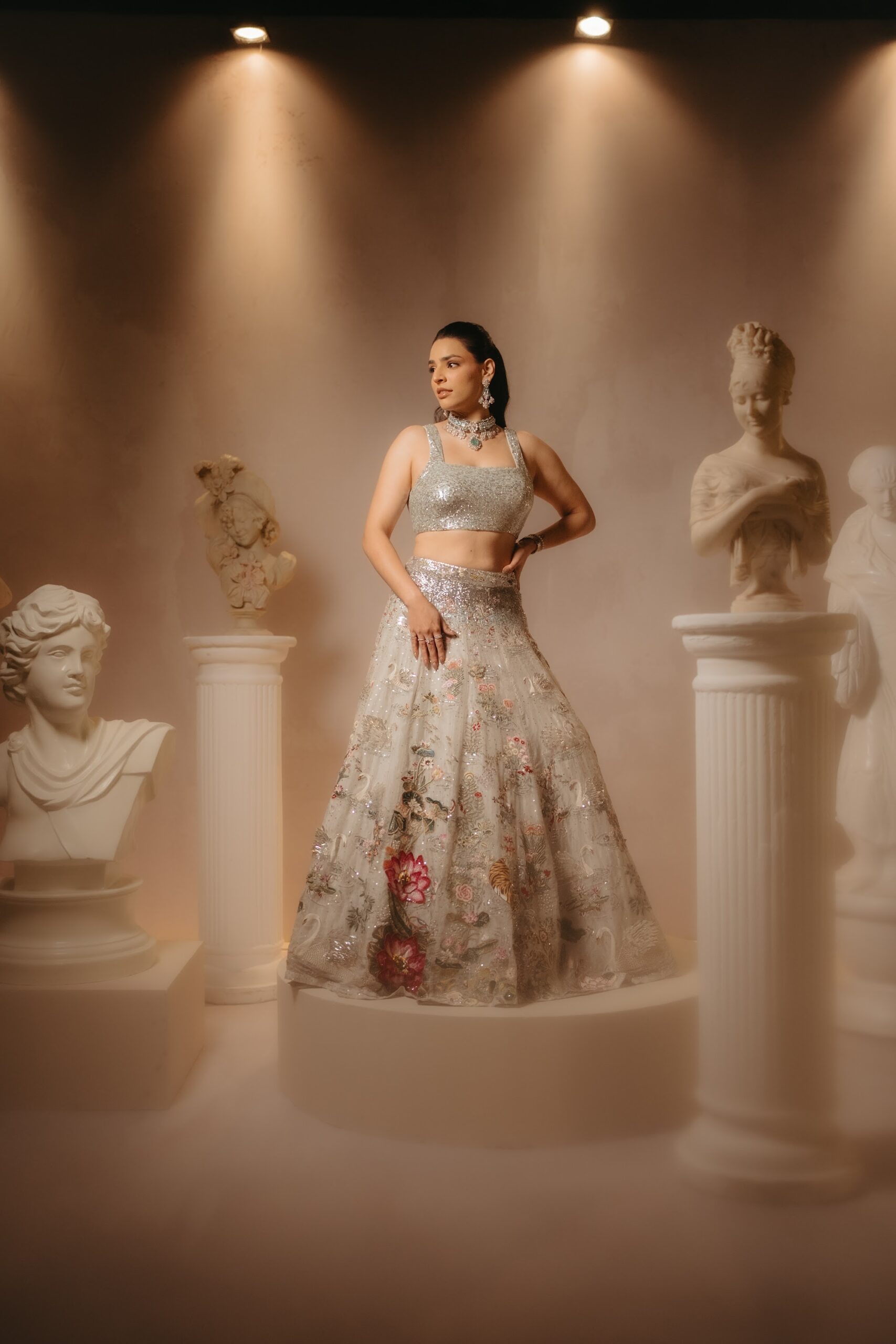
A composed portrait changes the pace again. The figure stands within a restrained interior, with sculptural objects nearby and a softly defined foreground. The clothes and the person are clearly placed within the setting. After the movement in the other images, the arrangement invites a more sustained look at line, posture and the details of the outfit.
The stillness has a purpose. It gives the viewer time to understand the choices that might pass quickly during a moving celebration. A silhouette, a piece of jewellery or the position of a hand can become more apparent. The surrounding space helps hold the attention, leaving the portrait with a clear visual structure of its own.
Placed beside a moving photograph, this image does not need to compete on the same terms. One preserves animation; the other offers a resolved view. Their differences can make the album easier to read, with a changing rhythm that resembles the experience of an occasion moving between preparation, portrait time, ceremony and celebration.
The camera can respond to a dancing pair, an embrace or a composed portrait with a different kind of attention in each case. That variety gives the viewer several ways into the occasion. A single polished image may introduce the bridal look, while a photograph carrying visible movement can show how the clothes became part of a celebration.
A luxury wedding album has room for that range. Its most interesting pages may include a photograph that is difficult to reduce to a perfectly still detail, followed by one that allows every line to settle. Shutterdown’s moving frames make the case for keeping the action in the edit, alongside the portraits that give the eye a place to pause.
Photography supplied by Shutterdown Photography & Films.


