
The Many Moods of a Reels and Frames Wedding Album
A haldi close up, a carefully lit portrait and laughter among friends need different kinds of photographs. Reels and Frames’ work makes room for that changing rhythm within the luxury wedding album.

4 minute read
Hands reach into a close view of a haldi celebration, with a smiling face at its centre.
Let the Celebration Change the Picture
Hands enter from almost every direction. In a Reels and Frames haldi photograph, a smiling woman looks upwards while the people around her reach towards her face. Yellow fills much of the image. The frame is close, busy and full of overlapping gestures. Its pleasure lies in how much seems to be happening at the same time.
A perfectly orderly composition would offer a different account of this occasion. Here, the hands explain the participation. They keep the people outside the frame present within it, while the expression at the centre gives the activity a human focus. The photograph makes sense because the subject and the surrounding celebration are allowed to remain closely connected.
That connection is an important part of a wedding album’s range. An outfit portrait can show the decisions that went into a look. An image of a lively ritual records what happened once the people wearing those clothes became involved with everyone else. The two photographs carry different information, and the finished selection benefits from allowing each its own character.
Reels and Frames describes a practice that begins by understanding the client’s world, rather than applying one fixed house style. In this selection, that approach becomes visible through changes in distance, colour and emphasis. The image can respond to the occasion, giving a crowded haldi the energy it needs without making that energy the rule for every other moment.
Give the Portrait a Different Register
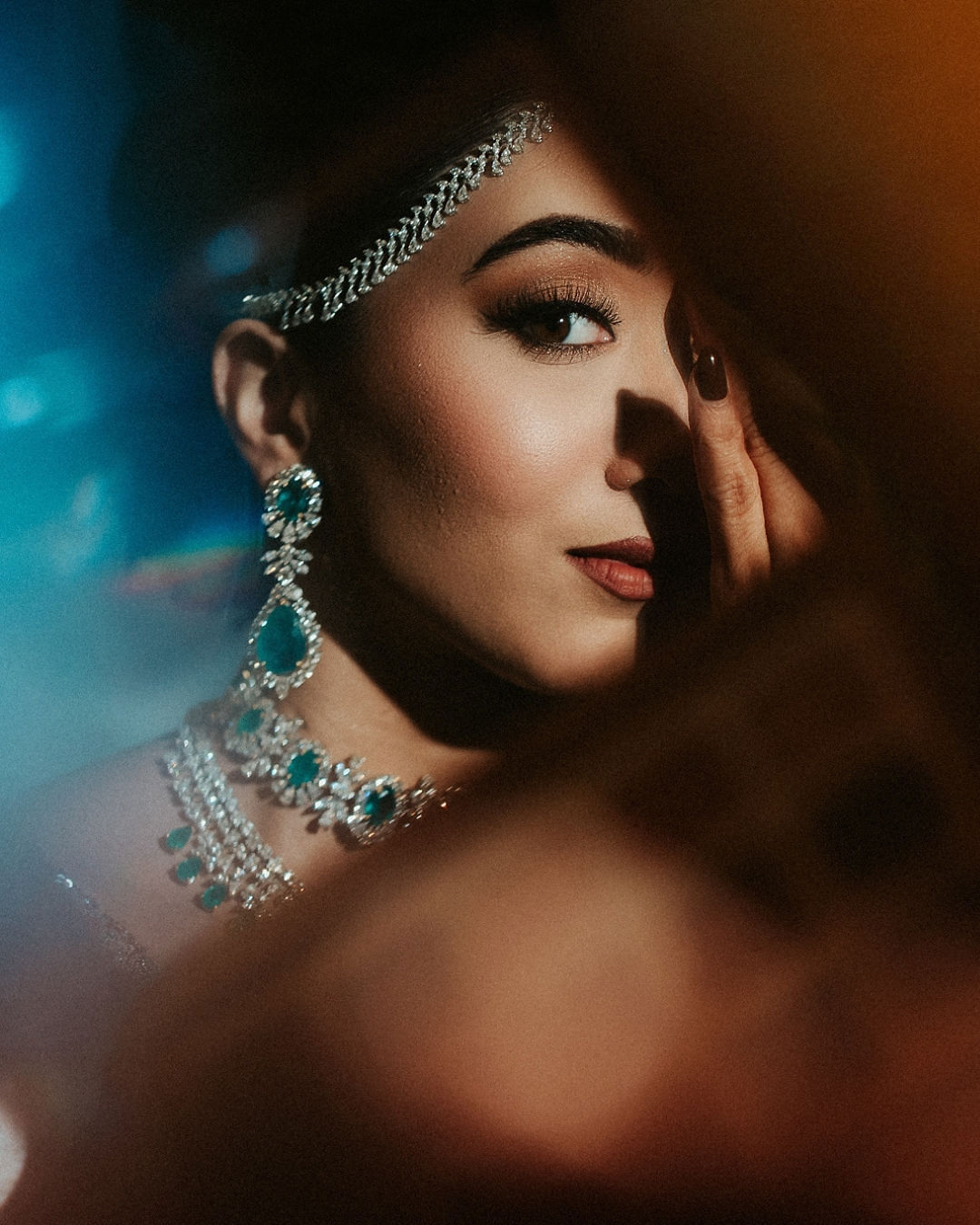
A close portrait elsewhere in the selection exchanges that bustle for selective light. The face is clearly defined, while the areas around it dissolve into softer colour and shadow. The photograph asks for a slower kind of attention. The eye has somewhere particular to settle, with the surrounding softness helping to concentrate the view.
There is room for this degree of visual control in a wedding story. The couple has made choices about jewellery, clothes and how they wish to appear. A portrait can give those choices time to register. Its relationship with the celebration comes through the person within the frame, even when the surrounding event has been largely left outside it.
The change of register also helps an album avoid a familiar problem: photographs that compete for attention in exactly the same way. If every image is equally crowded or equally polished, the viewer has little sense of the occasion’s changing pace. Different visual treatments can preserve the distinction between an intimate portrait and a gathering in full motion.
The studio works across photography and filmmaking, with a creative process organised around the people it documents. The useful implication for the wedding edit is continuity without uniformity. A consistent interest in a couple can connect photographs that look quite different. Colour, light and composition can change while the subjects remain recognisably themselves.
For a luxury wedding spread across several occasions, that flexibility gives each part of the programme room to breathe. A formal evening, a daytime ritual and a quieter interval need not be translated into one identical visual mood. Their differences are part of what the couple will want to remember when the whole celebration is brought together.
Keep the Laughter in the Edit
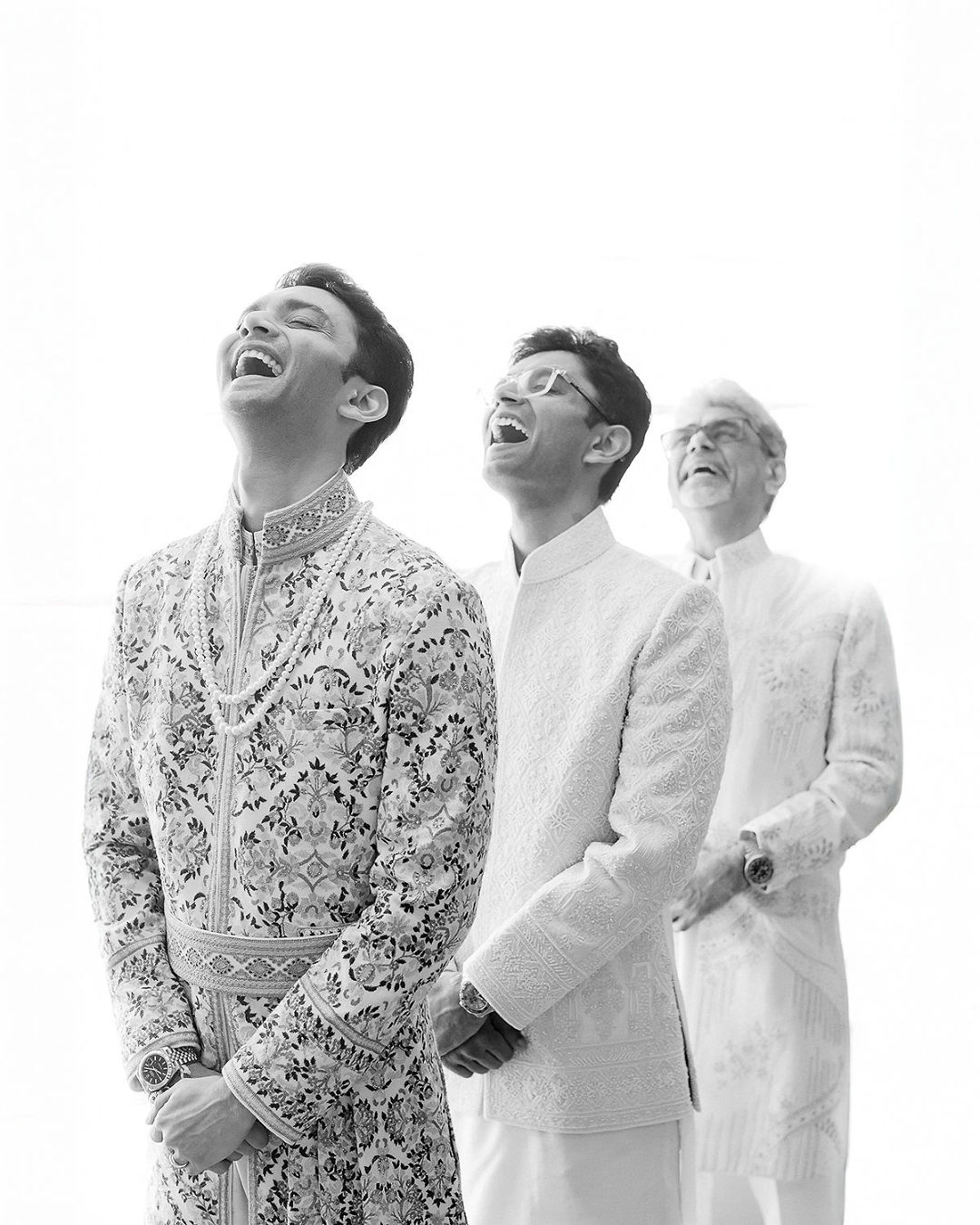
A monochrome photograph of three laughing figures makes another change of pace. Their faces turn upwards and their expressions carry the image. The setting offers little competition. The photograph is immediately readable because the relationship between the people is more interesting than any single decorative element that might have been included around them.
Laughter has a particular place in the wedding album. It can return the viewer to the social life of the occasion, beyond the parts organised around the ceremony or the couple’s entrance. The photograph need not explain the joke. A shared expression supplies enough information to suggest the ease and animation within the group.
The absence of colour gives this image a different texture from the yellow haldi frame. That difference can be useful in an edit. A viewer moving through the album encounters another pace and another way of looking. The photograph becomes a pause around the people, rather than one more variation on the same visual treatment.
The range suggests what a varied wedding story can contain. There is room for participation, a deliberate portrait and the expressions that emerge when people become absorbed in one another. Each deserves a form suited to its subject. The person laughing with friends can be as important to the finished album as the figure in a carefully lit portrait.
The appeal of the Reels and Frames selection lies in that permission to change. A wedding can be exuberant, composed and funny within the same day. Its photographs can carry those differences into the album. The resulting story feels fuller when the edit allows the occasion to have more than one mood, and the people within it more than one way to be seen.
Photography supplied by Reels and Frames.


