
Ram Bherwani Gives the Wedding Portrait Its Fashion Moment
A close view of bridal jewellery, a gown framed by architecture and a portrait among leaves. Ram Bherwani’s photographs bring a fashion vocabulary into the wedding album while keeping the person wearing the clothes in view.
5 minute read
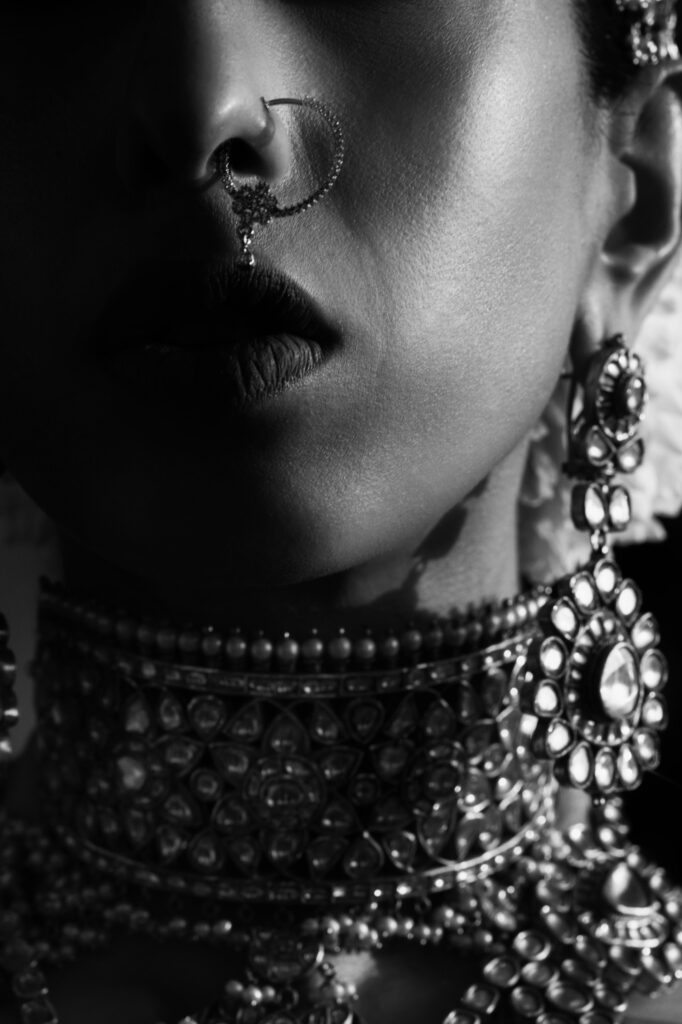
A monochrome close view brings the bride’s face and jewellery into the same composition.
The Close Up Has a Point of View
The first thing to notice is how little of the bridal outfit needs to be visible. In a monochrome photograph by Ram Bherwani Weddings, part of a face, the curve of a nose ring and a necklace occupy a closely edited frame. The image withholds the complete look. That decision gives the details it includes a much stronger presence.
A wedding wardrobe is usually introduced through a full length photograph. It is a useful record of silhouette, embroidery and proportion. A close view asks a different question: what happens when a piece of jewellery is seen against skin, beside an expression and within a particular patch of light? The clothes become part of a portrait rather than its entire subject.
Monochrome makes that relationship especially legible here. The eye moves between the brightness of the jewellery and the darker areas around the face. Without colour supplying the first impression, the photograph draws attention to surface, shape and the small changes between light and shade. It rewards looking closely at something the wider wedding view might pass over.
Ram Bherwani’s studio brings advertising, fashion photography and filmmaking into its wedding practice. That background offers a useful way to read this portrait. The frame has the concentration of a fashion image, yet its place in a wedding album is personal. It preserves the way a person and a chosen object appear together at this particular point in their life.
Give the Dress a Setting
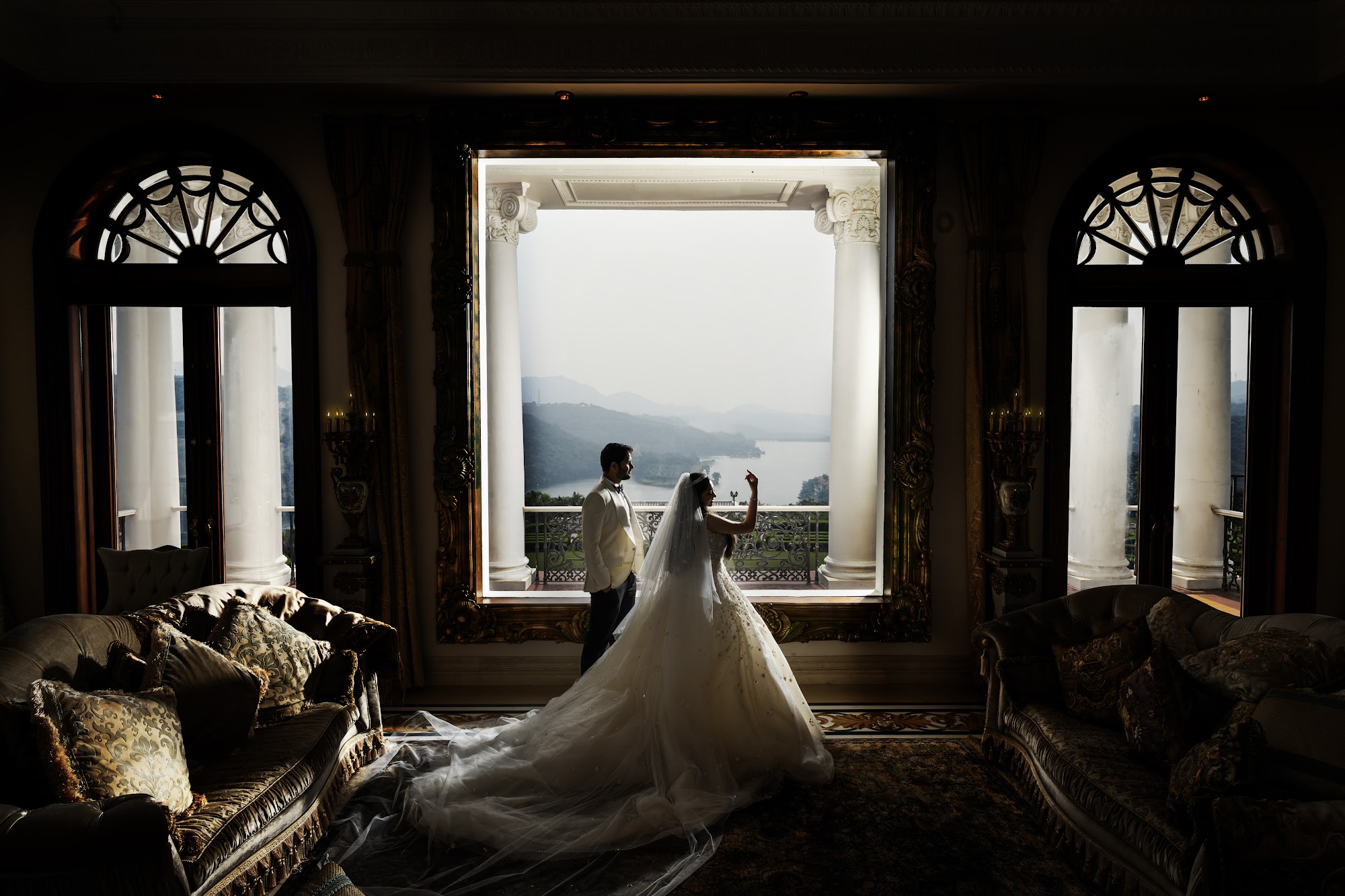
Another photograph opens the view considerably. A couple stands within a tall central window, with arched windows on either side and the sweep of a pale gown extending into the room. The architecture establishes a strong frame. The fabric gives the composition a line that moves out towards the viewer, connecting the people to the space around them.
This is where a bridal portrait can accommodate the ambition of a luxury wedding wardrobe. A train needs room to be understood. The shape of a doorway or the fall of light through a window can make its proportions clearer. The setting becomes useful because it has a relationship with the garment, rather than simply providing an impressive place to stand.
The figures remain central even though the room occupies much of the photograph. The arrangement leads the eye back to them. For a couple, a view like this can sit beside closer portraits without having to do the same job. One photograph describes the larger scene; another allows the expression, jewellery or gesture to become the point of attention.
A fashion eye can help give those different distances a coherent place in the album. It considers how fabric behaves within a frame, how a background alters a silhouette and where the viewer will look first. Those choices are most persuasive when the finished portrait still feels connected to the people whose celebration it records.
There is no need for every wedding photograph to carry this degree of composition. Its value comes partly from the change of pace it offers. Placed among photographs of arrivals, rituals and conversation, a resolved portrait creates a moment in which the viewer can pause over the choices that went into the clothes and the occasion.
Let the Surroundings Enter the Portrait
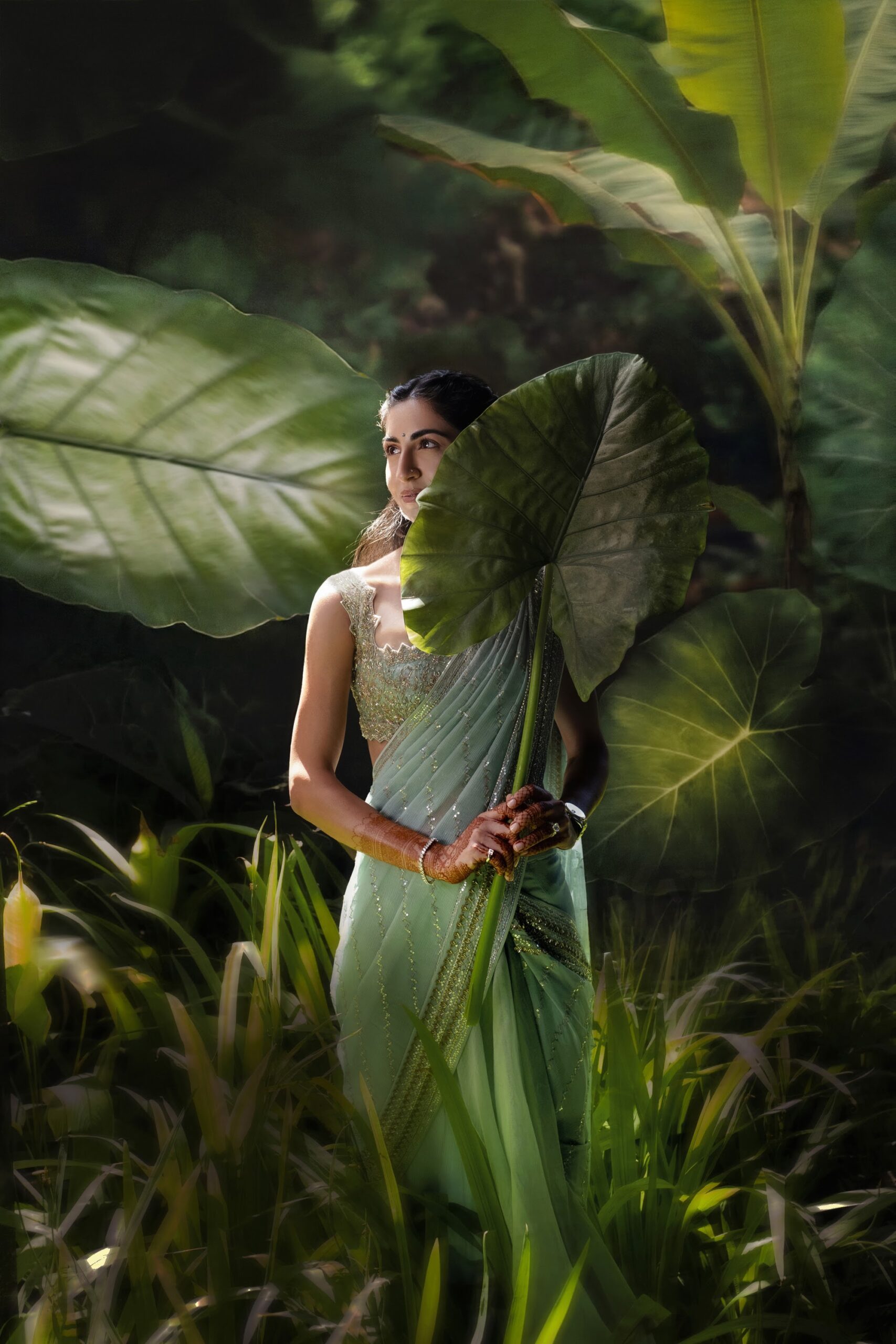
A portrait among large leaves offers a different relationship between person and setting. Green fabric sits within a green environment, while the leaves divide the frame into overlapping shapes. The figure is partly surrounded by foliage. Rather than clearing everything away from the subject, the photograph allows the environment to become an active part of the image.
The shared palette is doing much of the work. Clothing and background belong to the same family of colour, but their surfaces remain distinct. A smooth piece of fabric reads differently from a veined leaf. The portrait gains interest through those differences, inviting the eye to separate the person from the setting without making either one disappear.
Across these photographs, fashion enters through attention rather than through a single repeated pose. The close view isolates a detail. The architectural portrait makes space for a silhouette. The foliage portrait brings colour and surroundings into conversation with the clothes. Each offers a different way to record how someone inhabits what they are wearing.
That range matters when the wedding album has to outlast the first reveal of the bridal look. A complete outfit photograph remains useful, but a varied portrait selection gives the couple more ways to return to it. They can notice an ornament, a movement of fabric or the relationship between two figures within a room.
The strongest fashion influence in Ram Bherwani’s selection is this willingness to let a portrait have a particular visual idea. The clothes receive careful attention without exhausting what the photograph can say. In a wedding album, that leaves room for both the significance of getting dressed for the occasion and the individual who gives the look its life.
Photography supplied by Ram Bherwani Weddings.


