
The Guest List Grew. Which Part of the Wedding Must Change First?
An extra table affects more than catering. Recheck the room plan, accommodation and guest journey before approving the next invitation.
A guest list rarely grows in one dramatic decision. It grows through a cousin’s partner, an additional family branch, a few important friends and a second conversation about who should be invited. Eventually, the venue drawing represents a wedding you are no longer hosting.
Before asking what each extra guest costs, establish what the higher number changes. F5 Weddings lists venue selection, hospitality, RSVP and logistics among its services. Those connected responsibilities provide a useful way to organise a revised brief: people, space and movement must be updated together. (F5 Weddings — Planning, Hospitality and Logistics Services)
Count the right people at the right function
Keep invitations, confirmed attendance, overnight guests and attendance at each function in separate fields. A relative joining the reception may not need an airport pickup, a bedroom or a seat at the welcome dinner.
State assumptions clearly. Pending replies should remain visible rather than being silently counted as either definite arrivals or definite absences. Ask the planner what number each vendor is currently working to, and identify where those numbers disagree.
Recheck the room before adding another table
Send the revised attendance to the venue and request an updated plan. Include occupied chairs, service routes, bars, stages and any dedicated dance floor. A capacity stated for one layout does not automatically apply to another.
Ask to see the view from the least favourable seat. Can that guest see the ceremony or screen? Is their table beside a working service entrance? Adding seats should not create an overlooked corner that the family would never have chosen in the original design.
Confirm the venue’s approval before committing to a higher attendance.
Follow the additions back to their arrival
For guests staying overnight, check the available room mix and the dates they need, including early arrivals or late departures. Then revisit transfers using actual arrival groups rather than a single total.
An additional vehicle may change the loading plan and staffing at pickup points. More rooms at a second hotel may require a different shuttle pattern. Ask the hospitality team to show those changes in the guest journey, so the family can judge convenience alongside price.
Ask for a change sheet, not a revised grand total
Request a side-by-side breakdown: original scope, added requirement, revised quantity and any resulting fee. Separate charges that rise per guest from additions triggered by the layout, equipment or staffing plan. Have vendors explain their own charging basis and contractual deadlines.
This makes decisions clearer. The family may choose to protect a particular dinner’s intimacy, move a function to a larger space or adjust accommodation arrangements. Each option should show its practical consequence before approval.
Give one family decision-maker authority to approve the revised scope. Then issue a dated attendance version to the relevant teams and retire the old one. A larger wedding can still feel considered, provided everyone is designing for the same guest list.
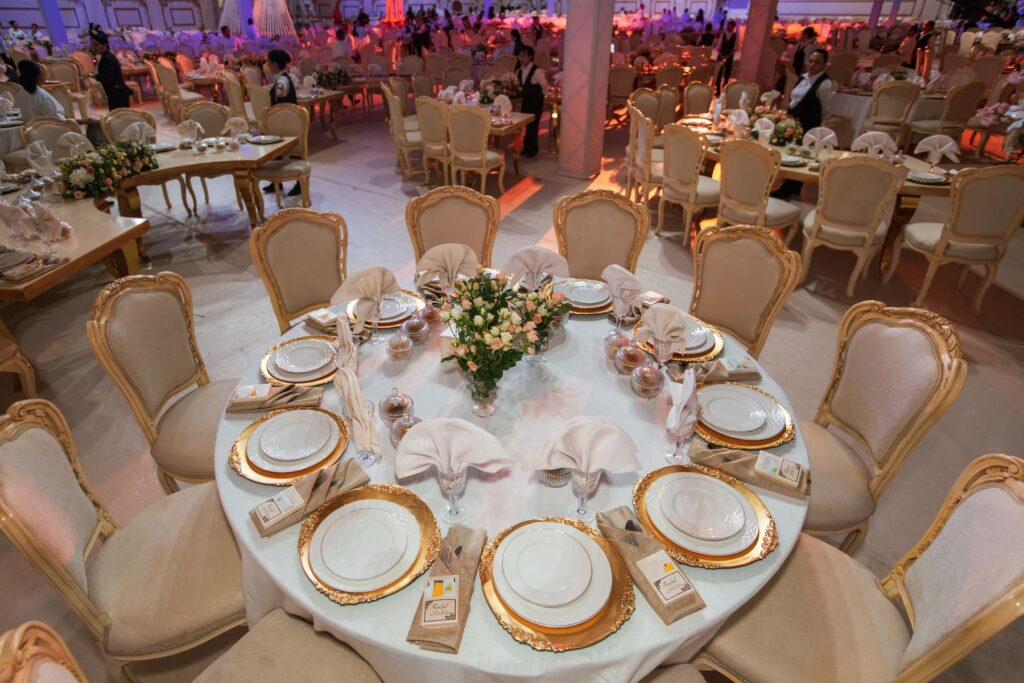
A reception layout illustrating the space needed for tables and guest circulation; not an F5 Weddings production. Photography: Denys Gromov. Pexels License. Via Pexels.
Share this story
More stories like this

A Single Destination Weekend or a Two-City Celebration?

7X Weddings Knows the Luxury Is in What You Never Have to Think About
