A Single Destination Weekend or a Two-City Celebration?
Compare the journeys your guests will make and the time you will spend with them before choosing how many cities belong in the celebration.
Compare the journeys your guests will make and the time you will spend with them before choosing how many cities belong in the celebration.
A destination weekend promises continuity: guests arrive, settle in and share several occasions in one place. A two-city celebration offers a different possibility, perhaps bringing one event closer to an extended family and reserving another for a smaller travelling group. Each format can be generous when its logistics match the people invited.
A planning team’s destination credentials are only the beginning of that discussion. DreamzKrraft’s official FAQ describes work across Indian and international destinations. Your own comparison should ask how the proposed team will manage each journey and handover in your specific itinerary.
Draw the guest journey first
For the single-destination option, list the routes from your guests’ main starting cities, the transfer from the airport, hotel arrangements and the journey home. For two cities, add the second transfer, another check-in and the time needed to pack and dress between events.
Consider the guest with the longest journey and the person who needs the most assistance. Do not judge the entire itinerary by the couple’s own flight or by the fastest available transfer. Leave realistic room for delays and rest.
Compare the same celebration on both sides
Ask for two like-for-like proposals with the same guest groups, hosted nights and principal events. Identify venue charges, hospitality staffing, guest transport, supplier travel, local production and any duplicated setup. A two-city plan does not automatically cost twice as much, and a single property does not automatically remove transport work.
Clarify whether everyone attends every event. If a home-city reception welcomes a wider circle, present that as a distinct hosting choice, with its own invitations and hospitality plan. Avoid an itinerary that leaves guests unsure whether they are expected to follow the entire journey.
Decide what the second city contributes
There may be a strong reason: an important family connection, a meaningful ceremony location or access for guests who cannot travel farther. Put that reason at the top of the brief and test whether the programme protects it.
For a single destination, ask the opposite question: what will keep several days in one place enjoyable? Unscheduled breakfasts, optional activities and time to rest can matter as much as another produced event.
Before choosing, read both programmes aloud from arrival to departure. Notice how often the guest is in a car, waiting for a room or preparing for the next event. The better format is the one that gives the family the celebration it wants and leaves guests enough time to enjoy being there.
References: DreamzKrraft — Destination planning FAQ.
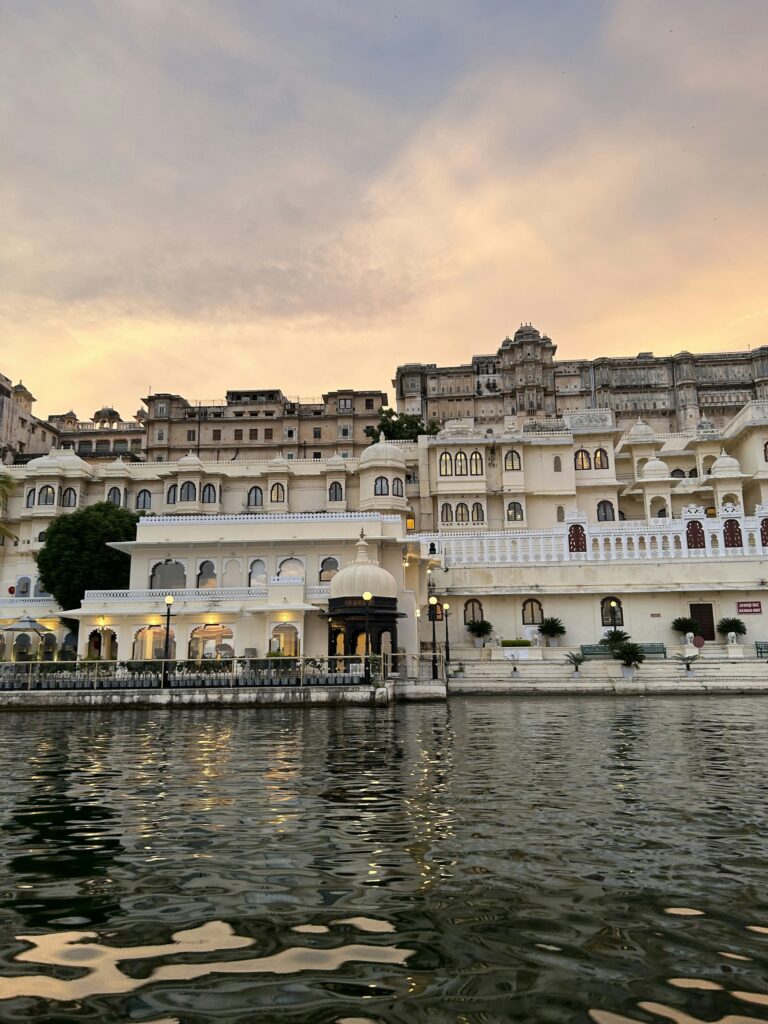
City Palace on Lake Pichola, Udaipur, photographed in 2023. Photograph: Maitree Patel / Unsplash. Unsplash License.