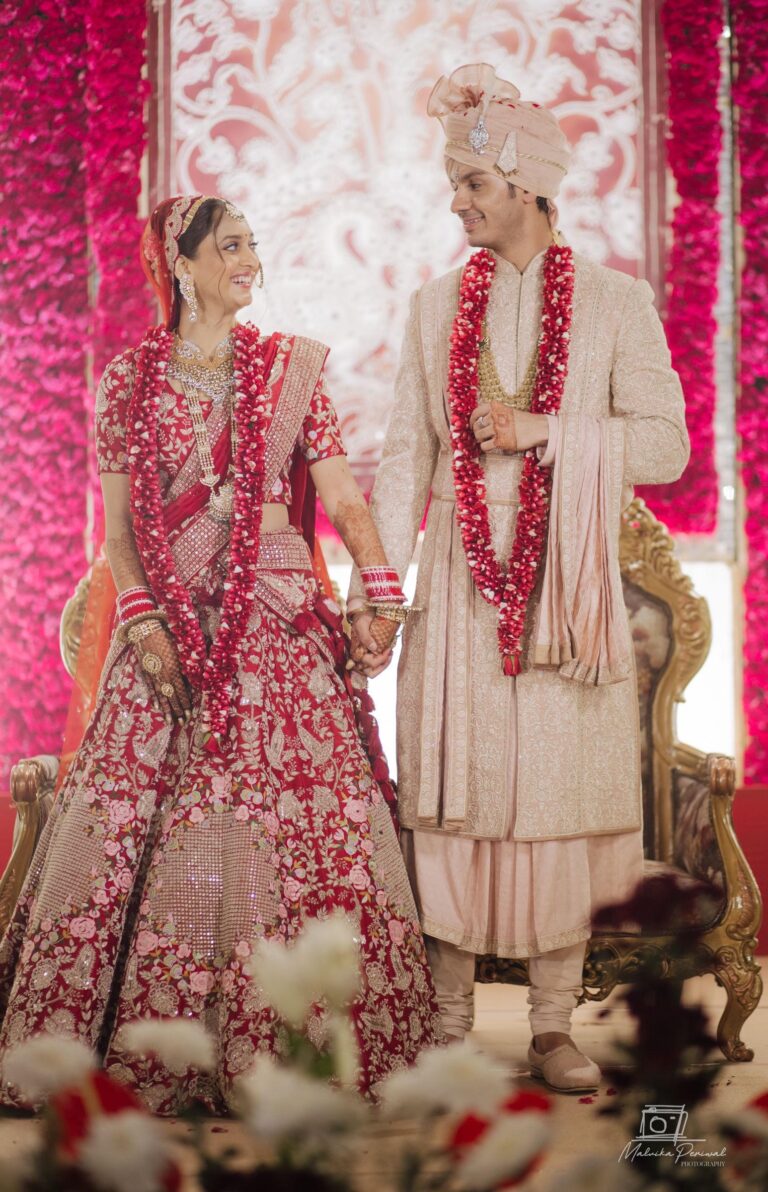
The Soft Architecture of Celebration
Draped fabric is giving wedding rooms a more tactile language, shaping entrances, ceilings and intimate corners with colour, volume and light.

5-minute read
Illustrative photograph by Tasha Kostyuk / Unsplash.
A length of fabric can change the scale of a room before a single flower arrives. Gathered above a doorway, it slows the entrance. Suspended across a ceiling, it draws the eye toward the table below. Left to fall in deep folds, it brings shadow to a flat surface. The renewed interest in wedding drapery is compelling because it offers more than a decorative finish. It gives designers a way to work with architecture through a material that can appear both structured and fluid.
The most assured interpretation begins with a clear idea of what the fabric should do. A ballroom may need a more intimate perimeter; an outdoor dinner may benefit from a defined canopy; a ceremony setting may ask for a softer frame. Each is a different brief. Drapery becomes persuasive when it answers the specific room, rather than repeating a recognisable social-media image regardless of the building, season or number of people who will gather beneath it.
Give the fabric a role
An installation should have a readable composition. A single generous sweep behind a ceremony can create a strong point of focus, while repeated panels may establish a rhythm along a dining room. The two approaches need different amounts of surrounding detail. If the fabric already gives the eye movement, flowers and furniture can take a quieter role. The room gains clarity when its components contribute to the same visual idea instead of each demanding an independent moment of attention.
The existing architecture provides useful limits. A handsome arch may need only a narrow frame of cloth; a plain service doorway might benefit from a more substantial treatment. Beautiful windows can remain visible, particularly when they contribute natural light or a view. Covering everything creates its own kind of uniformity. Selective draping makes the relationship between old and temporary architecture more interesting, allowing guests to understand the venue while experiencing it in a different mood for the wedding.
Height changes the result. Fabric hung too low can make a generous room feel compressed, while a treatment placed beyond the guests' field of vision may disappear. The designer should read the installation from the entrance, from a seated position and from the couple's place in the ceremony. This exercise often reveals where a fold needs more depth or a suspended line needs more space. The composition has to work at the scale of human presence.
Colour with something beneath it
A draped colour is never completely flat. Its folds create darker passages, and its surface responds to the light around it. A warm ivory can look almost golden beside amber lighting; a deep wine tone can become nearly black in the shadows. Choosing fabric from a tiny sample gives only a partial impression. A larger section, gathered and viewed in the intended lighting, tells a more useful story about the atmosphere it will create across an entire room.
Texture adds another layer. A matte cloth can give a saturated shade depth, while a lustrous finish introduces sharper reflections. A translucent panel makes the architecture behind it part of the composition. The right choice depends on the desired mood, and on what the guests will see through or beside the material. An intimate dinner and a theatrical sangeet may share a colour but ask for quite different weights, finishes and degrees of transparency in the fabric itself.
The table offers a place to carry this language forward without repeating it literally. Linen might echo a quieter note from the drapery, while glassware introduces contrast. Flowers can pick up a related shade rather than reproduce the exact tone. When every surface matches, the room can feel less dimensional. A considered difference between wall treatment, tablecloth and upholstery gives the eye several things to discover while preserving an overall sense of intention and visual calm.
Let light reveal the folds
Lighting determines whether the cloth looks sculptural or simply heavy. A gentle wash from the side can reveal depth; an even frontal light may flatten it. The relationship is especially important behind the couple, where the fabric becomes part of the most photographed setting. The lighting team and decor team should see their work together before the final arrangement is fixed. A beautiful material can lose its character when illuminated without regard for its surface or its position in the room.
Daylight brings movement of its own. A translucent canopy might feel luminous in the afternoon and require an entirely different treatment after sunset. If guests return to the same setting for dinner, the fabric can provide continuity while the lighting shifts the atmosphere. This is an economical visual idea as well as an elegant one: the venue acquires a second mood through a deliberate change in illumination, without needing to be completely dismantled and rebuilt between events.
Practical lighting still belongs within the composition. Menus should remain readable, pathways visible and faces recognisable. A dining room that looks exquisite in a wide photograph can feel frustrating when guests cannot comfortably see one another. The best lighting balances the drama of the installation with the ordinary pleasures of dinner. A fabric ceiling becomes more beautiful when it holds a well-used table beneath it, rather than drawing all available attention away from the people gathered there.
Leave room for the celebration
Soft architecture still requires serious construction. The venue and installation team need to agree on fixing points, approved materials, clearances and the way the fabric will be secured. Outdoor treatments need a plan for changing weather. These decisions are part of the design, because they determine which forms can be created confidently. A visually light canopy should never depend on uncertain support, and a dramatic curtain should not interfere with the routes people need to use throughout the event.
The installation also needs to accommodate service. Staff must reach tables without brushing elaborate folds, and doors should open fully. Guests should be able to move between the dining room, lounge and dance floor without negotiating loose fabric. Thinking through these movements early keeps the finished room generous. The difference between an atmospheric setting and an inconvenient one is often found in a few clear passages that barely register in photographs but matter throughout the evening.
At its most expressive, drapery offers a sense of enclosure without rigidity. It can make a large venue feel gathered, give a familiar courtyard a new silhouette or bring intimacy to a long table. Yet its final purpose is to frame what happens inside it. Once guests arrive, the cloth should recede into the feeling of the room: a little softness around the edges, a little depth above the conversation, and a setting that welcomes life rather than requiring stillness.