The Reception Becomes a Supper Club
A more intimate dining mood is giving the wedding reception a new centre of gravity, with the table itself becoming the evening's main event.
5-minute read
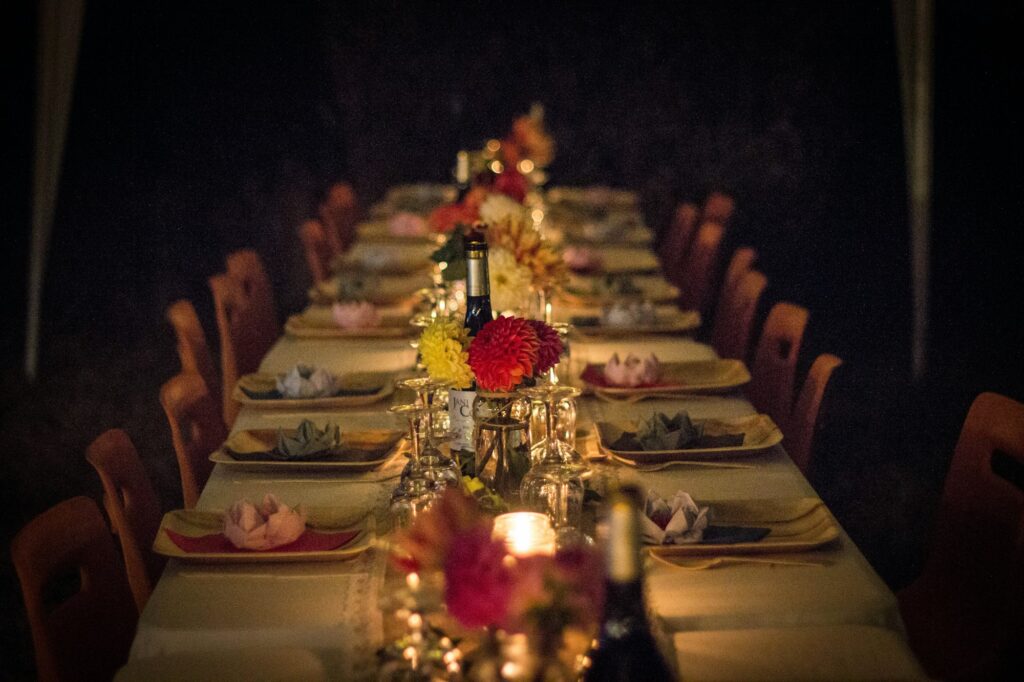
Illustrative photograph by M F / Unsplash.
The room is ready before the guests sit down. Glasses catch the light along a generous table; a small menu waits beside each plate. The music has enough character to be noticed and enough restraint to leave room for conversation. There is anticipation, but little sense of a programme about to begin. A reception approached as a supper club borrows this pleasure from a favourite restaurant: the feeling that dinner is worth settling into, and that the people beside you are part of its appeal.
For a luxury wedding, the idea offers a way to make the meal more distinctive without endlessly expanding the menu. The experience can be intimate even within a substantial celebration, provided the room, service and food have been considered together. Guests should feel invited into an evening with a point of view. A beautiful table becomes the place where the wedding is lived, rather than a brief pause between an entrance, several performances and the eventual move toward the dance floor.
Begin with the kind of dinner you love
The couple's restaurant habits can provide a more useful starting point than a catalogue of wedding menus. Do they enjoy a slow meal with several small dishes, a lively table where plates are passed around, or a concise dinner followed by a long evening of music? The answer gives the chef a direction. A supper-club reception becomes personal through this rhythm, as well as through the ingredients or culinary traditions represented on the plate in front of each guest.
An Indian dining narrative can sit beautifully within the format. A focused sequence might explore a region, a family repertoire or a conversation between two culinary backgrounds. The chef can interpret that brief through portion size, presentation and the progression of flavours. The result need not resemble restaurant tasting-menu theatre. Familiar dishes can acquire a different presence when served with precision, introduced thoughtfully and allowed enough space within the meal for guests to notice what makes them particular.
Editing is central to the experience. If every favourite appears, the meal may lose its shape. The chef and couple should decide which dishes carry the story and which are pleasant but unnecessary additions. This does not require austerity. It creates the possibility of appetite, anticipation and a satisfying finish. A reception feels generous when guests enjoy what arrives, at the moment it arrives, rather than being confronted with a selection so broad that its intended character becomes difficult to recognise.
Build intimacy at the table
Long tables create a compelling visual line, but their social success depends on spacing and seating. Guests should be able to hear those opposite them and move comfortably behind their chairs. Several shorter tables may produce a more convivial room than one impressive arrangement stretching across its entire length. The design should be assessed from a diner's position. Flowers, candles, bottles and serving dishes all need a place, and the people have to remain the most important part of the composition.
Seating can introduce guests through a shared interest rather than simply placing similar age groups together. A friend who loves food might enjoy the company of a relative with a remarkable repertoire of family recipes. Existing friendships still matter, and nobody should feel used as a networking exercise. The aim is an easy first conversation. A small amount of thought about who will enjoy the meal together can influence the atmosphere more deeply than an additional layer of table decoration.
The couple's position deserves reconsideration too. A raised table separated from the room produces a different feeling from seats within the dining arrangement. There may be ceremonial reasons for a particular placement, but the decision should be conscious. If intimacy is the intention, the couple needs a chance to participate in it. They should be able to eat, listen and speak to the guests nearby, rather than spending the entire dinner receiving people while their own plates remain untouched.
Service sets the pace
A supper-club mood depends on timing that feels responsive. A course should arrive while guests are ready for it, with enough coordination that one side of the room is not finishing while the other waits. The format must suit the kitchen, service team and distance to the tables. A wonderful idea tested for six people may behave differently for a wedding group. The most effective menu is one that the team can deliver beautifully at the actual scale of the celebration.
Shared dishes can encourage conversation, but they need appropriate table space and attentive replenishment. Individual plating offers another kind of clarity, though it can become slow if the programme is too elaborate. Neither format guarantees a better evening. A thoughtful combination may work particularly well: a few things already waiting on the table, a composed main course and a dessert served with a little ceremony. The sequence should make guests feel looked after without constantly interrupting their conversations.
Drinks can follow the same sense of intention. An aperitif introduces the evening; a short selection accompanies the meal; something comforting may appear as the music changes later. Alcohol-free choices deserve an equally considered place in that progression. A guest should not have to explain their preference repeatedly to receive an interesting drink. Clear menus and informed service allow everyone to take part in the hospitality of the table, whatever they have chosen to pour into their glass.
Let dinner have its own ending
Lighting and music should support the length of the meal. An atmosphere that is appealing for ten minutes can become tiring over two hours if faces remain in shadow or the soundtrack never settles. Guests need to read the menu and enjoy the expressions across the table. Music can introduce a strong mood without turning every conversation into an effort. The room should reward staying seated, giving the meal a sense of occasion through its comfort as well as its appearance.
The transition into dancing benefits from a clear gesture. Dessert might arrive before the couple moves toward the next room, or coffee may be offered in a lounge that becomes the bridge between dinner and the party. The change should feel inviting rather than like an instruction to abandon a half-finished course. A reception has more texture when its chapters are allowed to reach their own conclusion, giving guests time to enjoy one experience before being drawn naturally into another.
What remains is the memory of a table at which something happened: a story told, an unexpected friendship begun, a favourite dish understood in a new way. The supper-club reception makes room for those pleasures. It places culinary craft in the company of good conversation and allows the wedding meal to become one of the reasons people remember the evening. After the chairs have been pushed back, the celebration can continue with the easy satisfaction of guests who have actually dined together.
Share this story
More stories like this
There’s More to a Drinq Wedding Bar Than the First Pour

The Wedding Bartender Brings a Personal Pour to the Party