A Room Made for Celebration
From the first view to the last conversation, thoughtful wedding decor gives beauty a purpose and guests a place within it.

5-minute read
Illustrative photograph by Shardayyy Photography / Unsplash.
A wedding room is first encountered in motion. Guests approach through a doorway, slow beside a floral arrangement and look ahead to find the people they know. The ceiling may catch their attention before the tables do. The light determines whether the space feels open, intimate or expectant. Long before anyone examines a centrepiece, the room has already begun to shape the evening. Decor works at this scale as much as it works in detail.
The most compelling luxury wedding settings give guests a clear sense of where they have arrived. This may come from a courtyard's proportions, a terrace facing water or the sweep of a ballroom. A designer can amplify that character through careful placement, texture and light. When a space is treated as a blank surface to be covered, some of its most valuable qualities disappear. A distinctive room offers the beginnings of a visual language.
Begin with what the space gives you
Architecture can suggest an entire composition. Repeated arches establish a rhythm that floral arrangements can follow. A high ceiling invites the eye upward, although it does not require every part of the room to be suspended with decor. A garden supplies changes in height, shade and colour that deserve to remain visible. Responding to these features allows an installation to feel situated. The celebration appears to belong to the place rather than temporarily conceal it.
There is pleasure in a considered focal point. A ceremony setting at the end of a long approach, a beautifully lit dining table or a sculptural arrangement near an entrance can anchor the room. Once that point is established, surrounding elements can support it with greater restraint. The eye needs somewhere to rest between moments of intensity. Without that breathing space, even exceptional flowers and intricate fabrication begin to compete for the same attention.
Scale matters more than the number of components. A modest arrangement may feel lost beneath an expansive ceiling, while a broad installation can overwhelm a narrow courtyard. The relationship between furniture, flowers and empty space needs to be read from several positions. An entrance view tells only part of the story. The room should also make sense from a seated guest's perspective and from the place where the couple will spend the ceremony.
Colour lives in materials
A wedding palette becomes richer when it moves beyond a list of shades. Ivory linen, creamy flowers and pale stone may share a family of colour while offering different surfaces. Timber introduces depth. Glass catches the light. Metal can add a sharper note. The combination produces an atmosphere that a single repeated colour cannot achieve on its own. Guests experience this layering even when they cannot name the individual materials responsible for it.
Flowers offer another kind of variation. Their stems, shapes and natural irregularities can keep a carefully designed setting from feeling mechanical. An arrangement can be full without becoming a solid block, or spare without appearing unfinished. The choice depends on the architecture and the mood of the event. For an intimate dinner, low arrangements may support conversation. At an entrance, a taller composition can create a welcoming sense of occasion without interrupting anyone's view.
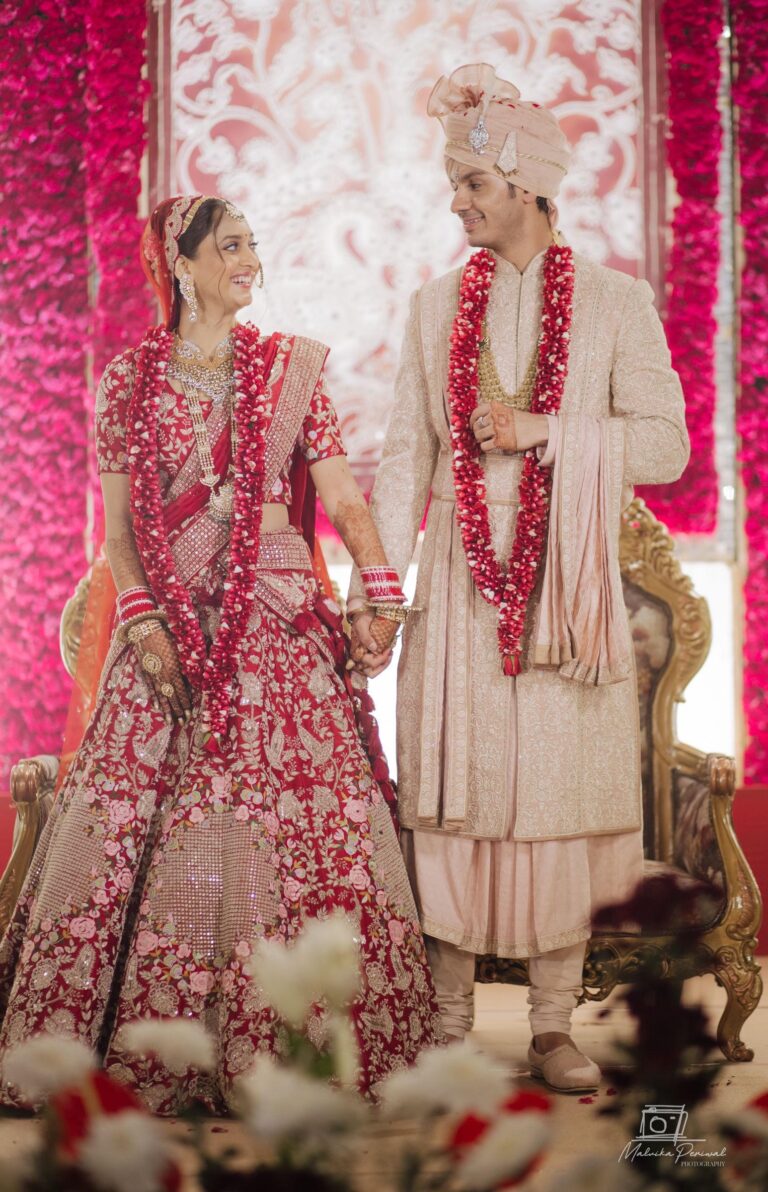
The palette should be considered alongside the wedding clothes. Deeply embroidered garments may benefit from a setting that gives their colour and texture space. A pale ensemble can disappear against an equally pale backdrop if the light and depth are overlooked. This is a conversation between the decor team, the couple and the photographer. The aim is a room that looks complete on its own and remains generous to the people who enter it.
Light changes the story
Daylight and evening light create different rooms from the same architecture. A setting that feels airy at noon can become flat after sunset if illumination is treated as an afterthought. Lighting can reveal the grain of a surface, the depth of an arrangement and the warmth of a face. It also directs attention. A softly lit path draws guests forward, while a pool of light on a dining table encourages them to settle.
The transition between ceremonies deserves particular thought. Guests might leave a bright afternoon gathering and return to the same courtyard for dinner. A shift in the lighting, table arrangement and music can make that return feel like a new chapter. The architecture provides continuity. There is no need for a complete visual transformation if a few decisive changes can alter the mood. Such transitions often feel more assured because they preserve a recognisable sense of place.
Beautiful lighting still has practical work to do. Guests need to read menus, navigate changes in level and recognise one another across a table. The photographer needs usable light where important moments will happen. The service team needs to move safely. A room can retain a romantic atmosphere while addressing these needs. The skill lies in distributing illumination carefully, so function becomes part of the composition rather than a correction added at the end.
Design at the height of a guest
A seated guest encounters decor differently from a camera positioned at the entrance. The chair, the space between place settings and the height of the flowers become immediate. Someone should be able to place a glass down comfortably and speak to the person opposite without leaning around an arrangement. These small considerations determine whether a dining setting feels welcoming. Luxury can be sensed through the freedom to inhabit a beautiful space without effort.
The same attention extends to circulation. A dramatic installation beside a bar should leave room for a queue. A photogenic lounge should be close enough to the celebration to feel connected. Guests who prefer a quieter conversation need a place to sit that is still part of the evening. The room becomes more expressive when it accommodates several ways of enjoying the wedding. Beauty has greater depth when it invites participation.
At the end of the night, the setting will have changed. Chairs will have moved, napkins will have unfolded and the tables will show the traces of dinner. A good design can welcome that life. It does not depend on remaining untouched to be beautiful. The flowers frame a conversation; the light holds a familiar face; the architecture gathers everyone together. The most memorable wedding decor gives a celebration form, then allows the people inside it to complete the picture.