A Hotel of Your Own
Exclusive-use wedding stays turn a destination into a shared address, making privacy, unhurried encounters and the life between events part of the invitation.
5-minute read
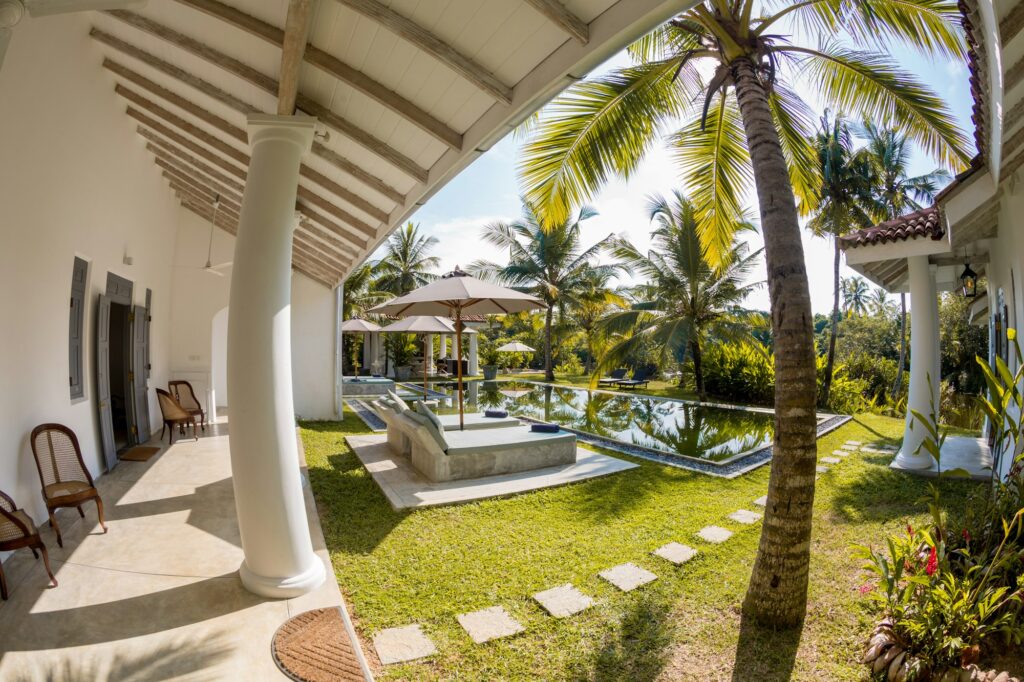
Illustrative photograph by Dinuka Lankaloka / Unsplash.
Imagine coming down to breakfast and finding the people from last night's dance floor already gathered around the coffee. A cousin is reading beside the pool; someone is making plans for lunch. There is no formal event underway, yet the wedding continues through these small encounters. This is the attraction of taking over a hotel, estate or collection of villas for a celebration. The destination becomes somewhere the guests can inhabit together, with a rhythm extending beyond the official programme.
Exclusive use offers a particular expression of luxury: the possibility of shaping the experience of a place over time. It is a format already offered by properties such as Aman Kyoto, where a private resort buyout is an option for celebrations. The appeal is easy to understand. Instead of meeting only at scheduled functions, friends and family share an address. The wedding has a centre of gravity, and the moments around the ceremony become part of its character.
Choose a house for the whole company
The right property begins with the guest group rather than the most dramatic photograph. A compact hotel may bring everyone together beautifully, but its stairs, room sizes and common areas need to suit the people staying there. Families travelling with children have different requirements from a group of friends arriving for two nights. Elders may value an easy route between their room and the dining space. These details shape whether the shared address feels comfortable throughout the stay.
The distribution of rooms matters too. A handful of spectacular suites does not compensate for a large difference in the comfort of the remaining accommodation. The couple and planner should understand the whole inventory, including the distance between separate buildings and the arrangements for guests staying elsewhere. A buyout feels most generous when belonging is not determined by room category. The common spaces should offer everyone an equally welcoming place within the life of the celebration.
Scale is a social decision as well as a practical one. A property with several small lounges invites different conversations; a broad central terrace draws the group together. Neither is inherently better. The choice depends on how the couple likes to host and how familiar the guests are with one another. Looking at the hotel as a temporary household helps reveal its strengths more clearly than considering it only as a collection of backdrops for individual wedding events.
Privacy needs a precise meaning
Exclusive use should be understood in specific terms. The arrangement might include all bedrooms, selected public areas or the entire property, and those distinctions affect the experience. A restaurant may have its own operating commitments; a spa may require advance appointments. The planner and hotel should establish what belongs to the wedding party, during which hours and with what support. Clear agreements allow privacy to feel natural once guests arrive, without repeated negotiation during the celebration itself.
The same clarity applies to movement. A wedding can feel wonderfully secluded while still needing straightforward access for suppliers, transport and service teams. Separate routes may help preserve the atmosphere, but they have to work for the building and the people operating it. The couple should understand which spaces remain active behind the scenes. A private setting feels effortless when the arrangements supporting it are carefully coordinated, rather than when the practical workings of the hotel are simply overlooked.
Discretion also concerns the guests. Room allocations, travel details and private gatherings do not all need to circulate through a large group chat. Information can be shared with the people who need it, through the planner or a considered guest guide. The aim is an easy stay rather than a tightly controlled one. Good hosting gives guests enough knowledge to move confidently while allowing the more personal parts of the wedding to remain within the intended circle.
The hours between the invitations
A shared address creates an opportunity to programme less. Breakfast can run across a generous window instead of becoming another mandatory gathering. A shaded sitting area can remain available for those who want company without activity. Guests might discover the destination in small groups and return for the main event later. These intervals make the stay feel like travel as well as attendance. They are especially valuable when several days of dressing, photographs and ceremonies would otherwise fill every available hour.
Food outside the formal functions deserves attention. Someone arriving late should know what can be ordered, and a guest who skips an excursion should still feel looked after. A simple lunch, fresh tea or an accessible evening snack can contribute more to the lived experience than an additional elaborate installation. The service should anticipate different appetites and schedules. In a temporary household, people notice whether there is somewhere to settle and something appropriate to eat between the announced occasions.
The destination itself should retain a presence. A local walk, a conversation with the property's team or a meal reflecting its surroundings can give the stay specificity. These experiences need not be arranged for everyone at once. Offering a few thoughtful possibilities allows guests to choose their own pace. The wedding then acquires a sense of place through ordinary discoveries, alongside the more composed moments of the ceremony, portraits and evening celebrations that brought everyone there.
Let the hotel remain a hotel
Taking over a property does not require transforming every corner into an event setting. A quiet library can keep its purpose; a handsome breakfast room may need little beyond good service. Preserving some familiar hospitality spaces gives guests relief from the intensity of the main functions. It also allows the architecture and character of the hotel to contribute something the wedding team did not have to manufacture. The setting becomes more convincing when it can still be recognised beneath the celebration.
The final morning is an opportunity to extend that care. Guests leaving at different times need clear transport arrangements and a place for luggage, coffee and goodbyes. A farewell breakfast works best when people can join without another round of formal preparation. The couple may finally have time to sit with someone they have barely spoken to all weekend. These last conversations can become some of the stay's most valuable memories precisely because they arrive without an entrance or an announcement.
A hotel of your own is ultimately a place held briefly in common. Its value lies in the freedom to move from ceremony to conversation, from a dressed-up evening to an ordinary breakfast, without losing the feeling of being together. Long after the flowers are gone, guests may remember a particular chair, a late cup of tea or the ease of finding a friend across the courtyard. The finest private wedding stays make room for those memories to form.