Why Envelop Designs a Wedding for More Than the Photograph
The first view sets the mood. Envelop’s wedding environments invite a closer look at how architecture, lighting and the places guests gather can carry that mood through a celebration.
5 minute read
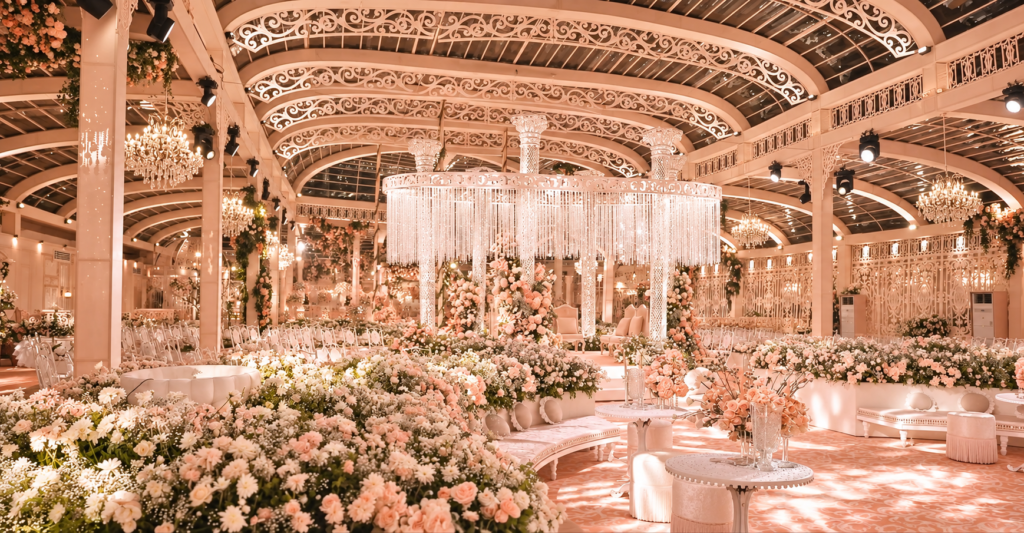
Curved overhead structures, pale flowers and seating share one coordinated palette in an Envelop portfolio view.
Begin Where the Guests Will Sit
Pale flowers extend through a room whose curved overhead structures repeat across the view. The seating belongs to the same soft palette, while a suspended arrangement creates a central presence. In this Envelop portfolio image, the individual decorative pieces are difficult to separate from the room they form. The atmosphere comes from their relationship with one another.
For a guest, that relationship is experienced from a seat as much as from the entrance. A ceiling occupies one part of the view, a table another, with flowers close enough to register as individual stems. The wedding room has to hold up across those different distances. Its character should remain apparent after the first sweeping look has given way to a more settled evening.
Envelop approaches experience design through a narrative in which spatial design, lighting, sound and guest interaction belong together. The photographs offer a visual starting point for that broader idea. What they show most clearly is the connection between the large architectural gesture and the smaller places in which people might spend their time.
That connection gives the luxury wedding brief a useful direction. The room can be considered through the occasions unfolding within it: sitting with family, moving towards dinner or gathering to watch a performance. Each asks for a different kind of attention. A consistent visual language can give those experiences a relationship while allowing the social character of the wedding to lead.
Carry the Idea Into the Details
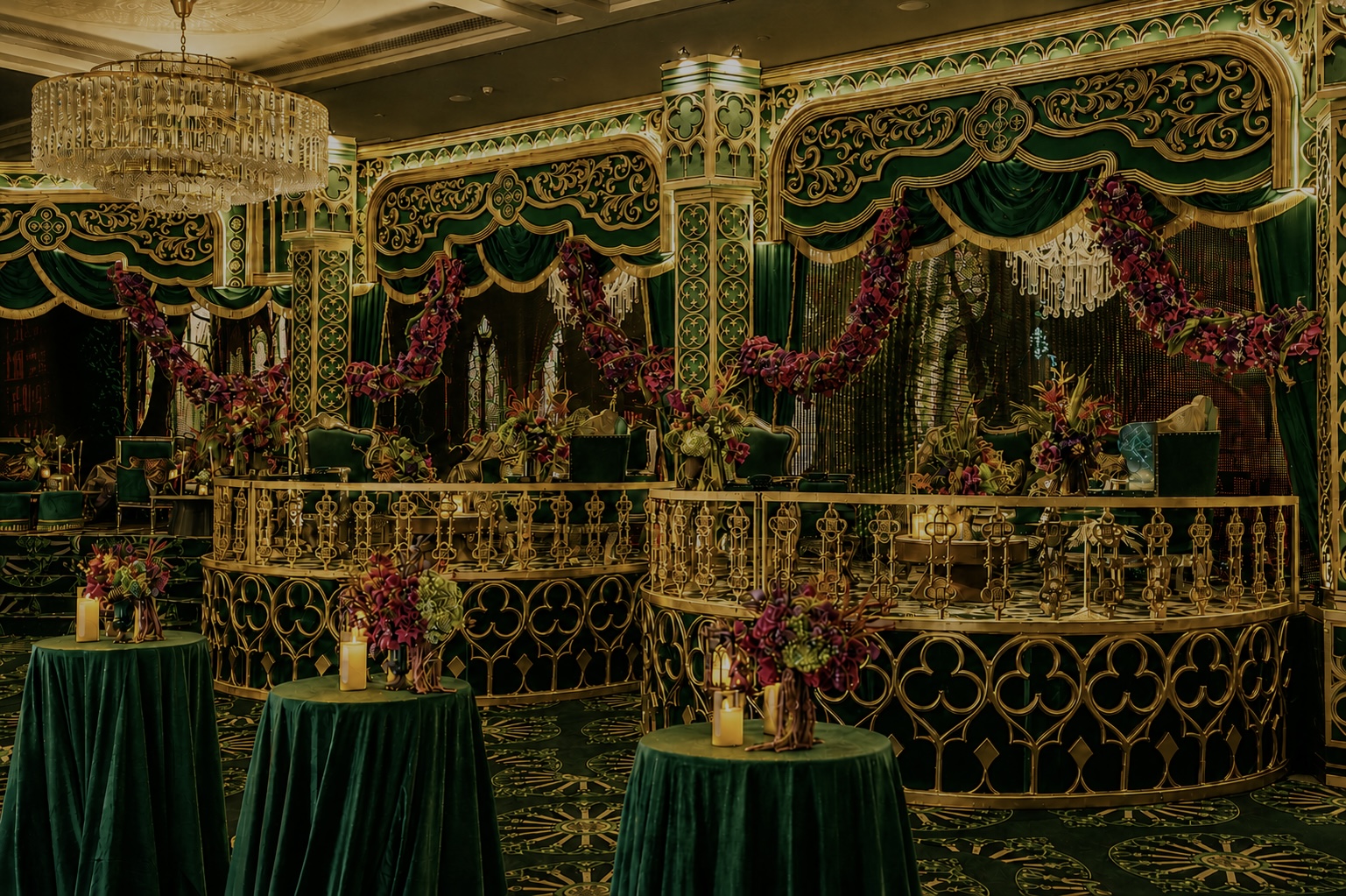
Another Envelop image brings the design much closer. A decorative counter sits within an ornate framework, with a dark green ground making the pale and metallic tones more distinct. The view is rich in pattern, but the counter still provides a clear horizontal line. It establishes a practical scale within the surrounding decorative structure.
A counter is an interesting place to consider the difference between a wedding photograph and a wedding experience. Guests approach it, pause beside it and look at what is being offered. They encounter its surface and proportions directly. The design participates in an exchange rather than remaining an object observed from across the room.
This gives the detail a particular responsibility. Patterns, flowers and decorative elements can extend the room’s identity into that exchange. At the same time, the arrangement needs to leave its purpose understandable. The most effective correspondence is one in which the larger visual idea remains present while the guest can comfortably do what they came to do.
The studio’s emphasis on human behaviour places those interactions within the design brief. A wedding environment is constantly changing as people gather and move. A place that is empty in a portfolio image may become the centre of conversation during the event. Its relationship with the route around it, the furniture nearby and the surrounding light contributes to the way that moment feels.
Seen in this context, an immersive scheme is built through continuity. The material treatment at the counter can relate to a doorway or a seating area. A repeated colour can make different parts of the room feel connected. The guest does not have to consciously identify every reference for the effect to register. The idea becomes part of the setting in which the celebration is being experienced.
Allow the Mood to Change With the View
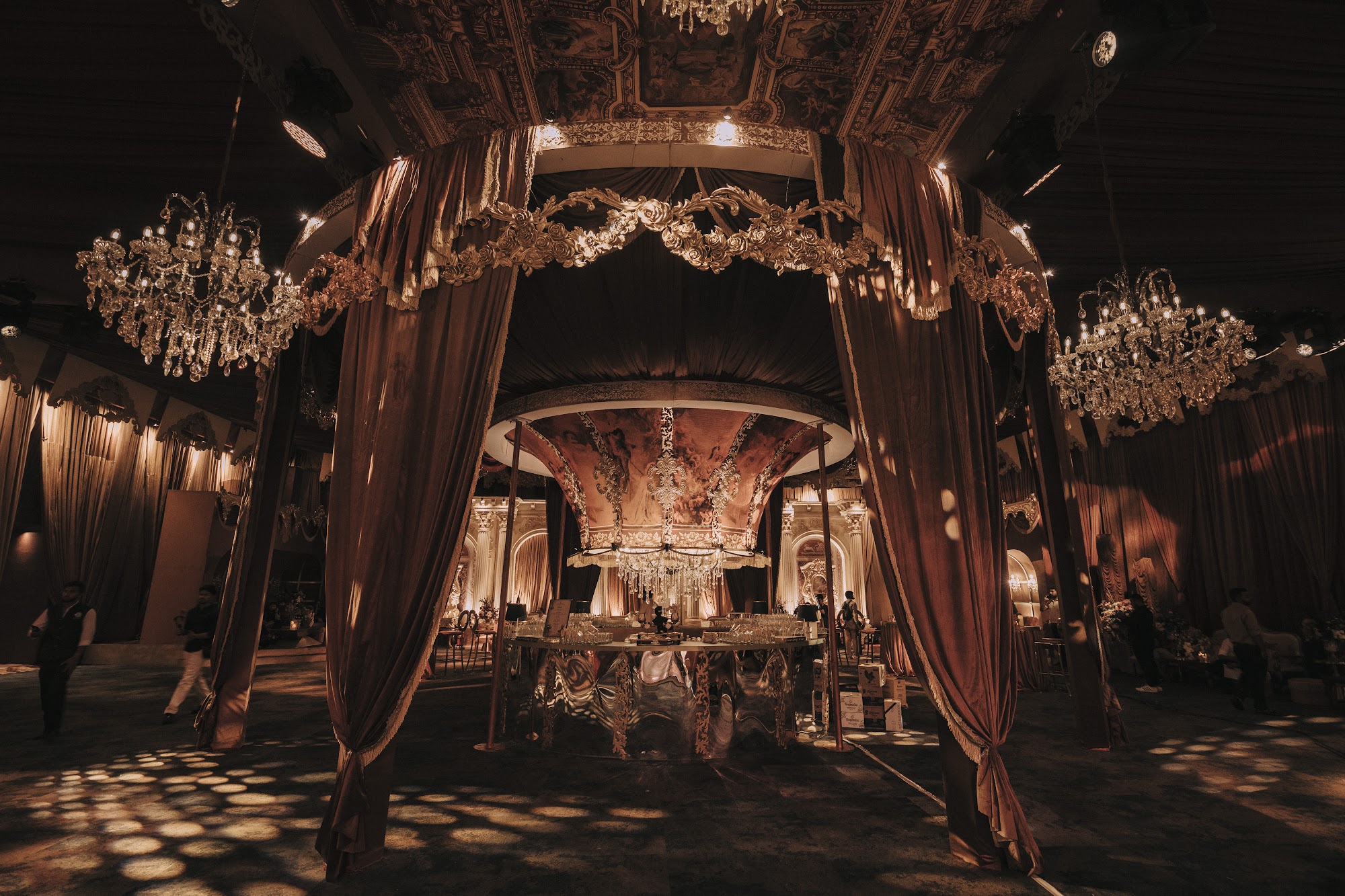
A darker portfolio setting reveals another aspect of that continuity. Draped openings frame a view towards the interior, with warm light picking out the decorative elements. The foreground and the space beyond it are experienced as separate layers. The eye moves between them, allowing the room to reveal itself through a sequence of framed views.
The contrast with the pale floral room is substantial. One view makes its curves and flowers readily apparent; the other builds interest through darker intervals and selective illumination. Both have a coherent atmosphere. The difference suggests how a wedding’s several occasions can acquire individual identities without losing the care that connects the overall celebration.
Light is central to that change. It affects which surfaces become prominent and how much of the room can be understood at once. A warmly lit opening can draw attention towards a gathering beyond it. A more evenly illuminated setting can make the relationship between the tables and the surrounding architecture immediately clear. The choice belongs to the experience the occasion calls for.
Envelop brings sound and technology into the spatial and visual brief. Their inclusion widens the conversation around the wedding room. The setting needs to make sense while people are talking, music is playing and the programme is moving between its quieter and more expansive moments.
The most useful question, then, comes after the first view. Where do guests pause, what do they encounter at close quarters and how does the room change as their attention moves? Envelop’s approach invites the wedding to be considered through those encounters. The photograph can introduce the visual world. The celebration gives the people within it time to discover what that world offers.
Portfolio images supplied by Envelop.