The Great Indian Wedding Book Journey
The Great Indian Wedding Book brings together the people, ideas and craftsmanship behind Indian weddings. Across six editions, the publication explores bridal fashion, design, destinations and the art of celebration.
Follow us on Instagram: @greatindianweddingbook
EDITION 1.0
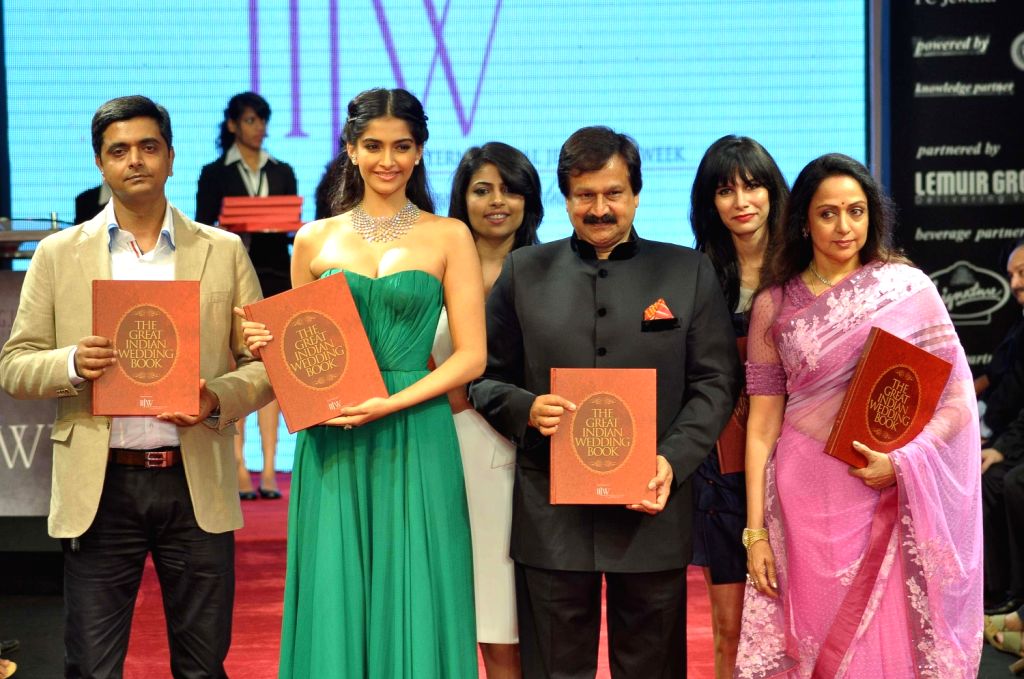
Unveiled in 2012 by Sonam Kapoor with Hema Malini, the first edition introduced a coffee table celebration of Indian weddings, bringing together bridal fashion, expert perspectives and inspiration across the many crafts behind a celebration.
Explore more
Before a wedding becomes a sequence of celebrations, it begins as a collection of possibilities. A fabric, a family jewel, a destination or a remembered ceremony can become the starting point. The Great Indian Wedding Book’s first edition gave those possibilities a home: a substantial volume in which the imagination of the Indian wedding could be considered slowly, beyond the urgency of arranging an event.
Published in 2012, the inaugural edition was unveiled by Sonam Kapoor at India International Jewellery Week. Contemporary coverage also pictured Hema Malini at the launch. Edited by Iram Mirza and Jotica Sehgal and published by Atul Pandey, the book brought together perspectives from wedding specialists across fashion, jewellery, cuisine and entertainment. Its beginning established the relationship between beautiful imagery and informed advice that remains central to the collection.
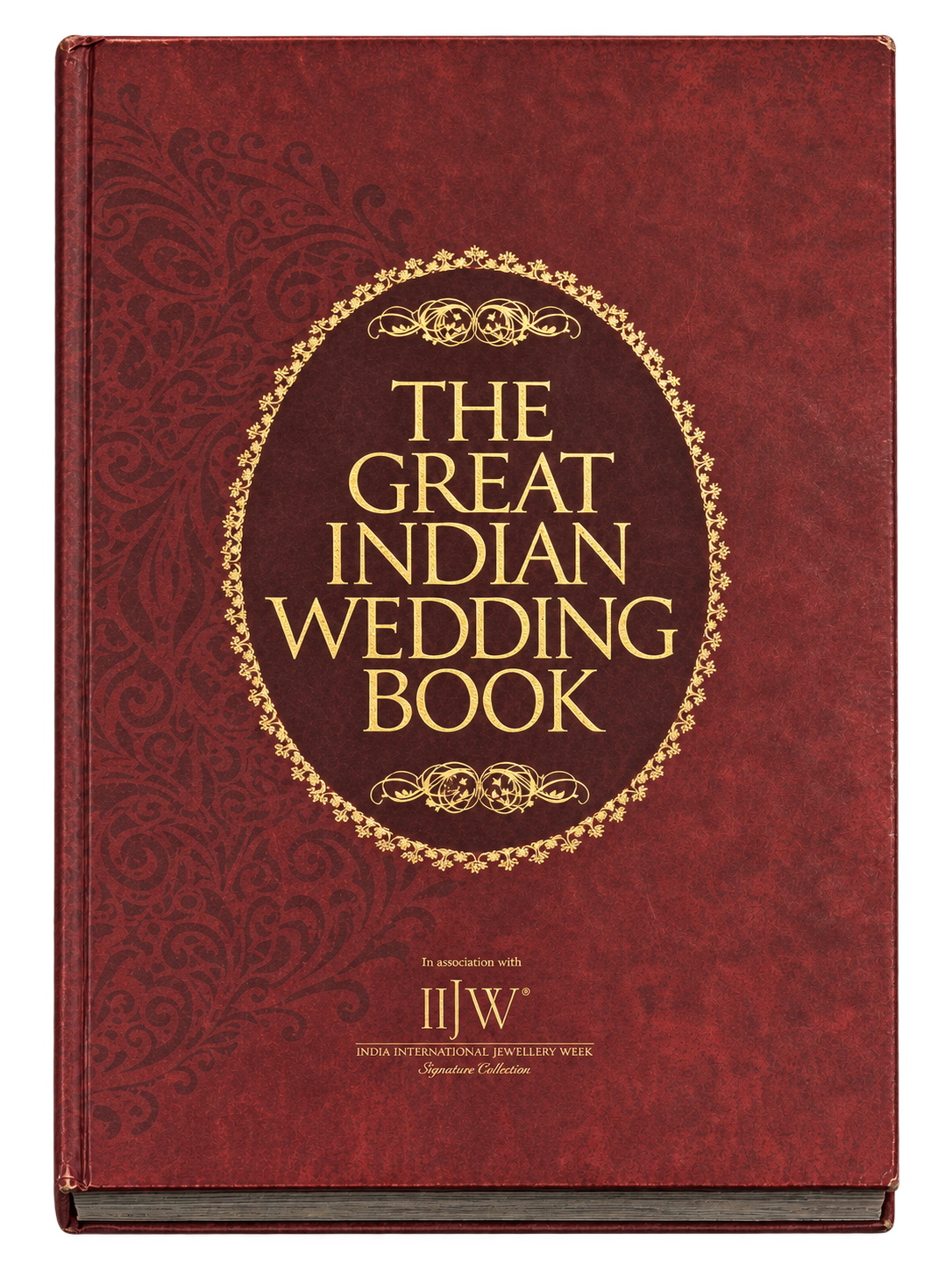
A cover made to be kept
The burgundy cover introduces that intention before the first page is turned. Gold lettering sits inside an ornamental oval, while a darker decorative pattern travels across the surface. The composition feels formal, almost ceremonial. It suggests something to be placed on a table, returned to during conversations and eventually kept alongside the objects through which a family remembers a significant occasion.
Reading the cover today, its appeal lies in the balance between richness and restraint. Burgundy supplies depth; gold gives the title clarity; the surrounding pattern rewards a closer look. As a visual interpretation, it offers an enduring wedding lesson: a confident palette can carry considerable detail when its elements have a clear relationship. Luxury emerges through composition as much as through the quantity of decoration.
An invitation to imagine
The original edition’s published description names sections including The Wedding Wishlist, Bespoke, The Wedding Palette, The Wedding Splurges and The Wedding Resources. Together, those subjects connect inspiration, personal expression and the practical search for specialists. Rather than reducing the wedding to one spectacular image, that structure makes room for the many decisions through which an overall atmosphere takes shape.
Its fashion and colour focus is especially meaningful when viewed as a starting point for planning. A bridal wardrobe establishes more than what one person wears. Fabric, jewellery, silhouette and colour can influence flowers, invitations and the feeling of a ceremony. Considering these relationships early allows a celebration to develop a visual language without requiring every element to match literally.
The presence of different professional voices also makes a useful distinction between admiring a result and understanding its creation. Couture, cuisine and entertainment demand different skills, yet guests encounter them within the same occasion. Bringing those disciplines into one conversation encourages readers to think about the wedding as a complete experience, shaped by many people working towards a shared intention.
For a family opening the first edition, a productive approach is to begin with response rather than replication. Which images feel welcoming? Which colours recall home? Which traditions deserve particular attention? Such questions turn a reference book into a conversation. They leave space for different generations to contribute memories and preferences before individual suppliers or elaborate concepts dominate the discussion.
The beginning of a collection
There is particular value in revisiting an early edition after the wedding itself. What once served as inspiration becomes a record of the tastes and aspirations surrounding that period. The distance between a published idea and a family’s final interpretation can be revealing. It shows how an image was adapted, which details endured and where personal meaning became more important than a fashionable reference.
For wedding professionals, the same volume can be approached as an exercise in attention. A striking bridal image invites questions about proportion and light. A considered palette suggests how contrasts might be controlled. A discussion of bespoke service raises questions about listening. These are ways of reading the edition today, rather than a claim that every contemporary planning concern appears explicitly within its pages.
Edition 1.0 therefore occupies a distinctive place in the archive. It marks the publication’s beginning and offers a lens through which to consider the Indian wedding as both a cultural occasion and a creative undertaking. Its burgundy and gold exterior makes that ambition tangible: a celebratory object with sufficient presence to stand on its own, while inviting readers into a much wider world.
The most useful way to return to this first chapter is with curiosity. Look for the choices that continue to resonate, notice the details that belong to their moment and allow both to inform a personal point of view. A wedding reference earns its lasting place when it helps readers articulate their own celebration. The opening edition begins that process with an invitation to look, consider and imagine.
EDITION 2.0
Launched by Jacqueline Fernandez in Mumbai in 2014, the second edition explored bridal style, wedding ideas, destinations, gifting and specialist resources, bringing inspiration and practical discovery into one volume.
Explore more
A wedding can begin with a single clear preference and quickly become a world of decisions. The outfit leads to jewellery; a destination raises questions of hospitality; an invitation introduces the celebration long before guests arrive. Edition 2.0 approaches that expanding landscape through a useful editorial idea: the different parts of a wedding deserve to be considered together, while retaining the character of each.
Unveiled at the Grand Hyatt in Mumbai in June 2014, the second edition was launched by Jacqueline Fernandez, with Sharman Joshi joining her on stage. Contemporary reporting described a publication intended for well-informed brides and grooms looking across bridal style, destinations, gifting and specialist services. It positioned the book as a companion through several stages of imagining a celebration, rather than a reference for a single ceremony.
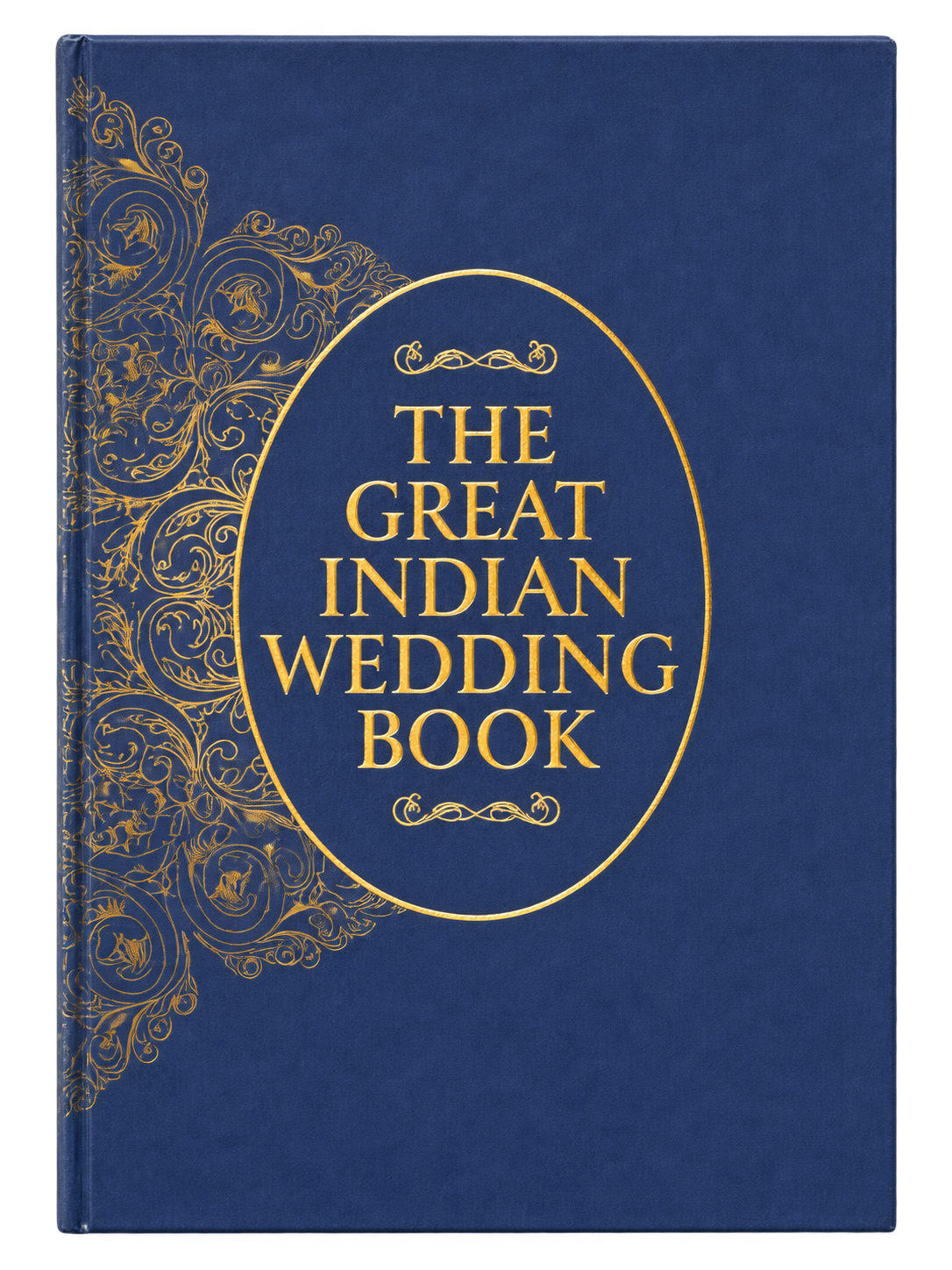
Blue and gold, with room to breathe
The edition’s blue cover offers a quieter form of grandeur. Gold scrollwork gathers along one side, while an oval gives the title a defined centre. The surrounding blue provides space for the ornament to register. Viewed beside the burgundy first edition, it creates a recognisable family resemblance through gold lettering and decorative richness, while establishing a distinctly different visual mood.
That balance can be read as a practical design lesson. A wedding need not fill every surface to feel complete. An invitation with generous margins, a setting with a deliberate focal point or a wardrobe built around one outstanding piece can feel more assured than a composition in which every detail competes. Here, the cover becomes an invitation to notice placement and proportion alongside colour.
Five routes into the celebration
The second edition’s announced structure comprised The Great Indian Bride, The Great Indian Wedding Ideas, The Travel Guide, The Gifting Guide and The Resource Book. The range matters: appearance, atmosphere, location, generosity and expertise all belong to the same experience. Readers can begin with the subject closest to their interests and then consider how the remaining choices support it.
The bridal section’s pairing of fashion designers and jewellers is a useful starting point for that interconnected thinking. An outfit and its jewellery are rarely experienced separately. Their proportions, surfaces and movement determine the whole impression. When looking at bridal references, readers can ask what creates the balance: the neckline, the scale of an ornament, the drape or the deliberate absence of an additional accessory.
The travel element opens another perspective. A wedding destination is also a setting for arrival, rest, conversation and time spent together. Beyond the appeal of a photograph, couples can consider how a location accommodates their guests and ceremonies. Climate, travel connections, privacy and the pace of a stay become part of the creative brief. These are contemporary reading prompts inspired by the edition’s destination focus.
Gifting deserves similarly considered attention. A meaningful gift can communicate welcome, gratitude or a connection to place. Thinking about it early helps avoid treating it as an isolated purchase at the end of planning. The relationship between packaging, usefulness and personal significance often matters more than scale. A gift becomes memorable when its recipient understands why it was chosen.
From inspiration to a useful brief
A resource section gives the act of browsing a practical next step. After identifying an atmosphere or an idea, readers need people capable of interpreting it. The useful question is not simply who can reproduce an image. It is who understands its purpose, can explain the choices involved and can adapt the concept to the family, setting and realities of the celebration.
One way to use Edition 2.0 today is to organise a working brief around its five areas. Begin with the people and the occasion, then note priorities for style, setting, guest experience, gifts and specialist support. The exercise keeps a wedding conversation broad enough to remain coherent. It also makes differences of preference visible early, when they can still become productive discussions rather than late changes.
For professionals, the edition offers a reminder that clients move between these subjects without experiencing them as separate industries. A family may discuss a necklace, a hotel and a dinner within the same meeting. Helping those choices relate to one another is part of thoughtful service. A strong specialist contribution should enrich the whole celebration, even when the commission concerns only one part.
Within the collection, Edition 2.0 is distinguished by this movement from individual inspiration towards a wider planning landscape. Its blue and gold cover introduces an elegant sense of order, while its documented structure gives readers several paths through the wedding world. Returning to it is an opportunity to connect beautiful possibilities with clearer questions, stronger priorities and a celebration that feels considered from beginning to end.

EDITION 3.0
The third edition continued the collection’s exploration of Indian weddings, bringing the creative disciplines of celebration together through expert perspectives and visual storytelling.
Explore more
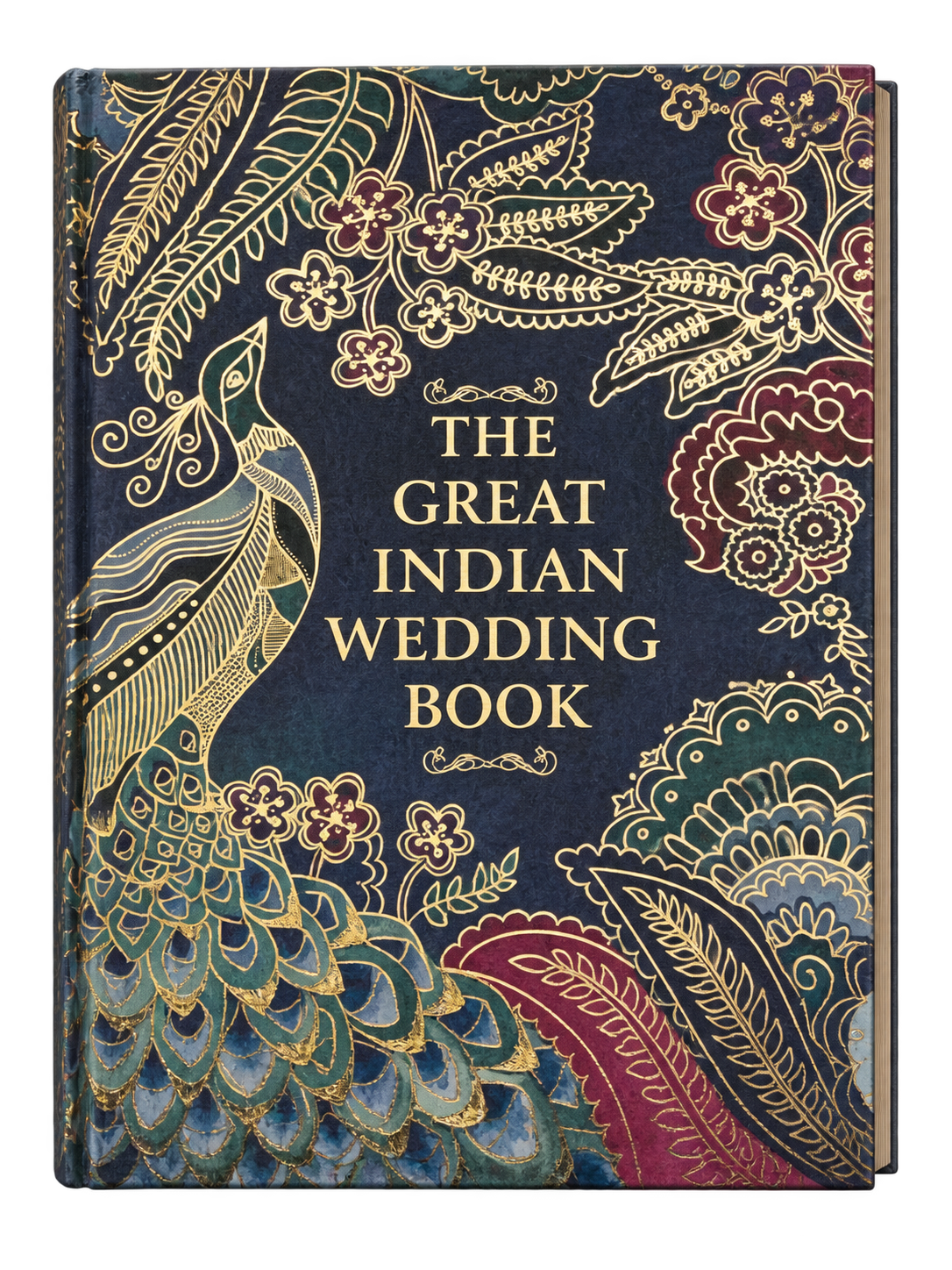
The third edition announces itself through movement. A peacock rises along the cover, its feathers opening into a field of gold outlines, flowers and layered foliage. Deep blue, teal and plum create a rich setting for the title. Before considering any individual wedding reference, the cover establishes a compelling idea: many different elements can belong together when their relationships have been thoughtfully composed.
This feature takes the edition’s cover as its starting point and reads it within The Great Indian Wedding Book’s wider editorial purpose. It is a visual and editorial appreciation, rather than a chapter-by-chapter synopsis. The publication describes its role as bringing together ideas and expert perspectives from the wedding world. Edition 3.0 provides an especially expressive object through which to consider that approach.
A palette with several voices
The cover’s richness comes from the way its colours interact. The dark ground allows the gold to remain legible, while green and plum introduce variation without breaking the whole. Some areas carry dense ornament; others give the title space. The result invites a closer look at how a wedding palette might contain several voices while still feeling recognisable and complete.
For couples, this suggests a helpful alternative to choosing one colour and repeating it everywhere. A palette can include a primary shade, quieter supporting tones and a metallic accent. Different ceremonies can emphasise different parts of that family. Continuity then comes through a shared sensibility, leaving room for a daytime gathering, an evening reception and the wedding ceremony to have individual moods.
The peacock motif also introduces an important distinction between a reference and a literal theme. Its appeal can lie in the sweep of a line, the repetition of a feather or the contrast between a dark surface and a reflective detail. Those qualities can inform a creative brief without requiring a peacock to appear on every invitation, table or stage.
Craftsmanship that rewards attention
Gold linework connects the cover’s many forms. Following it across the surface reveals how repetition, density and spacing build an overall rhythm. As an interpretation of the object, this is an invitation to pay attention to workmanship. In wedding design, the finish of an edge or the precision of a small repeated detail can contribute as much to the final impression as a larger visual gesture.
That attention extends naturally to the people creating a celebration. A florist, textile specialist, invitation designer and lighting team may interpret the same brief through completely different materials. Their contributions become stronger when the underlying intention is clear. Is the atmosphere intimate, festive, formal or theatrical? A shared answer provides direction while allowing each specialist to bring knowledge that the family may not possess.
A useful exercise when approaching this edition is to look at the cover before describing it in words. Notice where the eye pauses, which colours feel dominant and how the decoration frames the title. Then translate those observations into qualities rather than shopping instructions. Richness, contrast, delicacy and movement are more flexible starting points than a demand to reproduce one finished image.
The same method can shape a wedding wardrobe. A detailed textile may need a quieter supporting element; a strong jewel may become the focal point; a repeated accent can connect otherwise different ensembles. These are contemporary applications of the cover’s visual relationships, not claims about specific looks within the edition. Their value is in helping readers express what appeals to them and why.
A celebration held together by intention
Composition also concerns time. Guests experience a wedding through a sequence of arrivals, ceremonies, meals and conversations, rather than through a single overhead view. A beautifully connected celebration gives each moment enough space. Just as the cover alternates ornament with quieter areas, an event can benefit from a rhythm that accommodates anticipation, participation and rest without losing its overall sense of occasion.
For professionals, this reading of Edition 3.0 encourages collaboration around a common language. Instead of asking every supplier to copy the same reference, a planner can explain the emotional and visual qualities that matter. The result has room for discovery. A material, a regional technique or a particularly thoughtful service detail may become the element that makes the celebration feel personal.
Within the archive, the third edition’s distinctive cover offers a memorable expression of abundance organised with care. Its blue, teal, plum and gold remain individual, yet the composition holds them together. That is also the most useful invitation this feature offers a reader: to see the wedding as a relationship between many choices, and to give those choices a shared intention before adding further detail.
EDITION 4.0
Launched in 2017 with Bipasha Basu, the fourth edition explored a more personal approach to the wedding, connecting trousseau, invitations, cuisine, souvenirs and destinations within the celebration.
Explore more
The most memorable wedding decisions often begin with recognition. A couple sees an idea and understands something about their own celebration: how they want people to feel, which traditions belong at its centre or what kind of atmosphere seems true to them. Edition 4.0 can be approached through that search for recognition, with personal expression becoming the thread that connects a wedding’s many moving parts.
The fourth edition was launched in Mumbai in 2017 with Bipasha Basu. Contemporary coverage placed personalisation at the centre of the publication’s message, describing a connection between trousseau, invitations, cuisine, souvenirs and destinations. Atul Pandey’s comments at the time emphasised couples’ readiness to shape the details of their wedding. That documented context gives this edition a clear place within the collection’s continuing story.
Burgundy, gold and a sense of occasion
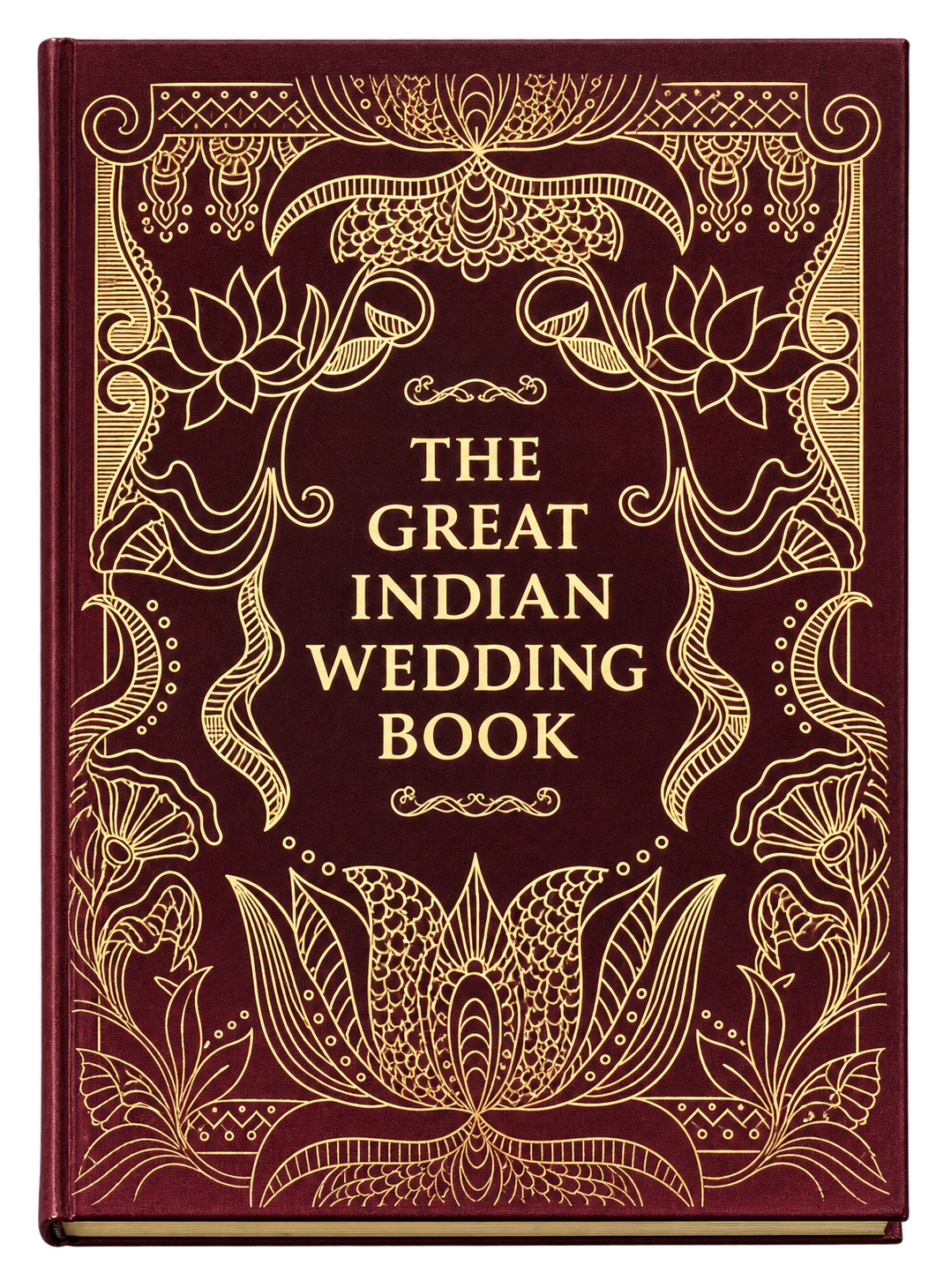
Its cover gives that story a strong visual identity. A deep burgundy surface carries gold lotus forms, sweeping leaves and a decorative frame around the title. The composition is abundant but ordered, with the lettering holding the centre. As a visual reading, it speaks to a celebration in which expressive detail is supported by a confident structure.
The palette also demonstrates why consistency need not feel repetitive. Burgundy can appear differently in a woven textile, a flower or a printed invitation; gold can register as a soft reflection or a sharper accent. What connects these materials is their relationship, rather than an exact match. A wedding can develop a recognisable language while allowing each object and setting to retain its own character.
Personalisation begins with a point of view
A personal wedding is not created simply by placing initials on an object. It begins with decisions about what matters. For one family, that may be the ceremony and its rituals. For another, it may be hospitality, music or the opportunity to bring relatives together. Establishing those priorities provides a meaningful basis for choices that might otherwise be made because they look impressive in isolation.
The edition’s reported focus on several wedding disciplines makes that thinking particularly relevant. An invitation establishes an expectation; the venue changes how people gather; a meal shapes conversation; a wardrobe expresses identity. When these choices share an intention, the celebration feels considered. Their connection can be subtle, carried through a tone of voice, a material or the quality of welcome.
A trousseau, for example, can be approached as a sequence of individual moments rather than a collection of unrelated statements. The useful questions concern comfort, movement, ceremony and how the wearer wishes to feel. Jewellery and beauty then become part of the same conversation. These are ways to apply the edition’s personalisation theme today, rather than a description of specific ensembles within its pages.
Cuisine provides another opportunity for a more individual approach. A family recipe, a regional preference or a favourite way of entertaining can give a menu emotional value. Presentation still matters, but it becomes more persuasive when it serves a clear purpose. Asking why a dish belongs at the celebration can lead to a stronger decision than selecting it only for novelty or visual scale.
Making the many details work together
Invitations and souvenirs occupy different moments in the guest’s experience, yet both carry the wedding beyond the venue. One introduces it; the other may remain afterwards. Their design can connect through illustration, paper, language or a reference meaningful to the hosts. Thinking about them together encourages continuity while avoiding the assumption that every item must carry identical decoration.
The same principle applies to the destination. A beautiful setting should accommodate the celebration’s character and the people attending it. How guests arrive, where they spend informal time and how ceremonies move between spaces all influence the experience. Personalisation becomes practical here: it means choosing a place and a rhythm that support the family’s priorities, rather than forcing those priorities into an unsuitable setting.
For planners and creative partners, a clear point of view makes collaboration more useful. It gives each specialist a reason behind the request and a basis for suggesting alternatives. A designer can propose a better material; a hospitality team can refine a sequence; a photographer can anticipate meaningful interactions. The brief becomes an invitation to contribute expertise rather than an instruction to imitate an image.
Edition 4.0’s burgundy and gold cover remains a fitting introduction to this conversation. It carries ceremony and detail with assurance, while its launch context directs attention towards the people making the choices. To revisit the edition is to consider how a wedding gains identity: through the relationship between its visible beauty, its practical arrangements and the personal reasons that make those arrangements worth remembering.

EDITION 5.0
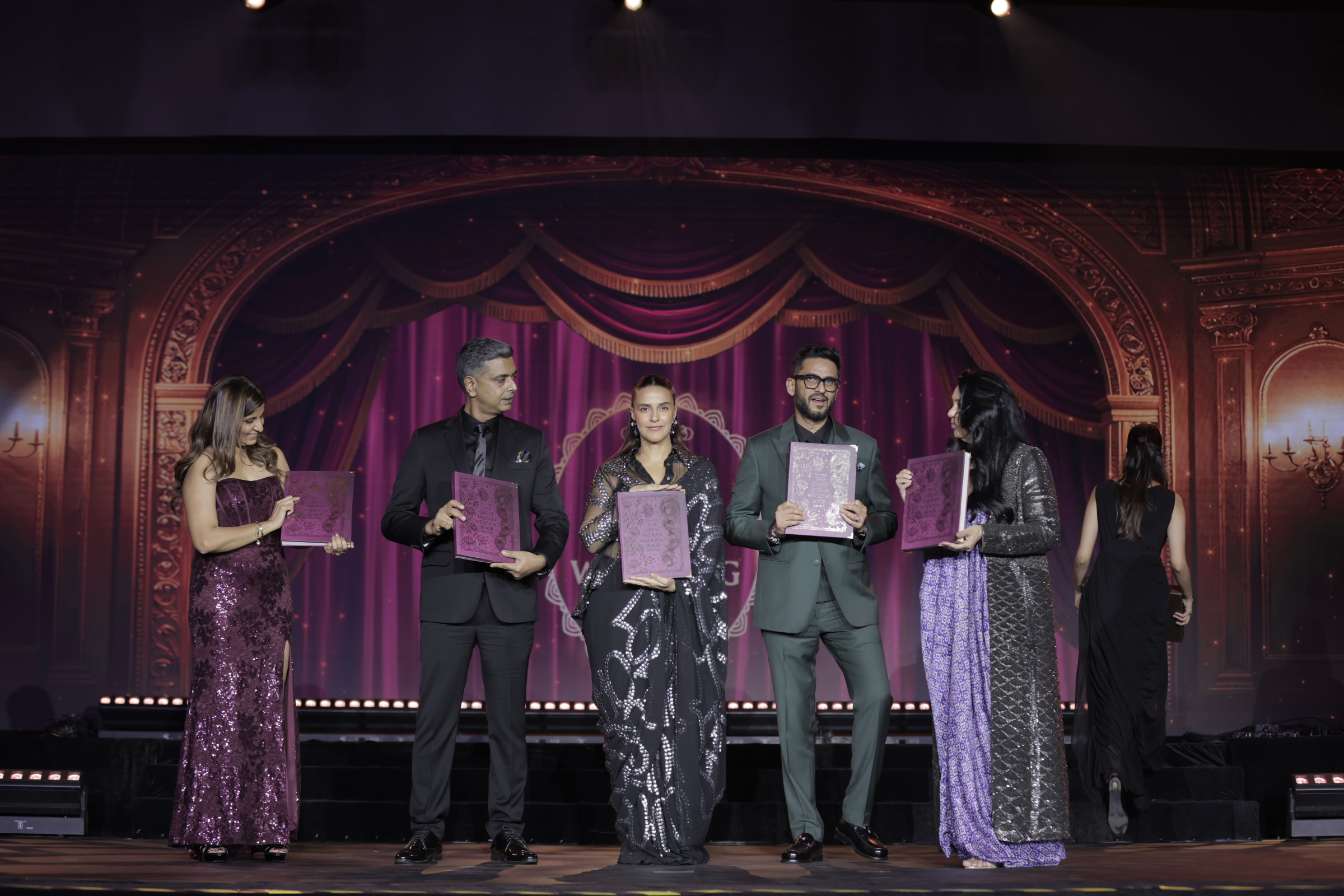
Unveiled by Neha Dhupia at India’s Best Wedding Makers Conclave 2025 in Mumbai, the fifth edition brought the publication together with the planners, designers, photographers and specialists whose work fills its pages.
Explore more
Every accomplished wedding contains work that guests may never see. Spaces are prepared, sequences adjusted quietly and unrepeatable moments anticipated. Edition 5.0 invites a useful shift of attention towards that work and the people responsible for it. The celebration becomes a meeting of skills, with beauty emerging through coordination as well as imagination.
The fifth edition was unveiled by Neha Dhupia on 5 October 2025 at the Jio World Convention Centre in Mumbai, during India’s Best Wedding Makers Conclave. The event, conceptualised by Copper Events, also featured Varun Dhawan and Esha Gupta. Its programme included the IBWM Powerlist, placing the publication’s launch within a wider occasion recognising people and businesses across the wedding industry.
The book and the gathering
The setting is significant when considering this edition’s place in the archive. A book offers time to examine an idea; a gathering creates opportunities for the people behind those ideas to meet. Bringing the two into proximity gives the publication another dimension. Its role as a reference can be understood alongside conversations about professional practice, collaboration and the responsibilities involved in creating an important family occasion.
At the launch, publisher Atul Pandey described an ambition to serve families, creators and brands navigating luxury weddings. That broad audience is worth considering. Families seek confidence and inspiration; professionals seek a considered understanding of their work; brands seek a relevant context. A useful editorial platform allows those interests to meet around the quality of the celebration rather than around visibility alone.
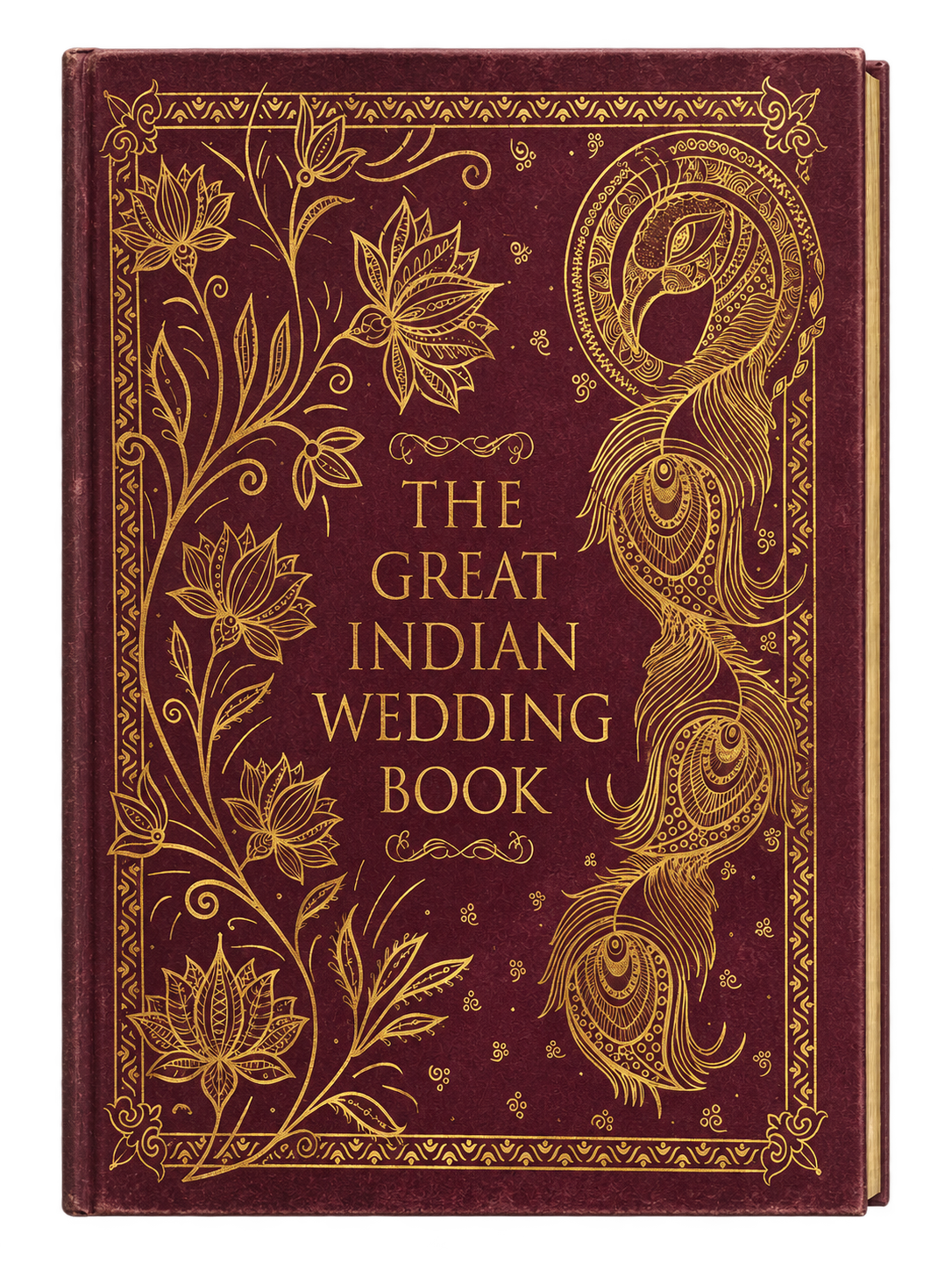
The burgundy and gold cover provides a distinctive introduction. Lotus and peacock motifs form an intricate frame around the title, with gold lines standing clearly against the darker ground. As a visual interpretation, the surface rewards attention to individual marks while retaining an overall order. It is an appropriate starting point for a feature concerned with the many contributions behind a finished wedding experience.
Recognising the full creative picture
A wedding is often remembered through its most visible elements: the bridal look, the setting or an outstanding performance. Yet those moments depend on less conspicuous decisions about timing, access, service and communication. Recognising the wider creative picture means asking how an experience was made possible. It gives due weight to the connection between a compelling idea and the practical skill required to deliver it.
For couples and families, that perspective can improve the way a brief is developed. Begin with the priorities of the occasion, then ask which expertise is needed to support them. A particularly complex ceremony, an international guest list or a strong culinary ambition will each suggest different requirements. Choosing collaborators becomes a thoughtful process of understanding fit, rather than a comparison based only on striking photographs.
It also changes the questions asked during a consultation. How does a team listen? How are decisions recorded? What happens when an idea needs to be adapted? Who coordinates with the other specialists? These contemporary planning questions follow naturally from a focus on the people behind the celebration. They are prompts for using the edition’s wider context, rather than claims about individual features inside the book.
The same attention can enrich the way readers look at imagery. An elegant table might reveal a collaboration between styling, floristry, lighting and service. A bridal portrait brings together the wearer, designer, jeweller, beauty team and photographer. Looking for those relationships encourages appreciation of the whole process and provides a more useful basis for developing an original celebration than copying the final appearance alone.
An archive with a human dimension
For wedding professionals, documentation has value beyond publicity. It creates a record of decisions, techniques and working relationships that might otherwise disappear once an event ends. A reference can begin a conversation about why a particular approach succeeded and how it could be adapted. Over time, such conversations help build a clearer language for discussing quality within a field that works across many different disciplines.
Edition 5.0’s association with the 2025 conclave makes the relationship between documentation and recognition especially relevant. The launch was a public occasion, but its lasting interest lies in the work a publication can continue to support afterwards. An image can prompt a new commission; a considered account can help a family ask better questions; a shared reference can make a professional conversation more precise.
Returning to the fifth edition, then, is an opportunity to look beyond the surface of celebration without losing its sense of wonder. The cover remains richly decorative, but this reading places human skill at the centre of that richness. A memorable wedding is assembled through many acts of attention. Giving those acts and their makers a place in the story deepens the meaning of the finished occasion.
EDITION 6.0
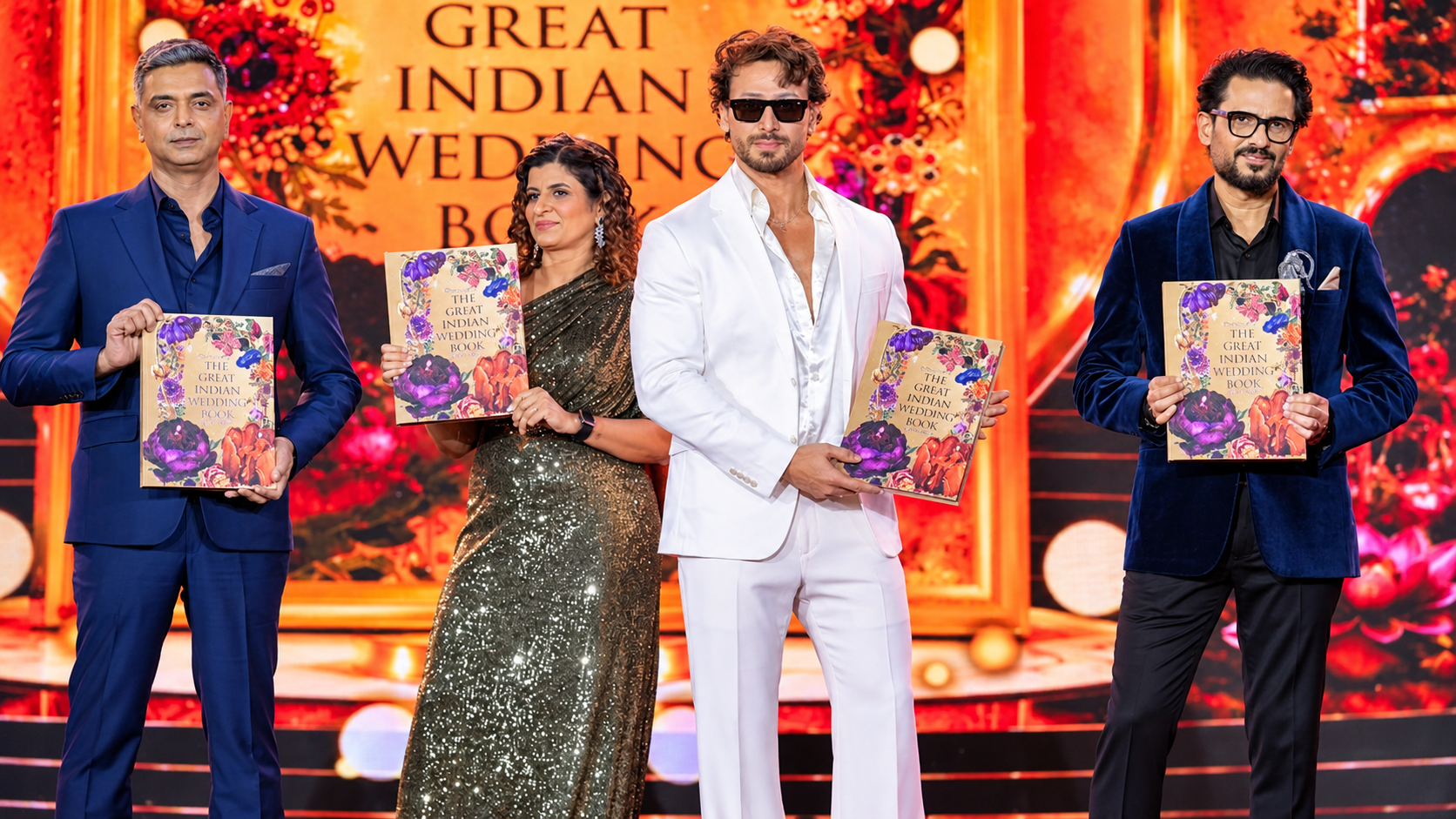
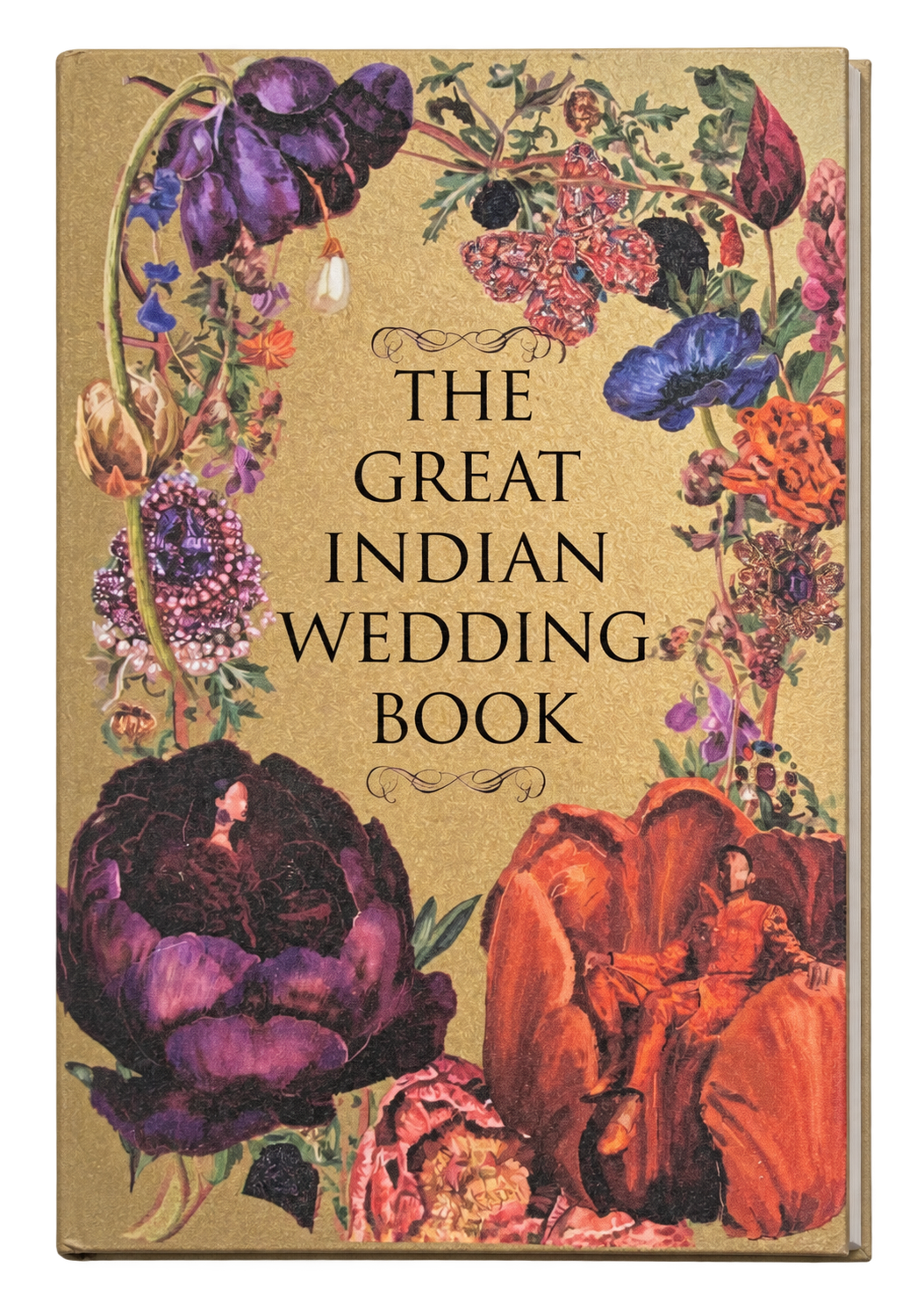
Unveiled by Tiger Shroff at India’s Best Wedding Makers Conclave 2026, the sixth edition celebrates contemporary Indian weddings through craftsmanship, expert perspectives and bridal fashion, including The Great Indian Bride editorial.
Explore more
The Indian bride does not belong to a single silhouette or colour. Her wardrobe may hold ceremony and experimentation, inherited jewellery and an unexpected contemporary shape. Edition 6.0 opens a conversation around that breadth through The Great Indian Bride, bringing several design perspectives into one editorial setting. It asks readers to consider bridal style as an expression of the woman wearing it and the occasions she wishes to create.
The sixth edition was unveiled with Tiger Shroff at India’s Best Wedding Makers Conclave 2026 at the Jio World Convention Centre, Mumbai. The event’s concluding honours evening was hosted by Amyra Dastur, with Mouni Roy and Wamiqa Gabbi presenting honours. For the publication, the launch connected a new chapter of wedding imagery with a gathering of the professionals and businesses shaping the wider celebrations industry.
Ten perspectives, one editorial conversation
The Great Indian Bride features Manish Malhotra, Falguni Shane Peacock, Abhinav Mishra, JJ Valaya, Amit Aggarwal, Ritika Mirchandani, Shantnu Nikhil Couture, Aisha Rao, Anita Dongre and Itrh. The editorial was photographed by Pravin Talan, styled by Tanya Ghavri, with hair and makeup by Shradha Luthra. Its range of design approaches offers readers a useful basis for thinking beyond a single prescribed bridal appearance.
The value of bringing different houses together lies in comparison without demanding a verdict. A reader may respond to the structure of one look, the colour of another and the craftsmanship of a third. Those responses can begin a more personal wardrobe conversation. Rather than selecting a complete identity from a reference, the bride can learn to articulate the qualities that feel most natural to her.
Photography, styling and beauty help that conversation become legible. They influence where attention falls, how a silhouette is understood and how accessories relate to clothing. Looking carefully at an editorial means noticing these contributions alongside the garment. A successful bridal image can suggest an atmosphere while leaving room for the individual wearer to make different choices about comfort, ceremony and self-expression.
A cover full of contrasts
The edition’s floral cover introduces a similarly varied visual world. A gold ground carries purple, orange, blue and green, with large blooms framing the title. The composition is expressive, yet the centre remains clear. Read as a design object, it demonstrates how contrasting colours and forms can coexist when their placement has purpose and the overall structure gives the eye a place to rest.
For readers planning a wedding, that offers a helpful way to approach multiple ceremonies. Different moments can carry different energies without becoming unrelated events. A shared sensitivity to materials, proportion or hospitality can provide continuity, even when a wardrobe or setting changes dramatically. The aim is a celebration that accommodates several expressions of the same people, rather than requiring one visual formula throughout.
A practical wardrobe discussion might therefore begin with movement, setting and the emotional character of each occasion. How long will an ensemble be worn? What will the ceremony involve? Which jewellery carries personal meaning? Such questions make room for beauty and individuality together. They are contemporary planning applications of the editorial’s variety, not instructions to reproduce the looks exactly as photographed.
Beyond the bridal image
The wedding continues well beyond its fashion imagery. A venue establishes scale and atmosphere; cuisine shapes the welcome; photography determines how moments are remembered. Invitations, gifting and entertainment contribute their own voices. The sixth edition’s broader publication context includes these wedding disciplines, encouraging readers to connect the first spark of bridal inspiration with the wider experience they wish to share with their guests.
For creative partners, the useful task is to understand what connects those preferences. A love of sculptural clothing might suggest clarity in the surrounding design. A detailed textile might inspire attention to craft without dictating a literal motif. Translating a reference into underlying qualities gives specialists room to contribute. It also helps the wedding retain a personal identity as practical decisions develop.
The launch within IBWM provides another frame for reading the edition: the bridal image is made possible by a network of expertise, and the celebration depends on an even wider one. Acknowledging that network deepens the pleasure of looking. Readers can admire the finished work while also considering the thought, collaboration and judgement behind its apparent ease.
Edition 6.0 brings the collection into a conversation about choice, interpretation and contemporary Indian bridal identity. Its floral cover is generous in colour; its opening editorial allows multiple design voices to be heard. The invitation to readers is equally generous: look closely, discover what resonates and build a celebration around those discoveries. The most lasting inspiration helps people recognise themselves more clearly in the possibilities before them.