The Overnight Wedding Decor Changeover Needs Its Own Plan
Between the last sangeet guest and the first ceremony arrival, a room has to be cleared, rebuilt, checked and handed back.
The evening’s last song and the next morning’s first guest belong on the same production conversation. Between them sits an entire changeover: a dance floor may have to disappear, a mandap may need to arrive and the hotel still has a building to operate.
A beautiful second design needs a credible route into the room. Before approving two dramatically different looks for one space, ask the planner, designer and venue to walk through the hours connecting them.
Begin with the production behind the picture
Q Events by Geeta Samuel describes an in-house production facility on its published work page, bringing together fabrics, furniture, flowers and set structures. Those different disciplines help explain why an overnight transformation needs several coordinated teams. (Q Events by Geeta Samuel — Work)
For your wedding, request a changeover schedule specific to the proposed designs. Establish which elements stay, which are removed and which can be prepared elsewhere. A floral adjustment and a complete structural rebuild should not receive the same allowance simply because both happen overnight.
Agree when the room truly becomes available
Record the guest-clear time, the venue’s handover conditions and the route by which equipment can leave. Include the bar, catering equipment and entertainment setup in that conversation. A decor team cannot begin everywhere while other suppliers are still serving guests or moving through the same doorway.
Let the venue and production lead confirm how access, working areas and any technical work will be managed. Guests returning to their rooms need a route that is understood by the hospitality team, too.
Decide what can be ready before the night begins
Ask which furniture, floral components and dressing elements can be staged in an agreed holding area. Check whether that space remains available through the evening and how the new pieces reach their final positions.
For elements intended to be reused, identify them by name and location. The person clearing a table should know which arrangement is travelling to another room. Reuse becomes more practical when the design team has already worked out its condition, handling and next placement.
Give every team a handover point
The schedule should show when one activity allows the next to begin. Who confirms that the previous set has cleared? When can the new installation be dressed? When does the venue inspect the space, and when can housekeeping complete its work?
Leave time for a final check with the lighting in the condition guests will see. Include ceremony seating, signage and the couple’s route. A photograph of a finished backdrop cannot confirm that the entire room is ready.
Keep a simpler version ready to approve
Ask the designer to identify which optional details could be reduced if access is delayed. Agree who can approve that decision overnight. The couple should not be the only people able to settle a placement question at three in the morning.
If the proposed transformation cannot fit within a workable schedule, consider a second space or a design that retains more of its structure. The morning’s calm is part of the design brief, and it begins well before the sangeet ends.
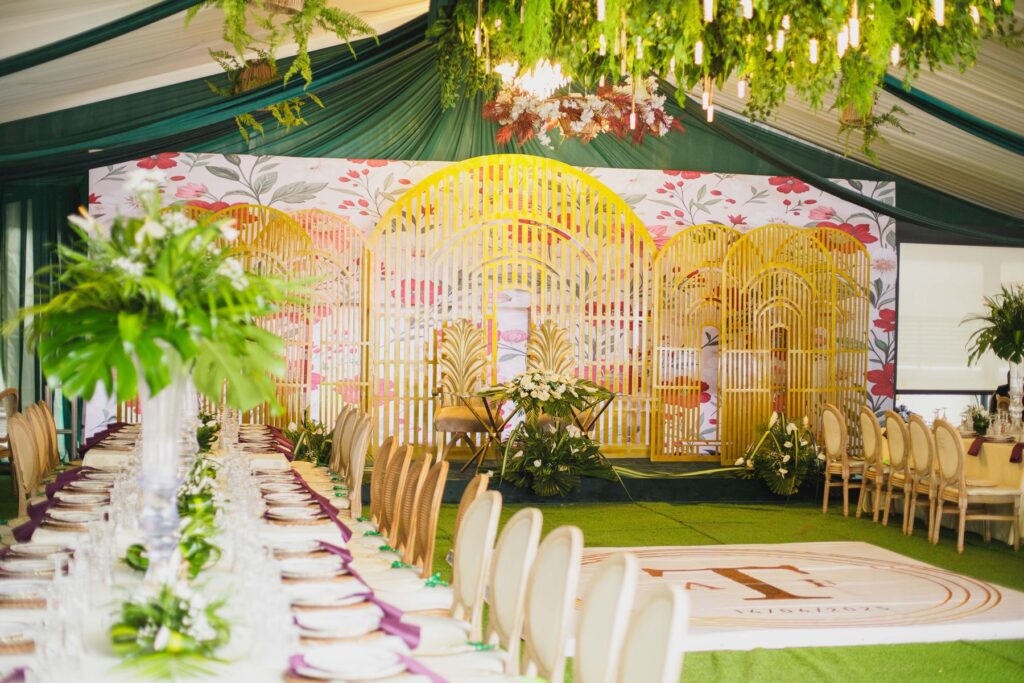
A completed wedding setting with layered seating, overhead greenery and a decorative stage. Illustrative photograph; not Q Events’ work or a documented overnight changeover. Photography: NUDE Nahum. Pexels License. Via Pexels. Original photograph unchanged.