Fresh Flowers or Crafted Decor? Compare What Guests Will Actually Experience
A floral proposal and a crafted installation can look equally dramatic on a screen. Compare their finish, installation and second life before choosing.
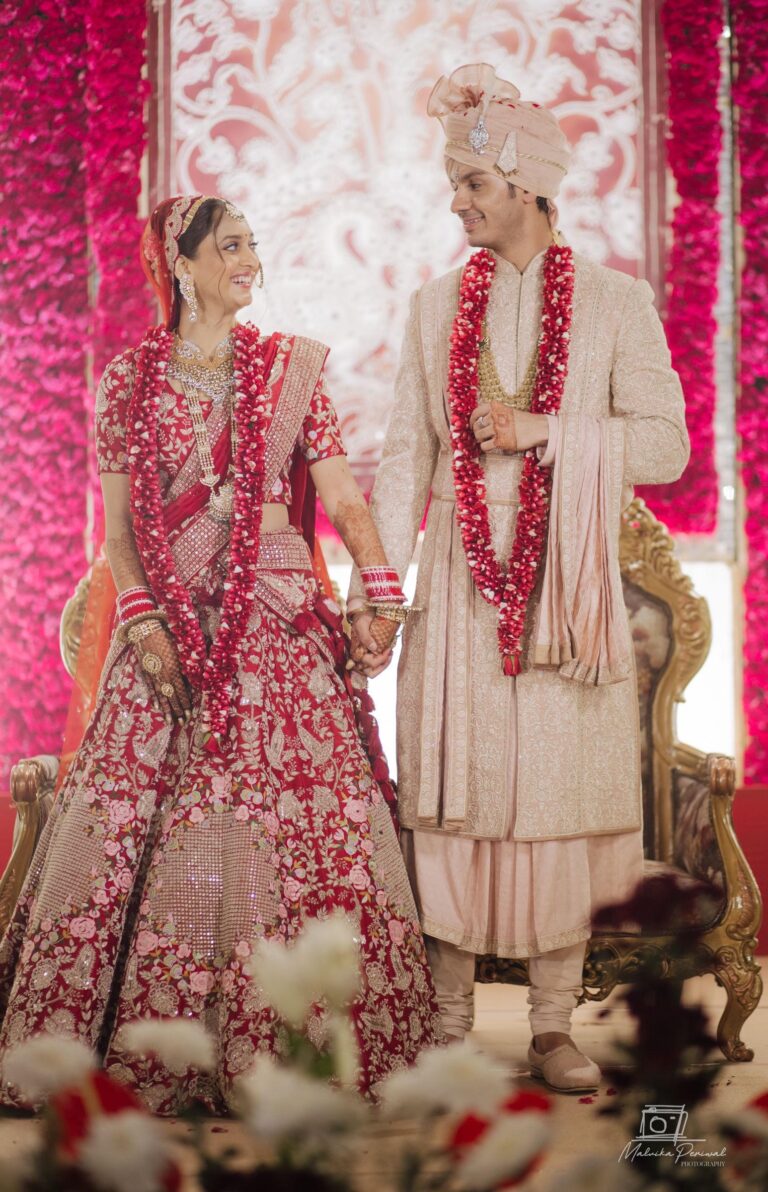
A fresh-flower arch and a sculpted backdrop can occupy the same rectangle on a mood board while offering completely different experiences in the room. One brings botanical detail close to the guest. Another may create a silhouette that holds its own across a large courtyard.
The useful question is where each material earns its place. Before comparing quotations, ask both designers to solve the same space, with the same guest routes and viewing distances.
Give both proposals the same dimensions
A photograph of an intimate floral doorway is a poor cost comparison for a freestanding structure spanning a ballroom stage. Request the width, height, depth, support requirements and installation scope of each option. Include the surfaces and lighting that complete the design.
Interflora India’s wedding service describes a process involving floor plans, drawings, flower sourcing, execution and dismantling. That is a helpful example of the scope to request from a floral specialist. Ask the crafted-installation team to explain its equivalent steps in the same level of detail. (Interflora India — Weddings & Events)
Test the view at three distances
From the entrance, look at shape and proportion. From a dining table, look at how the installation sits behind guests and whether it blocks the architecture. Up close, inspect the joinery, surface, vessels or floral mechanics that the finished design leaves visible.
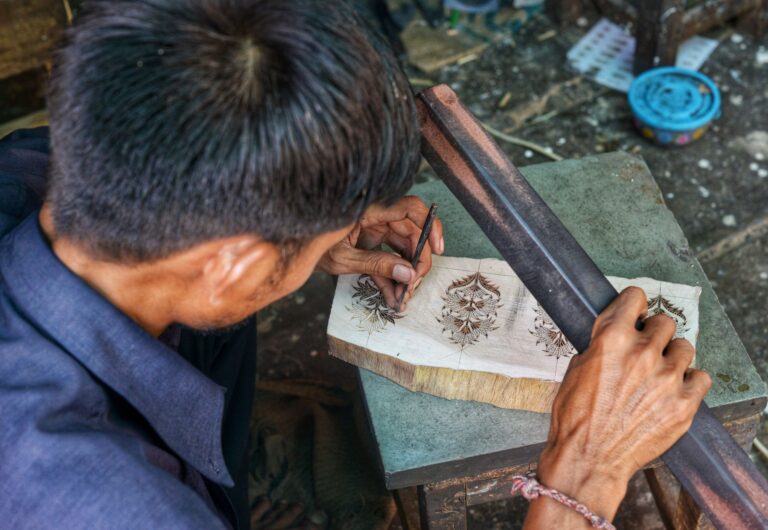
Request a material sample or a representative section, rather than approving everything from a digital render. Paper, textile, painted board and metal each respond differently to light. A convincing photograph of a sample should identify its material and scale.
Fresh flowers can make sense where guests will see petals and movement closely. A crafted element may suit a graphic form whose outline matters from across the room. Those are design possibilities to test against the brief, rather than fixed rules about where each belongs.
Ask what the venue has to accommodate
Discuss delivery access, assembly areas, installation time and the route used to remove the work. Ask the venue and production team to approve attachment methods, structural requirements and any overhead elements.
If a backdrop is intended to move between functions, request the actual relocation sequence. Who dismantles it? Where does it wait? Will it fit through the doorway? Confirm which components can move intact and which must be rebuilt.
Make the afterlife specific
“Reusable” needs a destination. A rented frame returning to a supplier, a purchased artwork going to the family home and materials awaiting disposal are different outcomes. Ask who owns each element and what collection or storage is included.
Apply the same precision to flower redistribution or waste-handling proposals. Request the arrangement for this event rather than assuming a general sustainability statement covers it.
A mixed scheme may be the most satisfying answer: crafted forms establish the room, while flowers reward closer attention. Approve the combination because the materials work together and the execution is understood.
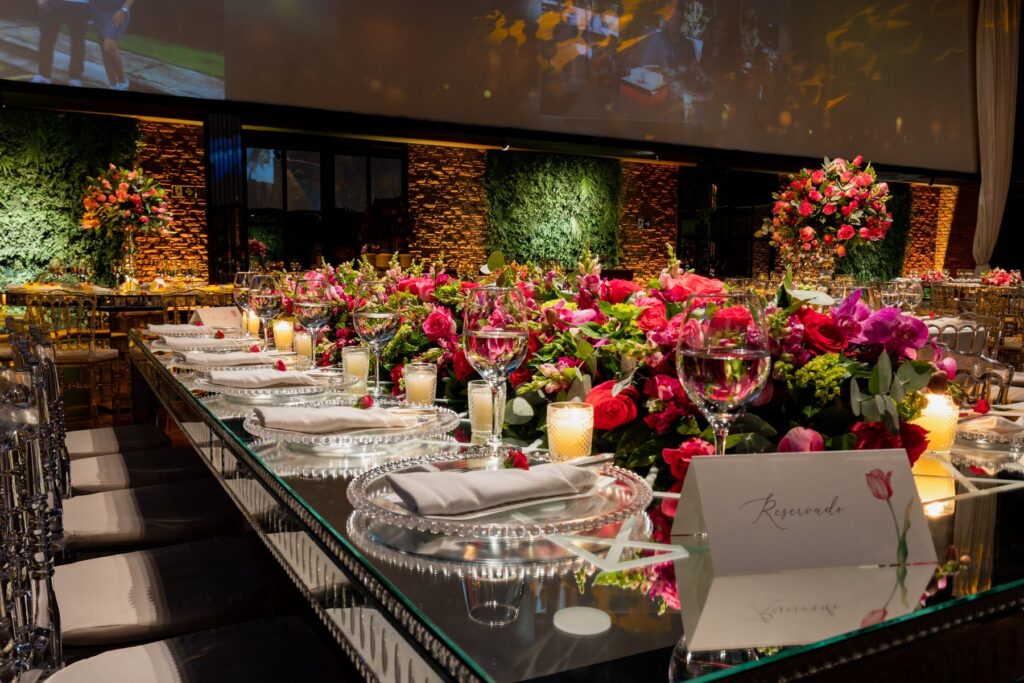
A floral reception tablescape illustrating flowers, candlelight and sightlines; not an Interflora commission. Photography: Matheus Bertelli. Pexels License. Via Pexels.