The Indian Textile Table: Beyond a Printed Tablecloth
Build a wedding table around a named textile technique, then give its colour, pattern and surface room to be seen.
Build a wedding table around a named textile technique, then give its colour, pattern and surface room to be seen.
A textile-led wedding table begins before the flowers arrive. Its character can come from the scale of a printed motif, the fall of a runner or the edge of a napkin. Those details offer a more precise starting point than a broad request for an “Indian-inspired” setting.
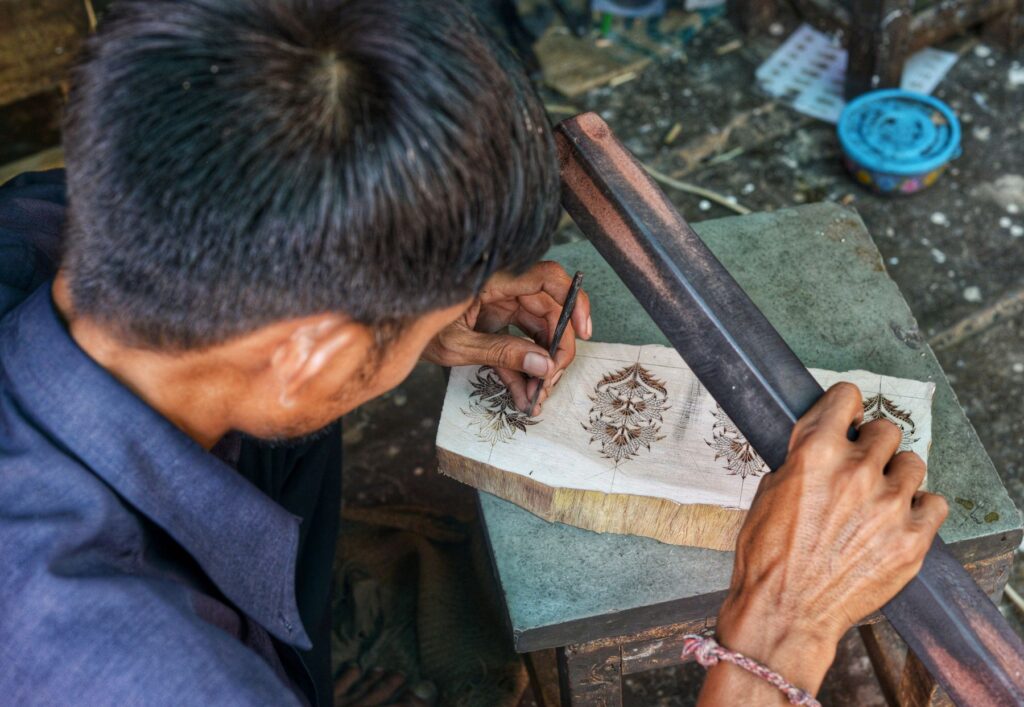
Good Earth’s Neelanjana collection provides a documented reference. The brand describes its indigo table linen as Dabu, a Rajasthani mud-resist hand-block-printing technique, with lotus motifs. That is a specific craft and design vocabulary to investigate, rather than a pattern to copy without context.
Choose the craft before the colour palette
Ask the textile supplier to identify the technique, place of production, material and care requirements. A floral design can be woven, embroidered, hand-block printed or digitally printed. The appearance alone is not enough to support a claim about how it was made.
If the commission is bespoke, decide which surface carries the principal work. A broad tablecloth, a narrower runner and a set of individual place settings create very different opportunities to see a motif.
Let the pattern survive the place setting
Make one complete sample table with the actual plates, glasses, napkins, menu cards and flowers. A detailed border may disappear beneath a charger; a carefully chosen repeat can be lost under a continuous floral arrangement. Photograph the sample from a seated guest’s eye level as well as from above.
Try fewer competing patterns before adding more. An indigo cloth might need only a restrained flower palette and a quieter plate to remain legible. Alternatively, a plain tablecloth can give embroidered napkins the attention they deserve. These are design directions to test against the room, not fixed rules.
Commission for a working dinner
Confirm finished sizes against the actual table inventory. Ask about joins on long tables, how patterns meet at seams, laundering, replacements and the number of spare pieces available. Have the caterer test the surface with plates, serving dishes and glassware before signing it off.
For a multi-event celebration, identify a second use while commissioning: a welcome lunch, a smaller family dinner or linen the family will keep. Put the maker and technique on the production record and credit them accurately when photographs are published. The most interesting textile story is the one the finished table allows you to recognise.
References: Good Earth — Neelanjana.
Carving a textile-printing block in Jaipur. Photograph: Sumit photography / Pexels. Pexels License.